
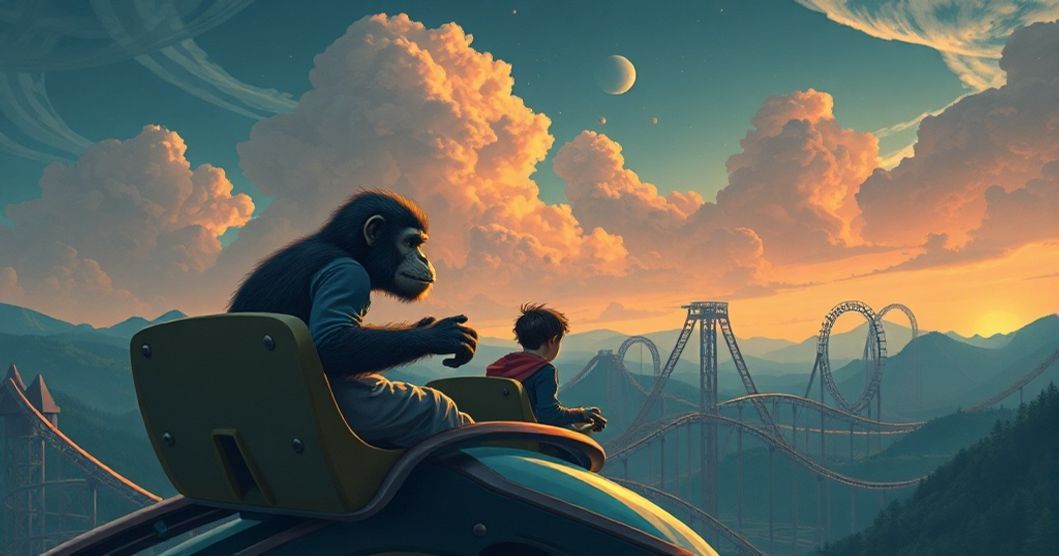
Part 1: Dream Presentation
Dreams often serve as mirrors reflecting our unconscious preoccupations, and this vivid experience at Cedar Point offers a fascinating glimpse into the dreamer’s relationship with control, connection, and unexpected responsibilities. The dream unfolds on a familiar yet unfamiliar landscape—the Steel Vengeance roller coaster at Cedar Point, Ohio, a park visited by the dreamer in 2014 before the coaster’s construction. The narrative begins with the dreamer standing in line alongside their cousin and oldest nephew, a scene charged with the tension between participation and observation. The nephew’s first upside-down roller coaster, chosen to ride with the cousin rather than the dreamer, sets up a dynamic of generational transition and emotional distance, while the roller coaster itself becomes a powerful metaphor for life’s unpredictable journey.
The dreamer’s position as observer rather than participant on the roller coaster introduces a central theme of control and vulnerability. The roller coaster, a symbol of life’s exhilarating yet disorienting moments, becomes a vehicle for exploring how we navigate uncertainty. The smooth, almost sleep-like sensation during the ride—despite the physical sensations of twists and turns—suggests a curious disconnection between the dreamer’s conscious awareness and their body’s experience, mirroring how we sometimes feel adrift in waking life, even when we try to stay grounded.
The restraints, described as resembling lawn mower controls, represent the attempt to impose order on chaos. The dreamer’s act of pushing down the bars and testing them by flexing their legs reflects a deliberate, almost ritualistic attempt to regain control in an otherwise unpredictable situation. This willingness to engage with the unknown—rather than resist it—highlights a shift in perspective: the dreamer accepts the ride’s challenges without fear, embodying a mature approach to uncertainty that contrasts with the initial anxiety one might expect.
Want a More Personalized Interpretation?
Get your own AI-powered dream analysis tailored specifically to your dream
🔮Try Dream Analysis FreeThe monkey prize introduces a layer of childlike wonder and responsibility. Treated like a Pokémon, the monkey symbolizes the dreamer’s inner child, a playful aspect of the self that emerges unexpectedly in adulthood. The act of feeding the monkey expensive sushi ($75.49) underscores the dreamer’s relationship with value and nurturing—both the monetary value of the sushi and the emotional value of caring for something fragile. The father’s financial support adds another dimension: intergenerational support, the dreamer’s reliance on parental guidance, and the comfort of knowing help is available when needed.
Part 2: Clinical Analysis
Symbolic Landscape: Unpacking the Dream’s Core Elements
The roller coaster itself stands as a multifaceted symbol in dream psychology, representing life’s journey with its peaks, valleys, and unexpected twists. In this dream, the Steel Vengeance coaster—an imposing structure built on a familiar location (Cedar Point, Ohio)—suggests a connection to real-life experiences and memories. The dreamer’s prior visit to Cedar Point in 2014, before the coaster’s construction, hints at a sense of anticipation for new experiences that may feel both familiar and foreign. The coaster’s smooth ride despite its reputation for intensity reflects the dreamer’s ability to find comfort in unexpected circumstances, a psychological defense mechanism against anxiety.
The restraints, described as “short bars over legs like lawn mower controls,” symbolize the dreamer’s attempt to impose order on chaotic emotions. By physically testing the restraints and accepting their function, the dreamer demonstrates a willingness to engage with life’s challenges rather than avoid them. This active acceptance contrasts with the dreamer’s earlier anxiety about the ride, showing a shift from fear to confidence—a significant emotional development.
The monkey prize is perhaps the most enigmatic element, embodying the dreamer’s relationship with nurturing, playfulness, and unexpected responsibilities. In dreamwork, monkeys often symbolize adaptability, curiosity, and the need to “monkey around” with established roles. The dreamer’s treatment of the monkey as a Pokémon-like creature suggests a desire to reclaim childhood wonder in adulthood, a common theme in dreams of middle age. The act of feeding the monkey sushi—an expensive, indulgent choice—reflects the dreamer’s need to balance practicality with indulgence, a tension many adults face between financial responsibility and personal fulfillment.
Psychological Perspectives: Jungian, Freudian, and Modern Frameworks
From a Jungian perspective, the dreamer’s experience on the roller coaster mirrors the individuation process—the journey toward self-integration. The coaster’s twists and turns represent the unconscious’s attempt to integrate fragmented aspects of the self, while the smooth ride symbolizes moments of clarity and acceptance. The monkey, as a totem animal, might represent the dreamer’s shadow self—the parts of the psyche that feel unfamiliar or even threatening but require acknowledgment.
Freudian analysis would likely focus on the dreamer’s relationship with authority figures, particularly the father who pays for the sushi. The father’s role as provider and protector in the dream suggests unresolved childhood dynamics, where the dreamer seeks security and guidance from parental figures. The act of “catching” the monkey as a prize could symbolize the dreamer’s attempt to “catch” or control childhood experiences they missed earlier in life.
Modern dream psychology emphasizes the role of context and personal history. The specific location of Cedar Point, a real-world amusement park, anchors the dream in concrete memories, while the roller coaster’s unfamiliarity reflects the dreamer’s current life transitions—perhaps new responsibilities, relationships, or career changes. The sleep-like sensation during the ride may indicate a state of psychological dissociation, where the dreamer is both present and detached from the experience, a common response to overwhelming life changes.
Emotional & Life Context: Unraveling the Layers of the Dream
The dream’s emotional core revolves around themes of control and vulnerability, generational connection, and unexpected responsibility. The dreamer’s decision to stand in line rather than ride the coaster suggests a pattern of observing rather than participating in life’s key moments—a common response to anxiety or uncertainty. The nephew’s first upside-down roller coaster introduces generational dynamics: the dreamer’s role as an uncle, mentor, or observer to the younger generation’s experiences.
The roller coaster’s smoothness despite its intensity hints at the dreamer’s ability to find comfort in stability, even during turbulent times. The passing out from twists and turns could symbolize emotional overwhelm, where the dreamer’s mind temporarily shuts down to protect against stress. This response is not pathological but adaptive—a way to process intense emotions without becoming overwhelmed.
The financial aspect of the dream—$75.49 sushi paid by the father—reflects the dreamer’s relationship with money and responsibility. The specific price suggests a fixation on value, perhaps related to work, relationships, or personal goals. The father’s payment implies a desire for support, a need to acknowledge that some responsibilities are too large to bear alone, and the comfort of knowing help is available when needed.
Therapeutic Insights: Applying the Dream to Waking Life
For the dreamer, this dream offers several opportunities for self-reflection. The roller coaster’s smooth ride despite its challenges suggests that even when life feels overwhelming, there is potential for stability and control. The act of accepting the restraints and trusting the ride—rather than resisting—can be translated into waking life as a practice of mindful acceptance. When facing uncertainty, the dreamer might benefit from acknowledging their ability to adapt and find comfort in unexpected circumstances.
The monkey prize invites exploration of the dreamer’s relationship with nurturing and play. In adulthood, we often lose touch with our inner child, the part that finds joy in simple pleasures and embraces whimsy without reservation. The dream suggests reconnecting with this playful aspect, perhaps through hobbies, creative pursuits, or moments of unstructured play. By nurturing this inner child, the dreamer can reduce stress and increase resilience.
The father’s financial support highlights the importance of seeking help when needed. The dreamer might benefit from recognizing that vulnerability is not weakness but a sign of emotional intelligence. By allowing others to support them, they can build stronger relationships and reduce the burden of self-reliance.
FAQ Section
Q: What does it mean to pass out on a roller coaster in a dream?
A: Passing out often symbolizes emotional overwhelm or a need to disengage temporarily from stress. It suggests the dreamer’s mind is protecting itself from intense emotions, a natural adaptive response.
Q: Why is the monkey prize significant, and how might it relate to real life?
A: The monkey represents the dreamer’s inner child or playful side, urging them to reclaim joy and whimsy. The expensive sushi highlights valuing experiences and nurturing relationships, even when they feel indulgent.
Q: How do the generational elements (nephew, cousin, father) contribute to the dream’s meaning?
A: These figures represent intergenerational connection, with the father symbolizing support, the cousin as a guide, and the nephew as a reminder of life’s new beginnings. Together, they reflect the dreamer’s role in both guiding and being guided by others.