
Part 1: Dream Presentation
Dreams often serve as mirrors reflecting our deepest emotional landscapes, and this particular narrative offers a vivid tableau of love, loss, and the complex dance between freedom and confinement. Here is the dream as it unfolded:
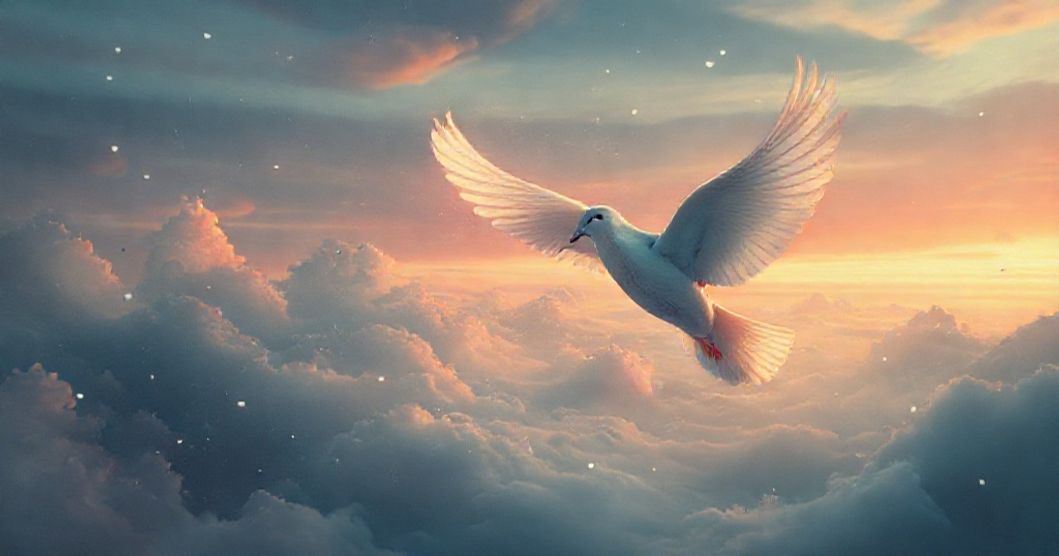
I woke with a gasp, tears still fresh on my cheeks, the residue of that dream clinging to my consciousness like mist. The wedding reception had been a blur of laughter and floral arrangements, but the moment my partner spoke—'I know you don’t love me'—everything shifted. Their words felt like a mirror held up to my own unacknowledged fears, triggering a cascade of emotions I’d spent years suppressing. I tried to argue, to prove my love through words and gestures, but my efforts crumbled against their certainty. The guests’ silent judgment and my own heartbreak propelled me into flight—a physical and symbolic escape. As I ran, my body began to transform: bones lengthened, feathers sprouted from my arms, and I became a dove, taking wing into the sky. Yet my freedom was bittersweet, for my grandmother—her form now a determined pigeon—chased after me, wings beating in relentless pursuit. The dream’s final, haunting note came not with flight but with the realization that this escape might be self-destructive, a metaphor for the psychological death of old patterns I couldn’t yet embrace.
Part 2: Clinical Analysis
Want a More Personalized Interpretation?
Get your own AI-powered dream analysis tailored specifically to your dream
🔮Try Dream Analysis FreeSymbolic Landscape: Wings, Weddings, and Transformations
The wedding setting in dreams carries profound symbolic weight, representing societal expectations of love, commitment, and identity. In this case, the wedding functions as a pressure cooker for unresolved emotional conflicts—perhaps the dreamer feels trapped by external expectations of happiness or fears that their true feelings don’t align with societal norms. The partner’s accusation of 'not loving them' is not literal but reflects the dreamer’s internal dialogue about unrequited love or self-doubt in relationships. When the dreamer transforms into a dove, this symbol gains multi-layered meaning: doves traditionally represent peace, spirituality, and emotional purity, yet their flight also signifies escape and freedom. The transformation itself is a classic Jungian 'individuation' symbol—a shedding of old identities to embrace new self-awareness.
The grandmother’s transformation into a pigeon introduces another layer of symbolic meaning. Pigeons often symbolize nurturing, resilience, and ancestral legacy, while the act of pursuit suggests unresolved familial dynamics. Grandmothers in dreams frequently represent the dreamer’s connection to heritage, values, and emotional roots. Her relentless chase as a bird might reflect the dreamer’s struggle to reconcile their need for independence with the pull of family expectations or the weight of inherited emotional patterns.
Psychological Undercurrents: Jungian, Freudian, and Modern Perspectives
From a Jungian lens, this dream embodies the 'shadow' archetype—the part of the psyche we reject but cannot escape. The wedding represents the collective self’s attempt to conform, while the dove transformation is the shadow’s integration. The dreamer’s internal conflict between 'convincing' and 'fleeing' mirrors the tension between conscious and unconscious selves: the conscious mind clings to love and connection, while the unconscious seeks release from emotional bondage.
Freudian analysis would likely interpret the wedding as a symbol of repressed desires for commitment, and the partner’s accusation as a projection of the dreamer’s own guilt or fear of inadequacy in love. The 'self-inflicted death' imagery could represent the dreamer’s fear of annihilating their identity in relationships—a common Freudian theme of 'death drive' (Thanatos) in the face of unmet emotional needs.
Modern cognitive dream theory adds another dimension: dreams process emotional conflicts by creating symbolic narratives. The transformation into a bird represents the dreamer’s attempt to rewire their emotional response system, finding new ways to navigate relationship challenges. The act of flight, while initially liberating, becomes burdened by the grandmother’s pursuit, suggesting that true freedom requires addressing rather than avoiding familial or relational patterns.
Emotional and Life Context: The Weight of Unspoken Feelings
The dream’s emotional core centers on unrequited love and the fear of rejection, which often stem from deeper issues like attachment styles or past relationship traumas. The wedding setting may reflect the dreamer’s current relationship status—perhaps navigating commitment, questioning their own feelings, or feeling pressured to conform to societal expectations of 'success' in love. The 'self-inflicted death' imagery is not literal but a metaphor for the psychological death of old relationship patterns, suggesting the dreamer is in a period of emotional transition, where letting go of unfulfilling dynamics feels both necessary and terrifying.
Grandmother’s role as pursuer introduces the possibility of unresolved familial issues—perhaps the dreamer feels their family’s expectations conflict with their own desires for freedom, or they fear disappointing loved ones by embracing change. The pigeon’s transformation into a bird of prey (or determined pursuer) hints at the dreamer’s perception of familial pressure as a source of both support and constraint.
Therapeutic Insights: Embracing the Flight While Honoring the Chase
This dream offers valuable insights for emotional growth. First, it urges the dreamer to acknowledge their fear of rejection and unmet emotional needs rather than escaping them. The dove transformation is not just an escape but a symbol of resilience—finding new ways to express vulnerability without losing oneself. The grandmother’s pursuit suggests that true freedom requires understanding, not avoiding, familial connections.
Practical reflection exercises could include journaling about moments of 'flight' in waking life—when do you avoid emotional conflicts? What patterns emerge in relationships? Mindfulness practices focusing on the present moment could help ground the dreamer in reality rather than living in the 'flight' mode of the unconscious.
For long-term integration, the dream suggests the importance of self-compassion: the 'self-inflicted death' feeling is not a death sentence but a call to redefine identity. By acknowledging the truth in the dream—the pain of unrequited love and the need for authenticity—the dreamer can begin to shed old patterns and embrace a new sense of self.
FAQ Section
Q: What does the dove transformation symbolize in this context?
A: The dove represents both spiritual elevation and emotional vulnerability. In this dream, it signifies the dreamer’s need to escape emotional confinement while also reflecting their desire for purity and authenticity in relationships. It’s a call to embrace both flight (freedom) and rootedness (connection).
Q: Why did the grandmother transform into a pigeon?
A: Grandmothers often symbolize ancestral influence and emotional roots. The pigeon represents the nurturing yet persistent nature of familial expectations, suggesting the dreamer’s struggle to reconcile their need for independence with the weight of family legacy.
Q: How should the dreamer respond to the 'self-inflicted death' feeling?
A: This feeling reflects the fear of losing oneself in emotional pain, not literal death. The dream urges the dreamer to view this as a metaphor for letting go of old identity patterns and embracing growth, not destruction. Journaling and self-compassion practices can help process these emotions without fleeing them.