
Part 1: Dream Presentation
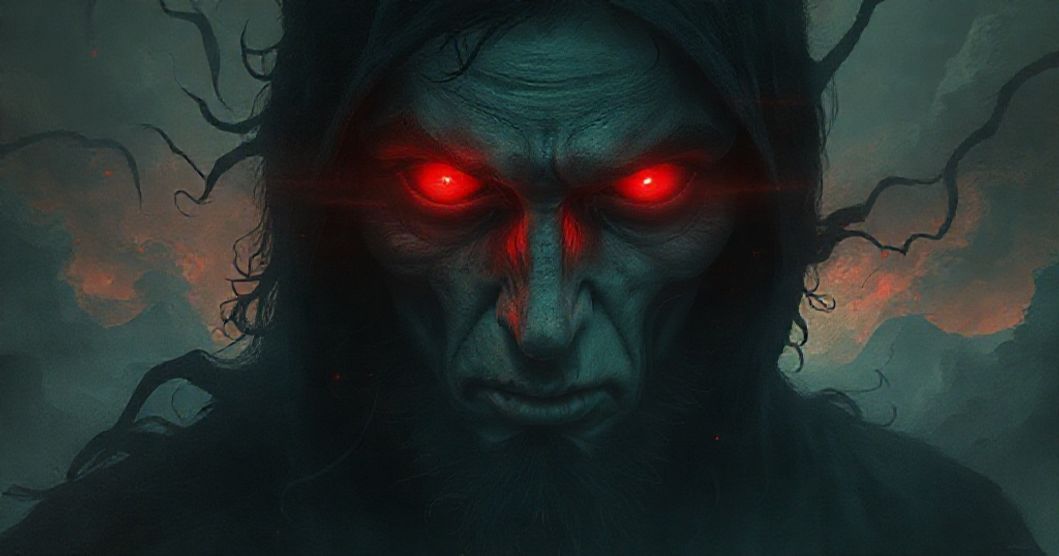
Dreams often serve as mirrors to our inner psychological landscapes, and this particular vision revealed a complex tableau of symbolic encounters. I awoke with the weight of a vivid dream pressing upon me, its details lingering like an unfinished puzzle. The first fragment unfolded in a dimly lit room where an elderly woman lay on her deathbed, surrounded by silent family members whose faces blurred into the shadows of grief. As she slipped toward unconsciousness, a figure materialized beside her—a man dressed in a sharp black suit, his presence both immediate and unsettling. Initially, only his left eye glowed with an eerie crimson light, as if containing a molten core of some forbidden knowledge. Then, as if triggered by an invisible signal, both eyes ignited with the same fierce radiance, and the old woman’s breath ceased. The man stood there, his gaze fixed on her form, and I felt a strange awareness that he was not merely observing death but extracting something from her—a soul, perhaps, or the last vestige of her life force. His suit was immaculate, but there was nothing comforting about his presence; it carried the cold precision of a judge or undertaker.
The scene shifted abruptly to a battlefield where warriors, their armor dented and weapons trembling, had just endured a brutal siege. They gathered in a circle, exhausted and wary, when the same man appeared among them. This time, his eyes were unmarked, his expression neutral as he spoke. They pleaded with him, gesturing toward their battered comrades and the collapsing structure they fought to defend. In exchange for a brief reprieve, they offered what seemed like a solemn bargain. The man listened, then slowly raised his left eye, which now glowed crimson—just as before. He spoke in a voice that carried no warmth: 'When my second eye glows, your time’s up.' Almost immediately, his right eye ignited, and the warriors’ movements froze. Their breath hitched, their weapons clattered to the ground, and one by one, they fell silent, their bodies slumping forward in a collective surrender to stillness.
I watched as an invisible spectator as the man turned and walked away, only to be joined by another figure. This companion was reptilian in form, its scales glistening green beneath a light brown robe that billowed slightly as if caught in an unseen breeze. The reptilian entity moved closer to the man, and together they departed, leaving the battlefield in stunned silence.
Want a More Personalized Interpretation?
Get your own AI-powered dream analysis tailored specifically to your dream
🔮Try Dream Analysis FreeNotably, this figure was distinct from the 'Hat Man' phenomenon described by others. He wore no hat, his attire was strictly formal—a black suit that suggested authority rather than anonymity. The crimson eyes, the suit, and the dual presence of the reptilian companion all felt deeply symbolic, yet I could not yet name their meaning.
Part 2: Clinical Analysis
Symbolic Landscape: Decoding the Dream’s Visual Language
The red-eyed figure in a black suit represents a multifaceted archetype that intersects with themes of mortality, power, and psychological projection. In dream symbolism, red eyes often signify intense emotional states—rage, fear, or suppressed anger—manifesting as luminous, almost predatory energy. The left eye’s initial glow may symbolize a focus on personal intuition or hidden fears, while the right eye’s subsequent illumination introduces a more balanced (yet equally threatening) perspective, suggesting a dual nature or conflicting aspects of the self. The black suit, formal and authoritative, contrasts with the Hat Man’s anonymity, instead embodying social roles or professional identities that may feel oppressive or judgmental.
The deathbed scene functions as a threshold between life and death, where the old woman’s transition becomes a metaphor for endings—whether literal losses, career changes, or the surrender of old habits. The 'extraction' of her soul (or life force) by the red-eyed figure suggests unresolved emotional attachments or a fear of losing control over significant life transitions. In Jungian terms, this could represent the shadow’s attempt to reclaim parts of the self that feel lost or abandoned.
The warrior group and their battle symbolize internal or external conflicts—perhaps facing overwhelming challenges, relationships in crisis, or professional pressures. Their negotiation for time and subsequent defeat mirror the struggle to find balance between action and surrender. The reptilian companion, dressed in a light brown robe, introduces a primal, instinctual element. Reptilian imagery often relates to the shadow self—primordial fears, survival instincts, or repressed desires that feel threatening when acknowledged.
Psychological Undercurrents: Theoretical Perspectives
From a Freudian lens, the red-eyed figure might represent repressed anger or guilt, particularly if the dreamer has unresolved conflicts with authority figures or feels judged by societal expectations. The black suit could symbolize the dreamer’s professional persona or fear of being 'watched' in social situations. The warriors’ defeat by the time-limited bargain suggests an inability to reconcile competing demands—work vs. personal life, for example—with a sense of inevitability.
Jungian psychology frames this dream as an encounter with the shadow archetype, particularly the 'wise old woman' (deathbed figure) and the 'wise old man' (red-eyed figure) as complementary aspects of the self. The reptilian companion may represent the shadow’s primal, instinctual nature, while the black suit embodies the persona’s social面具. The time limit ('When my second eye glows, your time’s up') reflects the dreamer’s awareness of existential deadlines—perhaps approaching milestones or feeling pressured to make decisions.
Cognitive dream theory suggests this narrative processes emotional information about mortality, conflict, and integration. The brain’s default mode network, active during dreaming, synthesizes recent experiences—maybe a recent loss, a stressful project, or relationship tension—into symbolic imagery that feels more manageable than waking reality.
Emotional & Life Context: Unpacking the Dreamer’s Inner World
The dream likely emerges from a period of significant transition or existential questioning. The deathbed scene may reflect anxiety about aging, mortality, or the loss of loved ones. The warriors’ battle suggests ongoing conflict—perhaps in relationships, career, or self-identity. The red-eyed figure’s dual nature (first left eye, then both eyes) hints at a growing awareness of internal dualities: light and dark, control and surrender, reason and emotion.
The reptilian companion introduces a layer of primal fear or survival instinct, suggesting the dreamer may be confronting deep-seated anxieties about authenticity or whether they’re 'predatory' in their interactions. The light brown robe worn by the reptilian figure contrasts with the man’s black suit, creating a visual tension between formality and primal nature—a possible commentary on the tension between social expectations and authentic self-expression.
Therapeutic Insights: Integrating the Dream’s Lessons
To integrate these symbolic elements, the dreamer might begin by journaling about recent life events that evoke similar emotions: endings, conflicts, or feelings of being 'watched.' Reflective questions could include: 'When do I feel most like I’m facing a 'red-eyed figure' in my life?' or 'What deadlines feel most urgent, and how do they affect my sense of self?'
Mindfulness practices focusing on breath awareness during moments of anxiety could help process the fear symbolized by the red-eyed figure. By acknowledging the shadow aspects represented by the reptilian companion, the dreamer can begin to differentiate between instinctual reactions and intentional choices.
Actionable steps might include: scheduling regular self-reflection time to identify dualities in daily life; creating a 'shadow inventory' of fears and desires; and practicing surrender techniques (e.g., meditation on impermanence) to address the time-limited anxiety.
FAQ Section: Addressing Key Questions
Q: What does the dual glowing eyes symbolize?
A: The left eye’s initial glow represents intuitive or repressed emotions, while the right eye’s illumination introduces a more integrated awareness. Together, they suggest the dreamer is processing dual aspects of a conflict or transition.
Q: Is the reptilian figure a negative symbol?
A: Not necessarily. Reptilian imagery often reflects primal survival instincts, which can be either threatening or protective. Its presence may signal the need to honor instinctual wisdom alongside rational thought.
Q: How should I respond to recurring elements like the time limit?
A: Consider what 'time' feels most urgent in your life. The dream may urge you to clarify priorities and practice surrender to the natural flow of events rather than resisting deadlines.