
Part 1: Dream Presentation
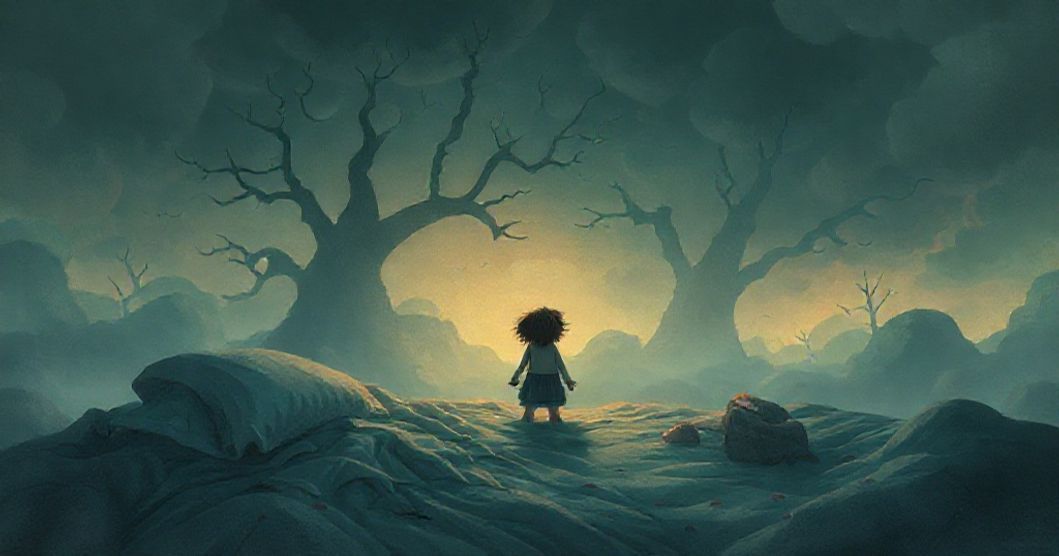
Dreams possess an uncanny ability to preserve emotional states long after their literal content fades, and for this 20-year-old, childhood nightmares have left an indelible mark on their psychological landscape. Since early childhood, the user has experienced intense, recurring nightmares characterized by a specific dread and sense of disproportion—most vividly, the disorienting feeling that their thumbs are abnormally large, akin to the distortions described in Alice in Wonderland syndrome. These nightmares, spaced years apart, consistently feature dark, underground tunnels and tasks that feel impossibly overwhelming, always centered on confronting an enormous, inescapable evil. Though years have passed without such nightmares, the emotional residue persists in fleeting moments of dread when awake, as if momentarily re-entering those childhood terror landscapes. The first, clearest nightmare occurred at age five: walking beside a construction site where men in white space suits worked on white, spaceship-like structures. A small yellow flower caught their eye on the roadside, and as they reached to pick it, one of the men stepped on it, crushing the delicate bloom beneath heavy boots. Subsequent dreams grew darker, depicting battles against a shadowy, formless mass that threatened to engulf the world, with the user tasked with impossible missions—like filling underground tunnels with darkness or navigating a mechanical system that felt both alien and evil. The recurring theme of 'impossible tasks' paired with overwhelming dread suggests an underlying fear of powerlessness, while the disproportionate thumbs and tunnel imagery hint at a distorted relationship with one's own body and environment. The emotional core remains a persistent anxiety, now seemingly tied to unprocessed childhood experiences, with the dreams acting as a recurring narrative of innocence lost and overwhelming threats that couldn't be overcome.
Part 2: Clinical Analysis
Symbolic Landscape: The Dark Mass and Disproportionate Thumbs
Want a More Personalized Interpretation?
Get your own AI-powered dream analysis tailored specifically to your dream
🔮Try Dream Analysis FreeThe recurring elements in these nightmares carry profound symbolic weight that extends beyond mere childhood terror. The construction site with white space suits and spaceship-like structures introduces a juxtaposition of order and menace: the sterile, futuristic environment of human-made progress contrasts sharply with the user's innocent curiosity (represented by the yellow flower). The flower, a symbol of fragile beauty and childhood wonder, becomes a victim of destruction, its crushing by a 'space-suited' figure suggesting the intrusion of adult authority or industrial forces into vulnerable, natural spaces. This dynamic reflects a common childhood anxiety about the loss of innocence in the face of adult-dominated systems. The 'enormous evil power'—a formless, shadowy mass—represents a collective archetype of existential dread, often manifesting in dreams as an abstract, overwhelming force that cannot be named or controlled. In Jungian psychology, this figure aligns with the shadow archetype: the repressed, unintegrated aspects of self that feel threatening and unknown. The tunnel imagery further emphasizes this sense of entrapment, as underground spaces symbolize the unconscious mind—where these repressed fears reside. Most striking is the 'disproportionate thumbs' sensation, described as similar to Alice in Wonderland syndrome (a condition involving visual distortions). This bodily disorientation is not merely a physical symptom but a psychological metaphor for feeling 'out of alignment' with one's environment—a distortion of self-perception that occurs when the mind feels overwhelmed by external pressures.
Psychological Currents: Jungian and Freudian Perspectives
Freudian theory posits that childhood anxieties manifest in dreams as symbolic representations of repressed desires or fears. For this user, the 'impossible tasks' and overwhelming evil power likely reflect unresolved developmental conflicts from early childhood. The age of five coincides with the emergence of concrete operational thinking, where children begin to grapple with complex social and environmental realities, often feeling inadequate in the face of adult responsibilities and threats. The construction site, with its ordered, mechanical world, may symbolize the rigid structures of childhood expectations—rules, authority figures, and societal pressures that feel inescapable. Jungian analysis offers a complementary perspective, viewing the 'enormous evil power' as a projection of the shadow self: the parts of the psyche that feel alien, threatening, or uncontrollable. By personifying this shadow as an external, overwhelming force, the dreamer externalizes internal conflicts that remain unintegrated. The tunnel system, in this context, becomes the unconscious threshold where the shadow must be faced—a journey toward self-understanding that the dreamer's psyche may have been avoiding for years. The recurring nature of these nightmares, spaced years apart, suggests that the shadow archetype's integration remains incomplete, as the psyche continues to revisit this unprocessed material. Neuropsychologically, this aligns with the role of REM sleep in memory consolidation: recurring nightmares may indicate that the brain is attempting to process emotionally charged memories, struggling to resolve the emotional conflict encoded in those early experiences.
Emotional and Life Context: Unfinished Business of Childhood
The persistence of these nightmares into adulthood, even without their literal recurrence, reveals a deeper emotional pattern. The user's description of 'a surge of the feeling' when awake suggests that the emotional charge of these dreams has become a part of their emotional baseline—a persistent anxiety that may be triggered by current life stressors. The 'impossible tasks' in the dreams likely represent feelings of being overwhelmed by responsibilities or expectations that feel beyond one's control, whether in academic, social, or personal domains. For a 20-year-old navigating young adulthood, these dreams may symbolize the transition from childhood dependence to adult independence, with the 'evil power' representing the complex, often terrifying reality of adult life that feels both inescapable and incomprehensible. The recurring nature across years also hints at developmental stages where new challenges emerge: adolescence, with its own set of social and identity struggles, may reawaken these childhood fears as the mind confronts similar feelings of inadequacy in new contexts. The user's mention of 'not having had nightmares in years' suggests a temporary resolution, possibly through natural maturation or unconscious processing, but the lingering emotional residue indicates that these dreams were not merely random childhood events but deeply tied to core identity formation.
Therapeutic Insights: Reclaiming Control and Understanding
For the user, these dreams offer an opportunity for therapeutic exploration rather than fear. The first step is recognizing that the 'impossible tasks' are not literal but symbolic—representing feelings of powerlessness, not actual threats. Journaling exercises can help map the emotional triggers of the dreams, connecting them to waking experiences that feel similarly overwhelming. By separating the dream's emotional intensity from its literal content, the user can begin to reframe these nightmares as messages rather than portents of doom. A practical exercise involves 'reparenting' the inner child in waking life: when the feeling of dread arises, the user can acknowledge it as a child would and offer comfort, validating the fear rather than suppressing it. This process of emotional containment helps integrate the shadow aspects represented in the dreams. Cognitive-behavioral techniques may also be useful in addressing the 'disproportionate body' sensations: grounding exercises that focus on sensory awareness (feeling one's feet on the ground, the weight of the body) can counteract the dissociation and disorientation. Over time, these practices help rebuild a sense of bodily control and self-efficacy, directly addressing the 'powerlessness' themes in the dreams. Finally, the recurring nature of the dreams across years suggests an underlying emotional pattern that may require exploration in waking life—perhaps through therapy—to uncover the root causes of this persistent anxiety.
FAQ Section
Q: Why do the nightmares feel so vivid even years later?
A: The emotional intensity of these dreams becomes deeply encoded in memory, creating a lasting emotional residue that triggers dissociative-like sensations during waking life. The brain struggles to process unresolved childhood fears, keeping them alive as symbolic messages.
Q: How can I distinguish between a real threat and the dream's symbolic meaning?
A: Dreams reflect emotional states, not literal threats. The 'impossible tasks' likely represent feelings of being overwhelmed by responsibilities or expectations, not actual dangers. Grounding techniques and mindfulness can help separate dream anxiety from waking reality.
Q: Is there a connection between the yellow flower and the dark mass?
A: Yes—the flower symbolizes childhood innocence and potential, while the dark mass represents the fear of that innocence being destroyed. This creates a narrative of protection vs. annihilation, common in dreams about lost opportunities or threatened vulnerability.