
Part 1: Dream Presentation
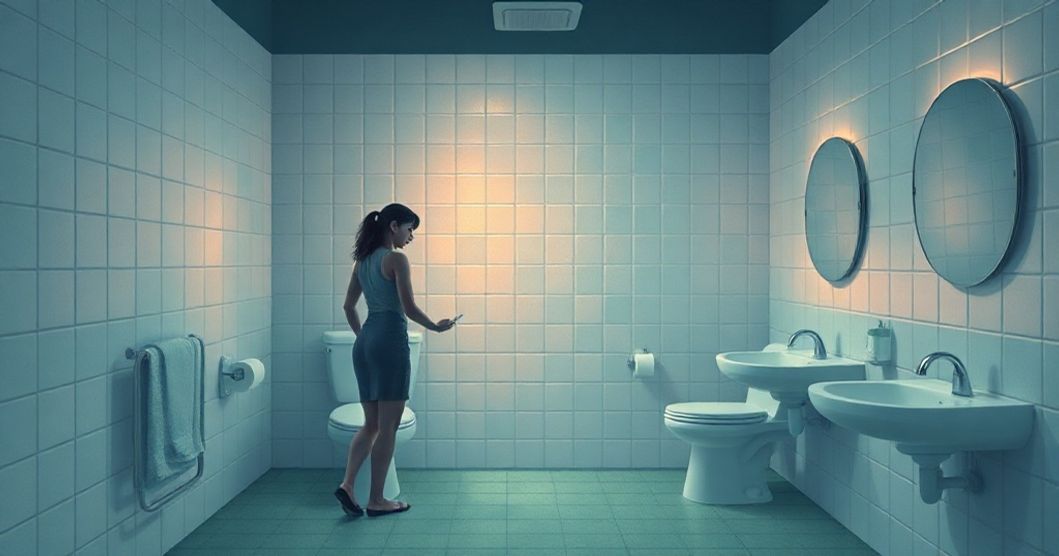
Dreams often surface with cryptic imagery that lingers in our consciousness long after waking, and this particular nocturnal vision offers a vivid tableau of bathroom options, each carrying symbolic weight beneath its surreal surface. The dreamer found themselves presented with three distinct toilet configurations within a liminal space: the first haunted by a green ghost child, the second lacking structural integrity with an unsettling substance on the floor, and the third explicitly labeled 'NOT A TOILET.' The room itself lacked a proper door, instead featuring frayed strings hanging in place of a threshold, while a queue formed outside, suggesting others awaited their turn to make similar choices. This dream’s elements—the unconventional toilet options, spectral presence, and boundary-less environment—crystallize into a powerful metaphor for the dreamer’s internal landscape of choices, fears, and unresolved emotional patterns.
The first bathroom option, haunted by a green ghost child, introduces a spectral figure that likely represents unresolved childhood anxieties or repressed emotions. In dream symbolism, children often embody aspects of our inner selves that remain unintegrated, while green can signify envy, growth, or contamination. The 'haunted' quality suggests these feelings persistently intrude on the dreamer’s sense of safety and control, much like an unwanted presence in a private space.
The second option, with its broken structure and floor covered in an unspecified substance, evokes themes of dysfunction and inadequacy. A toilet without a base implies instability or a lack of foundational support, while the 'substance' on the floor likely symbolizes repressed feelings or behaviors that have 'leaked' into waking life. This imagery may reflect concerns about personal shortcomings or fears of failure in contexts where the dreamer feels expected to 'perform' or 'function' properly.
Want a More Personalized Interpretation?
Get your own AI-powered dream analysis tailored specifically to your dream
🔮Try Dream Analysis FreeThe third option, labeled 'NOT A TOILET,' stands as a deliberate rejection of conventional norms, suggesting the dreamer is questioning established paths or societal expectations. This explicit labeling hints at a desire to deviate from prescribed roles or standards, even as the dreamer grapples with the uncertainty of what alternatives might exist. The absence of a proper door—replaced by strings—amplifies this sense of vulnerability and exposure, as if the dreamer feels their boundaries are porous or negotiable.
Finally, the queue forming outside the bathroom underscores social pressure and collective expectations. The dreamer is not alone in facing these choices, suggesting shared anxieties about cleanliness, functionality, and conformity. The strings instead of a door create a paradox: the room feels both open and restricted, reflecting the tension between the dreamer’s need for privacy and the pressure to conform to external standards.
Part 2: Clinical Analysis
Symbolic Landscape: Toilets, Ghosts, and Boundaries
Toilets in dreams universally symbolize control over bodily functions, emotional release, and basic needs. The three distinct toilet options in this dream represent different approaches to managing these fundamental aspects of life. The haunted toilet introduces the supernatural element of a green ghost child, which in dream psychology often signifies unresolved childhood issues or repressed emotions. The green hue may indicate envy or contamination fears, while the child’s spectral nature suggests these concerns persistently haunt the dreamer’s psyche despite attempts to move past them.
The broken toilet, with its exposed 'substance' on the floor, embodies dysfunction and the fear of failure. In Freudian terms, this could represent unresolved conflicts around cleanliness or control—areas where the dreamer feels their life lacks structural integrity. The 'substance' on the floor, though unspecified, likely mirrors the dreamer’s internal 'messiness' or unprocessed emotions that have 'leaked' into waking life. This imagery often surfaces when individuals feel overwhelmed by responsibilities or relationships that feel unstable.
The 'NOT A TOILET' option is a crucial symbolic pivot, representing the dreamer’s resistance to traditional norms or societal expectations. This explicit rejection of the toilet archetype suggests a desire to explore alternative paths or question what is considered 'functional' or 'normal.' The labeling itself underscores the dreamer’s awareness of this alternative, even as the dream world remains constrained by the same rules that govern waking choices.
The room’s lack of a door—replaced by strings—represents the dreamer’s relationship with boundaries. Strings, though functional, lack the solidity of a door, symbolizing porous personal boundaries or the feeling that one’s private space is vulnerable to external influences. The queue outside reinforces this theme of collective pressure, as others wait to make similar choices, suggesting the dreamer is not alone in grappling with these boundary issues.
Psychological Undercurrents: Jungian and Modern Interpretations
From a Jungian perspective, this dream operates at the level of the collective unconscious, where archetypal imagery like the 'haunted' space reflects the shadow self—the parts of ourselves we disown or fear. The green ghost child could represent the dreamer’s 'shadow child,' aspects of themselves they have neglected or projected onto others. The toilet options then become manifestations of how the dreamer attempts to 'process' or 'contain' these shadow elements.
Freudian analysis would likely focus on the toilet as a symbol of childhood conflicts, particularly around cleanliness and control. The 'haunted' toilet might reflect unresolved Oedipal or anal-stage issues, while the broken toilet could symbolize feelings of inadequacy in meeting societal standards of hygiene or responsibility. The 'NOT A TOILET' option would then represent the dreamer’s unconscious resistance to these repressed demands.
Modern cognitive dream theory, however, views dreams as problem-solving mechanisms. The dreamer’s mind may be processing recent life changes or decisions by creating this surreal scenario—a way to visualize the 'options' they face in waking life. The queue outside suggests the dreamer is experiencing social pressure to conform, while the string door represents the fragile nature of their current boundaries.
Neuroscientifically, this dream reflects the brain’s attempt to integrate disparate emotional experiences into coherent narratives. The disjointed elements—the ghost, broken toilet, and non-toilet option—may correspond to fragmented waking experiences the dreamer is struggling to process. The lack of a door and forming queue activate the brain’s default mode network, which processes self-referential thoughts and social cognition.
Emotional Context: Uncertainty and the Weight of Choices
The dreamer’s emotional response—'toilet dreams are so weird'—highlights the dissonance between the dream’s surreal imagery and waking reality. This discomfort likely mirrors underlying anxieties about decision-making and societal expectations. The dream’s emphasis on 'options' suggests the dreamer is at a crossroads in waking life, facing choices that feel equally unsettling.
The green ghost child introduces a layer of fear or unease that may stem from unresolved childhood experiences. Perhaps the dreamer is revisiting a period of uncertainty or feeling 'haunted' by past mistakes. The broken toilet, with its exposed floor substance, could represent fears of 'contamination' or inadequacy in professional or personal contexts. The 'NOT A TOILET' option, by contrast, signals a desire to step outside conventional paths, even as the dreamer hesitates to fully embrace this alternative.
The queue outside the bathroom underscores social pressure to conform to certain standards. The dreamer may feel others are judging their choices or waiting for them to 'choose correctly,' creating a sense of performance anxiety. The lack of a proper door amplifies this vulnerability, as the dreamer feels exposed in their decision-making process.
Therapeutic Insights: Integrating Dream Symbolism into Waking Life
This dream offers several opportunities for self-reflection. First, the dreamer should explore their relationship with societal expectations around 'functionality' and 'productivity.' The 'NOT A TOILET' option suggests a need to question whether they are forcing themselves into roles that no longer serve them, or whether they are resisting necessary changes.
Journaling exercises could help unpack the green ghost child’s significance. Asking: 'What childhood fears or emotions feel