
Part 1: Dream Presentation
Dreams serve as the unconscious mind’s storytelling medium, weaving together fragments of memory, emotion, and desire into narratives that often feel more real than our waking lives. This particular dream, spanning decades of the dreamer’s life, offers a rich tapestry of symbolic imagery and emotional resonance that invites deeper exploration. The recurring journey through identical doorways, the compulsion to follow a specific order, and the increasingly terrifying threshold at door 239 all point to a psychological landscape where fear, protection, and existential questions converge.
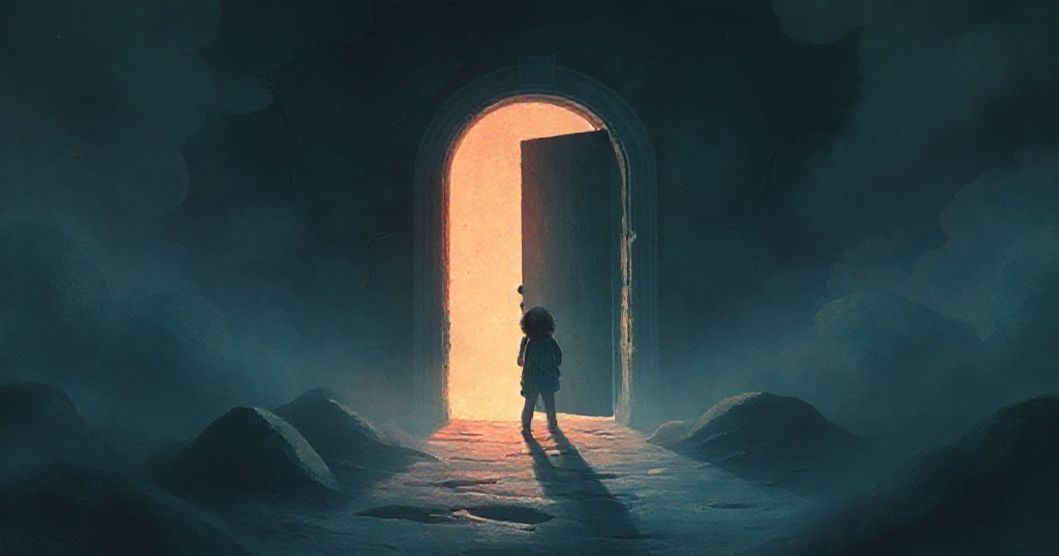
I’ve carried this dream with me since childhood—a ritualistic journey through identical doorways that unfolds with mechanical precision. Every time I enter, I must follow a rigid sequence of actions, as if performing a sacred incantation. If I deviate, the dream resets, erasing my progress like a erased pencil mark on paper. At six years old, this felt like a game; now, at twenty-something, it’s a psychological labyrinth I’ve traversed hundreds of times in my mind. Last week, something changed. I reached door 239, my breath catching as I cracked it open. Instead of the familiar room or corridor beyond, a vacuum-like force surged inward, pulling me toward an abyss of pure, inky darkness. The fear I felt wasn’t just terror—it was existential dread, a primal knowing that this darkness threatened to consume something essential about me. Nothing compared to the weight of that darkness. As the door slammed shut behind me, the vacuum’s suction threatening to suck my very consciousness into the void, I instinctively cried out the only phrase I could think of, a plea born of desperation: “JESUS S–” My voice cut off mid-sentence, and I jolted awake, heart pounding, sheets soaked with sweat, the memory of that darkness still clinging to my skin like a physical presence. I’ve never understood why this dream persists, or why this particular door felt so profoundly threatening. It’s as if the door itself is a threshold to something I’m not ready to face—or perhaps something I’ve been avoiding my entire life.
Part 2: Clinical Analysis
Want a More Personalized Interpretation?
Get your own AI-powered dream analysis tailored specifically to your dream
🔮Try Dream Analysis FreeSymbolic Landscape of the Recurring Dream
The recurring door in this dream functions as a powerful symbolic threshold—a Jungian archetype representing life’s transitions, new beginnings, and potential dangers. In dreams, doors typically signify entry into the unconscious, self-discovery, or confrontation with repressed aspects of the psyche. The dreamer’s compulsion to follow a specific order suggests a need for control in an otherwise chaotic inner world, while the act of restarting upon deviation reveals a fear of failure or a punitive inner critic. The number 239, appearing as the “239th door,” introduces numerology—a symbolic language where numbers carry deeper meaning. In numerology, 239 breaks down to 2+3+9=14, then 1+4=5, suggesting themes of change, freedom, or life direction. However, the dream’s focus on the number 239 as a threshold suggests this particular number marks a significant developmental milestone or unresolved issue.
The vacuum-like force pulling darkness represents the unconscious’s tendency to suck in unresolved emotions, memories, or fears. In dream symbolism, darkness often signifies the unknown, repressed aspects of the self, or existential uncertainty. Unlike other nightmares (the chainsaw, boiling flesh), this darkness is not a literal hellscape but a more abstract void, emphasizing the dreamer’s fear of existential annihilation or loss of identity. The “vacuum” metaphorically represents how the unconscious can feel overwhelming, pulling us into states of confusion or despair when we avoid confronting our deepest fears.
Psychological Framing: Childhood, Repetition, and Unconscious Protection
From a psychological perspective, this dream’s recurrence since childhood suggests a repetition compulsion—a Freudian concept where the unconscious repeats traumatic or unresolved experiences to master them. The dreamer’s ability to recognize when they’re dreaming (lucid dreaming) adds another layer: the dreamer is aware of the compulsion, yet unable to stop it, indicating a conflict between conscious awareness and unconscious needs. The six-year-old origin of the dream suggests early childhood experiences that established this pattern—perhaps a time of uncertainty, fear of abandonment, or unresolved separation anxiety.
Jungian analysis might interpret the door as the “threshold guardian”—a symbol of the shadow self, the parts of ourselves we reject or fear. The compulsion to follow a specific order could represent the dreamer’s attempt to impose structure on an inherently chaotic unconscious. The “restarting” upon deviation suggests a fear of not being “good enough” or a punitive internalized parent figure. The dream’s persistence despite the dreamer’s awareness hints at a deeper need to process something fundamental about their relationship with fear and safety.
Emotional Resonance: Fear, Salvation, and Existential Threats
The dream’s emotional core centers on existential fear—the feeling that the darkness represents not just a literal danger but a metaphor for losing one’s sense of self or purpose. The contrast between this dream and others (chainsaw, boiling flesh) highlights the unique terror of the unknown. The “worse than any nightmare” quality suggests this particular fear taps into primal anxieties about mortality, meaninglessness, or isolation. The desperate invocation of “Jesus S–” reveals spiritual yearning—a plea for protection against the existential void. This phrase is cut off mid-sentence, symbolizing the dreamer’s struggle to articulate their spiritual needs or the suddenness of awakening. In dreams, religious invocations often represent the unconscious’s search for meaning, morality, or a higher power to counter existential fears.
The dreamer’s lucid awareness within the dream (knowing they’re asleep) adds another dimension: the mind is both in control and yet paralyzed by fear, a paradox common in lucid dreams where the dreamer can’t fully control the dream’s direction. This contradiction reflects the waking self’s internal conflict: knowing rationally that the fear is symbolic, yet feeling its visceral power. The “JESUS” invocation suggests the dreamer’s unconscious recognizes the need for spiritual or emotional “salvation” from existential threats, even if the waking self hasn’t fully integrated this understanding.
Therapeutic Insights: Navigating Repetitive Dreams
Therapeutic approaches to recurring dreams involve exploring the emotional triggers, symbolic meanings, and personal associations. For this dream, journaling exercises can help the dreamer map out the sequence of events, noting how the dream feels different at each stage. Specifically, focusing on the moment of reaching door 239 and the vacuum force can reveal what the dreamer is avoiding in waking life—perhaps a major life transition, career change, or relationship shift that feels as threatening as the darkness.
Dream incubation, where the dreamer intentionally sets an intention before sleep, might help rewrite the dream’s outcome. By focusing on “opening the door with courage” or “seeing light instead of darkness,” the dreamer can work with the unconscious to reframe the threshold as an opportunity rather than a threat. Mindfulness practices, particularly around uncertainty, can help the dreamer develop tolerance for the unknown, reducing the fear associated with the vacuum and darkness.
FAQ Section
Q: What does it mean to have a recurring dream about doors?
A: Recurring doors symbolize life transitions, unresolved issues, or unconscious thresholds. The dreamer’s need for order suggests a fear of uncertainty, while the repetition indicates a need to confront or integrate something essential.
Q: Why does the darkness feel more threatening than literal hell?
A: Abstract darkness represents existential fear (loss of self, purpose) rather than concrete punishment. It taps into primal anxieties about mortality or isolation, making it more psychologically resonant than literal imagery.
Q: How can the dreamer work with this recurring nightmare?
A: Journal the dream’s details, explore the emotional trigger at door 239, and practice mindfulness around uncertainty. Consider working with a therapist to unpack childhood origins and spiritual yearnings tied to the “Jesus” invocation.