
Part 1: Dream Presentation
Dreams often serve as mirrors to our unconscious, reflecting tensions we may not fully acknowledge in our waking lives. This particular nightmare, vividly recounting a city overrun by uncanny dopplegangers, a mother who responds to identity questions with a single number, and a father who ignores warnings, offers a compelling narrative rich with symbolic potential. The dream begins with a moment of vulnerability: waking at 5 AM, returning to sleep, only to be ensnared in a world where human identity itself feels unstable and threatening. The dopplegangers, described as resembling those in Tokyo Ghoul, embody a primal fear of being replaced or losing one’s sense of self—a fear that transcends cultural boundaries and taps into universal anxieties about authenticity.
The dream’s narrative unfolds through increasingly intimate settings, starting with a public, threatening environment and ending in the most private of spaces: home. In the city, dopplegangers replace people and act out violence, their inability to provide names (responding only with numbers) emphasizing their inhuman, non-individual nature. This echoes Jung’s concept of the shadow archetype—those parts of ourselves we disown, yet which persistently seek integration. The mother, initially kind but ultimately revealing herself through a number, represents a deeper anxiety about the reliability of familial bonds. Her 'unnatural kindness' and subsequent betrayal when asked for her name (a fundamental marker of identity) create a paradoxical emotional landscape where safety and danger intertwine. Finally, the father’s refusal to heed the warning to stay outside suggests a conflict between protective instincts and inevitable exposure to threat, a common theme in dreams about parental roles and generational vulnerability.
Part 2: Clinical Analysis
Want a More Personalized Interpretation?
Get your own AI-powered dream analysis tailored specifically to your dream
🔮Try Dream Analysis FreeSymbolic Landscape: The Language of Numbers and Doppelgängers
The dopplegangers in this dream represent a multifaceted symbolic threat. In psychological terms, dopplegängers are classic manifestations of the 'double' archetype—a Jungian concept representing the shadow self or repressed aspects of the psyche. These figures in the dream are not merely evil but 'unnatural' in their replacement of real people, suggesting a fear of losing authenticity in relationships or social contexts. The Tokyo Ghoul reference adds cultural resonance, where ghouls embody the fear of predation and loss of humanity, here transposed onto dopplegangers who 'do something bad' to humans—extending this fear to include not just physical harm but existential violation of identity.
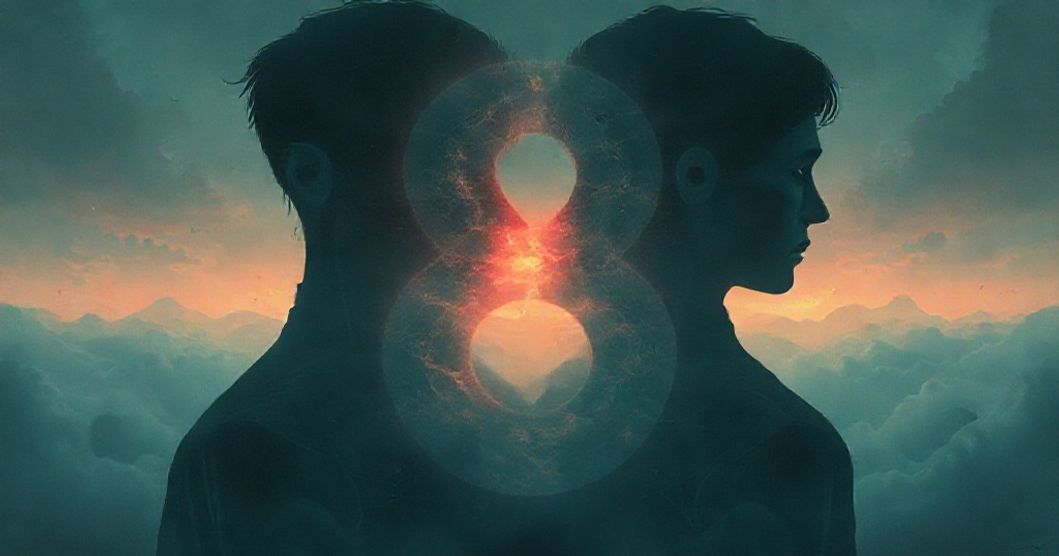
The number '8' as the mother’s 'name' is particularly significant. Numerology offers multiple interpretations: in many traditions, 8 symbolizes infinity, new beginnings, or balance (the 'infinite loop' of a figure-eight). However, in the context of this nightmare, it likely carries negative connotations tied to anxiety about identity collapse. Numbers in dreams often represent abstract concepts rather than literal values; here, '8' could symbolize a sense of being 'trapped' or 'cycled'—a recurring pattern in the dreamer’s life that feels inescapable. The mother’s response to '8' instead of a name is a powerful symbol of how familial bonds can become reduced to meaningless numbers or labels, stripping relationships of their human essence.
The home setting, typically a safe haven, becomes a site of threat in this dream, subverting the archetypal 'safe space' into a place of betrayal. This reversal suggests the dreamer may feel that home, once a source of security, has become destabilized by underlying anxieties about relationships or self-worth. The father’s role as the final betrayal—ignoring the warning to enter—completes this destabilization, as parental figures often represent protection and continuity. His refusal to heed the warning may reflect the dreamer’s struggle with accepting vulnerability or the inevitability of facing threats in life.
Psychological Perspectives: Threat Simulation and Unconscious Conflict
From a cognitive neuroscience perspective, dreams like this one may function as 'threat simulation,' a theory suggesting that dreams help process and rehearse responses to potential dangers. The repetitive nature of the nightmare (described as 'way too many nightmares for quite some time') indicates an unresolved conflict or persistent anxiety needing processing. The dopplegangers and their violence represent not literal threats but symbolic ones—the dreamer’s mind is rehearsing how to respond to situations where trust is violated or identity is questioned.
Jungian analysis would emphasize the shadow archetype’s manifestation in the dopplegangers. The shadow, according to Jung, contains repressed aspects of ourselves we fear or reject. The dopplegangers, being 'human' yet not truly human, could represent parts of the dreamer’s psyche that feel alien or threatening—perhaps aspects of themselves they’ve disowned but which now 'haunt' their waking life. The mother’s 'unnatural kindness' might symbolize the dreamer’s attempt to maintain emotional safety through forced positivity, while the number '8' reveals the underlying emptiness beneath that performance.
Freudian interpretation would likely focus on unconscious conflicts around identity and familial bonds. The mother, a primary figure of nurturing, becoming a source of threat when her identity is questioned, could reflect unresolved Oedipal conflicts or fears of maternal rejection. The father’s role, though less central, might represent paternal authority and the dreamer’s relationship to rules and boundaries. His refusal to listen to the warning could symbolize the dreamer’s struggle to impose boundaries on others or to accept that some threats cannot be avoided.
Emotional & Life Context: Unpacking the Anxiety of Identity and Safety
Recurring nightmares often arise from persistent emotional states or unprocessed trauma. The dreamer’s mention of 'way too many nightmares' suggests a period of heightened anxiety or stress. The dopplegangers’ threat to replace people and the mother’s betrayal could reflect anxieties about professional or social contexts where authenticity is devalued. In modern life, the pressure to conform, perform, or be 'replaceable' in work or relationships might manifest as this fear of dopplegangers.
The number '8' as a mother’s name hints at a deeper fear of identity collapse—perhaps the dreamer feels that their relationships are being reduced to superficial labels or metrics ('8' as a score, a grade, or a number of something). This could relate to academic or professional pressures where self-worth is tied to quantifiable achievements rather than qualitative connections. The mother’s 'overly kind' demeanor might represent the dreamer’s attempt to maintain a positive emotional facade, while the underlying threat suggests that this facade is crumbling under the weight of unaddressed anxieties.
The father’s role in the dream, standing at the door despite the warning, may symbolize the inevitability of facing threats even when we warn others. This could reflect the dreamer’s struggle with letting go of control—knowing that some dangers are unavoidable, yet still trying to protect loved ones. The physical sensation of waking up 'sweatiest I have ever been' reinforces the emotional intensity of the dream, indicating that the unconscious is working hard to process something deeply disturbing.
Therapeutic Insights: Integrating the Dream’s Message
For recurring nightmares like this, therapeutic approaches often involve helping the dreamer unpack the emotional core of the imagery. A journaling exercise could help explore waking associations to dopplegangers, numbers, and parental figures. Asking: 'When do I feel most like a 'doppleganger'—like I’m not being myself?' or 'What numbers or labels feel most oppressive in my life?' can help identify the specific anxieties driving the dream.
Dream reprocessing techniques, such as changing the dream’s outcome, might help integrate the message. In a safe space, the dreamer could visualize themselves confronting the dopplegangers with confidence, reclaiming their identity, or asking the mother for a different 'name'—symbolizing the desire to rewrite the narrative of identity and safety. This active engagement with the dream’s symbols can help transform fear into empowerment.
For recurring nightmares, establishing a consistent sleep routine may reduce their frequency, as sleep disruption often triggers threat simulation dreams. Additionally, mindfulness practices to ground oneself in the present moment can help prevent the mind from spiraling into anxiety, which might be the root cause of the recurring threat imagery.
Finally, the dream’s message about identity and safety suggests the need to examine how the dreamer’s sense of self is defined. If the dopplegangers represent feelings of being 'replaceable' or 'inauthentic,' the dreamer might benefit from exploring values-based living—aligning actions with core beliefs rather than external expectations. This could involve setting boundaries with people or environments that feel threatening to authenticity.
FAQ Section
Q: Why do I keep dreaming about dopplegangers replacing people?
A: Doppelgänger dreams often reflect anxiety about identity loss or feeling 'not yourself' in relationships. They may signal that you’re questioning authenticity in social roles or feeling replaced by others’ expectations.
Q: What does the number '8' symbolize in this context?
A: In this nightmare, '8' likely represents a sense of being trapped or cycled—an inescapable pattern (like a figure-eight) or loss of identity (reducing a person to a number). It may reflect pressure to conform to quantifiable standards.
Q: Why does my mother appear as a source of threat in my dreams?
A: A mother’s betrayal in dreams often symbolizes fears of maternal rejection or feeling that safety can’t be trusted. It may reflect unresolved relationship issues or anxiety about maintaining emotional bonds under stress.