
Part 1: Dream Presentation
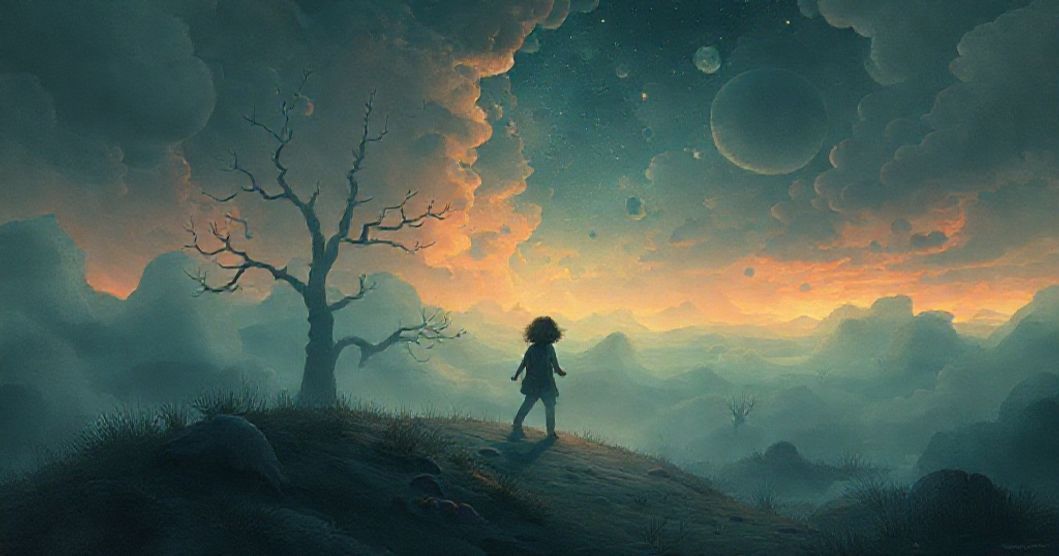
Dreams have long served as windows into the unconscious mind, revealing fragments of our deepest fears, desires, and unresolved emotional conflicts. In this particular dream narrative, the dreamer recounts recurring childhood nightmares that have persisted into recent years, suggesting a deeper psychological resonance. When I was between five and seven years old, I experienced a series of profoundly unsettling dreams that have haunted my memory ever since. One recurring nightmare unfolded in my grandmother’s house, a place that should have felt familiar yet existed in a distorted, uncanny reality. It was nighttime, and I found myself in the same room where I typically napped—yet this time, I’d somehow awakened within the dream itself. I saw my own body lying still on the bed, while my consciousness hovered above, trapped in a blue-tinged twilight where shadows clung to the walls like living things. The room felt both familiar and alien: the furniture was as it should be, but the corners swallowed light, and every shadow seemed to pulse with unseen movement. Then, from one of those shadowed corners, a tall, dark figure emerged—not quite human in its posture, yet undeniably present. It stared at me without moving, and I couldn’t scream or run; my body felt paralyzed by a cold dread. In a panic, I fled, racing down a narrow staircase that seemed to twist in impossible ways. As I tumbled downward, the steps blurred beneath me, and I woke with a gasp, heart pounding. Another dream unfolded on an endless staircase: I descended endlessly, though something unseen pursued me from above. The steps never ended, and my feet felt heavy with each descent, as if gravity itself opposed my escape. I’d look back, but there was nothing to see—only the endless flight of stairs stretching into darkness. On yet another occasion, I found myself in a labyrinthine alleyway reminiscent of Rio de Janeiro’s favelas, its narrow paths winding between crumbling structures. Four shadowy figures emerged from the darkness, their forms indistinct but their pursuit urgent. I ran blindly, the concrete walls closing in, until my mother’s voice shattered the dream, waking me in a sweat. She told me I’d been shaking violently, but I couldn’t recall the dream’s conclusion. Most recently, I revisited this dreamscape—the same grandmother’s house, the same blue-tinted room, the same sense of being trapped. This time, I woke not to my mother’s voice but to my brother, who’d come to rouse me for a meal. The dream felt unfinished, as if some primal urge demanded I return to face whatever awaited me in those shadowed corners.
Part 2: Clinical Analysis
Symbolic Landscape: Decoding the Dream’s Visual Language
Want a More Personalized Interpretation?
Get your own AI-powered dream analysis tailored specifically to your dream
🔮Try Dream Analysis FreeThe recurring elements in this dreamscape reveal a rich symbolic landscape worthy of exploration. The grandmother’s house, a central location, represents childhood security and maternal comfort, yet its distortion into an uncanny, shadow-filled space suggests the unconscious’s reworking of familiar environments to reflect underlying anxieties. The blue-tinged room, neither fully light nor dark, embodies the liminal space between waking and sleeping consciousness—a threshold where reality and fantasy blur, a common theme in childhood dreams. The dark figure in the corner, a classic archetype, likely represents the shadow self or repressed fears of the unknown. Its immobility before movement mirrors the paralysis of childhood helplessness, while the act of pursuit triggers the fight-or-flight response, a primal survival mechanism. The endless staircase, a recurring motif, symbolizes the psychological journey through unresolved issues; its inescapable nature suggests a feeling of being trapped in repetitive patterns of anxiety. The Rio-like alleyways, with their four shadowy figures, introduce a collective fear of urban isolation and the anonymity of threat, while the incomplete nature of the dream (awakened by mother and brother) hints at unresolved emotional threads from childhood.
Psychological Perspectives: Unpacking the Layers of the Unconscious
From a Freudian lens, these dreams may represent repressed childhood anxieties—perhaps fears of separation from caregivers, the terror of the dark, or unresolved conflicts about control. The inability to scream or run during the dream aligns with Freud’s concept of