
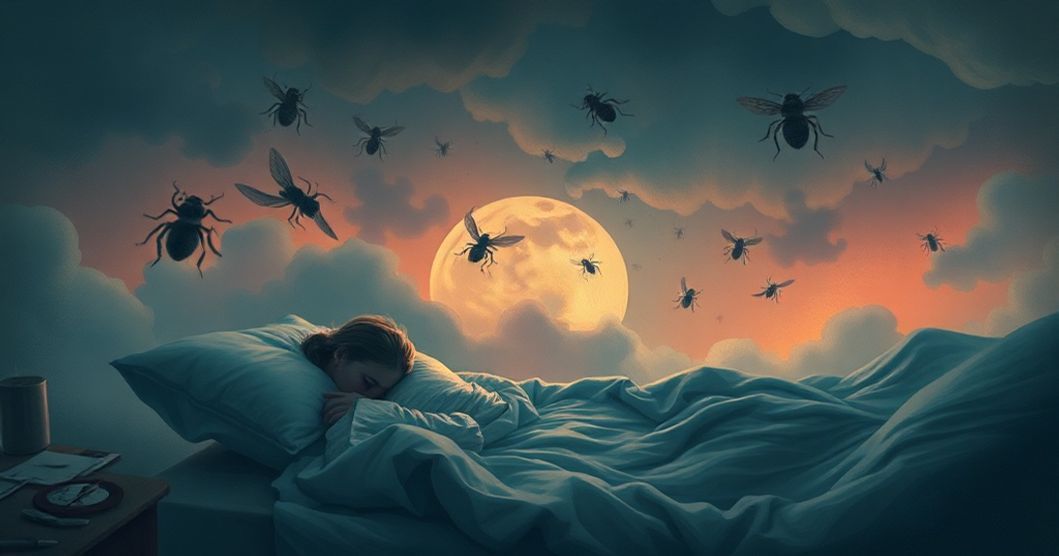
Part 1: Dream Presentation
Dreams that intrude upon our most vulnerable moments with visceral pain can leave an indelible mark on our sense of safety. This dream narrative recounts a recurring experience of physical suffering within sleep, where the boundary between dream and reality blurs as the body’s pain receptors seem to activate independently of external stimuli.
The dreamer describes multiple disturbing episodes: first, a giant centipede biting the ankle with a sharp, burning pain that radiates up the leg; second, a rat attacking the hand, peeling skin with a tearing, stinging sensation; and third, a bloody gash on the jaw accompanied by eye bleeding and stinging pain. Each dream evokes a visceral sense of violation and vulnerability, transforming sleep—a supposed sanctuary—into a battlefield where the body experiences pain as acutely as in waking life. The recurring theme of pests, creatures symbolizing decay and invasion, suggests deeper psychological undercurrents at play.
Part 2: Clinical Analysis
Want a More Personalized Interpretation?
Get your own AI-powered dream analysis tailored specifically to your dream
🔮Try Dream Analysis FreeSymbolic Landscape: The Language of Pain and Pest Imagery
The recurring pest imagery in these dreams carries significant symbolic weight. Centipedes and rats, often associated with filth and intrusion in waking life, serve as archetypal representations of "uninvited threats" in the dreamer’s unconscious. In dream psychology, such creatures frequently symbolize repressed anxieties or feelings of being "overwhelmed" by external pressures. The centipede’s segmented body and rapid movement might reflect fragmented emotions or a sense of being "attacked" from multiple directions in waking life.
The physical pain described—especially the peeling skin and tearing sensations—represents a more complex symbolic layer. Skin, as a primary boundary between the self and the external world, is a powerful symbol of vulnerability. When skin is violated in dreams (as in the rat’s attack), it often signifies feelings of exposure or a perceived loss of control over one’s boundaries. The stinging pain and bleeding further emphasize this theme of "breached safety," suggesting the dreamer feels emotionally exposed or under attack in waking life.
Psychological Perspectives: Understanding Pain in the Unconscious
From a Freudian perspective, these dreams may represent repressed conflicts manifesting as physical symptoms. The pest imagery could symbolize unresolved anxieties about control, cleanliness, or safety that the dreamer struggles to address consciously. Freud’s theory of "dream work" suggests that threatening imagery often disguises underlying emotional distress that the unconscious "protects" by transforming it into symbolic, less threatening forms—though in this case, the pain makes the symbolism particularly visceral.
Jungian psychology offers a complementary view, emphasizing the collective unconscious and archetypal imagery. The pest as a "shadow" archetype might represent aspects of the self that feel alien or threatening. The centipede, with its many legs, could symbolize the dreamer’s feeling of being "attacked from all sides" by internal or external pressures. The recurring nature of these dreams suggests the shadow aspect remains unintegrated, demanding attention.
Neuroscientifically, this phenomenon aligns with research showing that the brain’s pain-processing regions (including the anterior cingulate cortex and insula) remain active during REM sleep, the phase when most dreaming occurs. This explains why pain can feel so authentic in dreams: the brain’s neural networks for processing physical sensations remain engaged even when the body is at rest. The dreamer’s emotional state amplifies this activation, turning ordinary dream imagery into intensely painful experiences.
Emotional & Life Context: The Unconscious as Storyteller
The recurring theme of pest-related pain suggests an underlying emotional current that demands acknowledgment. Waking life stressors, such as anxiety about health, environmental concerns, or feelings of being "invaded" by responsibilities, might be manifesting symbolically. The dreamer mentions feeling "attacked" in vulnerable states, which could reflect real-life situations where boundaries are being crossed or control is being lost.
The disorienting nature of these dreams—pain in a state meant for relaxation—highlights a paradox: sleep, typically a time of restoration, becomes a site of emotional or psychological conflict. This could indicate that the dreamer is carrying unprocessed stress or trauma that seeks expression through physical sensation. The visceral nature of the pain might signal that the unconscious is trying to communicate urgency, urging the dreamer to address these underlying issues before they escalate into more severe emotional distress.
Therapeutic Insights: Bridging Dream and Waking Life
For the dreamer, these recurring nightmares offer an opportunity for self-reflection. Keeping a dream journal to document not just the events but also emotions and waking experiences can help identify patterns. Journaling might reveal connections between daily stressors and the pest imagery—perhaps work pressures, relationship conflicts, or environmental anxieties that feel overwhelming.
Grounding exercises before sleep could reduce the intensity of these dreams. Practices like progressive muscle relaxation or deep breathing help activate the body’s parasympathetic nervous system, signaling safety to the unconscious mind. Dream incubation—intentionally focusing on a question or concern before sleep—might help reframe the pest imagery into more manageable symbols, allowing the dreamer to process anxieties consciously.
Exploring the symbolic meaning of pests in waking life can provide clarity. What do these creatures represent in the dreamer’s life? Are there recurring themes of invasion, decay, or loss of control that need attention? Addressing these themes through journaling, therapy, or lifestyle adjustments can help integrate the unconscious messages into waking awareness, reducing the need for them to manifest as painful dreams.
FAQ Section: Navigating the Unusual
Q: Why do I feel pain so vividly in my dreams? A: The brain’s pain-processing regions remain active during REM sleep, and emotional intensity amplifies this experience. The mind-body connection in dreams often creates the illusion of real pain, especially when anxieties are high.
Q: Are these pest dreams a sign of mental illness? A: Recurring nightmares with intense pain are common and not inherently pathological. They often reflect stress, unresolved anxiety, or boundary issues. Persistent distress suggests exploring underlying themes through journaling or therapy.
Q: How can I stop these painful dreams? A: Try pre-sleep relaxation techniques, dream incubation to reframe symbols, and journaling to process waking anxieties. If dreams persist, consider discussing with a therapist to explore the deeper psychological messages.