
Part 1: Dream Presentation
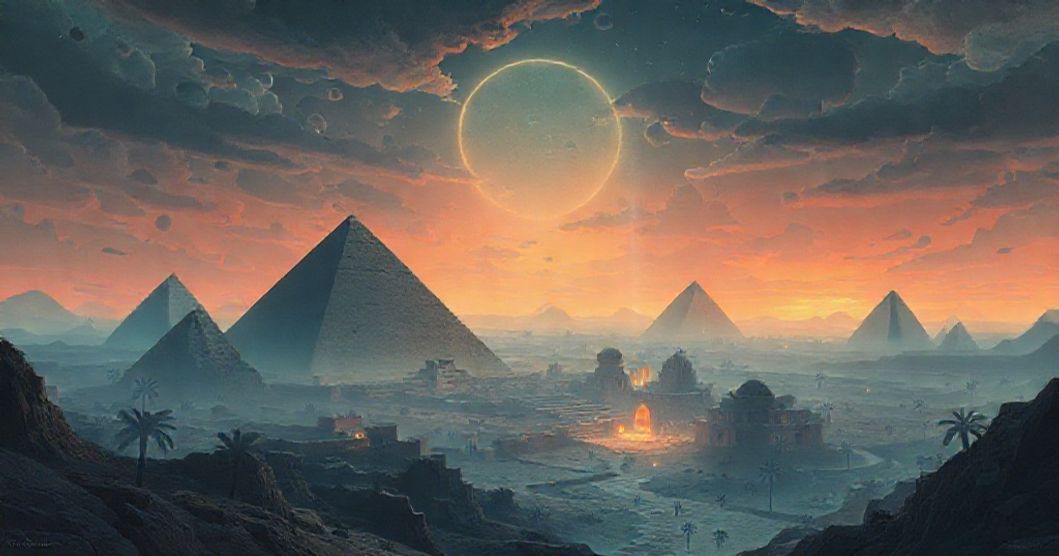
Dreams often serve as the unconscious mind’s way of constructing meaning from the chaos of waking experience, and for this dreamer, a recurring cityscape has emerged as a psychological canvas for deeper exploration. Since 2022, this extraordinary metropolis has materialized in their sleep with striking consistency, blending elements of ancient architecture, modern urban life, and spectral realms. At its core stand two or three pyramids, their stone forms rising against a twilight sky that never fully darkens, imbuing the city with an air of timelessness. The dreamer navigates distinct neighborhoods: a steakhouse-saloon where laughter mingles with the clink of glasses, a grocery store with impossibly familiar products, a bustling mall, and a university where they occupy a position of unexpected authority. The most enigmatic element is a massive green building at the city’s edge—a structure that evokes both institutional authority and liminal uncertainty. Within its walls, recently deceased figures emerge dazed, performing the exact jobs they held in life within factory-like spaces, while other rooms house spectral versions of jails and nightclubs. Outside the city, a sprawling estate with a modern home and a wife offers comfort, yet the dreamer’s agnostic worldview collides with the uncanny familiarity of this imagined afterlife. The narrative weaves together elements of architectural symbolism, emotional comfort, and existential questioning, creating a rich tapestry of unconscious themes.
Part 2: Clinical Analysis
Symbolic Landscape: The Dream City as Psychological Archetype
Want a More Personalized Interpretation?
Get your own AI-powered dream analysis tailored specifically to your dream
🔮Try Dream Analysis FreeThe recurring dream city functions as a multifaceted symbol system, with each element carrying layers of meaning that extend beyond literal interpretation. The pyramids at the city’s center represent ancient wisdom, timelessness, and spiritual significance—archetypal symbols of enduring structures that anchor collective memory. In Jungian psychology, pyramids often signify the self’s centrality, suggesting the dreamer’s unconscious is organizing experiences around core values or unresolved questions about legacy and purpose. The green building, meanwhile, embodies the liminal space of purgatory—a Freudian construct for the unconscious’ processing of unfinished business, yet with a distinctly modern twist. The factory where deceased figures perform life duties without awareness reflects the psychological concept of repetitive compulsion—the unconscious’s tendency to replay unresolved patterns until they’re integrated or resolved. These spectral workers remain in their routines not out of punishment, but because the dreamer’s mind has created a safe space for them to “finish” what felt incomplete in waking life. The university, where the dreamer is “well-known,” suggests a core identity theme: the unconscious seeking recognition, purpose, or validation in a space that feels both earned and unexpected.
Psychological Currents: Jungian, Freudian, and Cognitive Perspectives
From a Jungian lens, the recurring city represents the collective unconscious’s attempt to create order from disparate experiences, while the individual elements (pyramids, green building, university) function as archetypes—universal symbols that bridge cultural boundaries. The green building’s purgatorial nature aligns with Jung’s concept of the shadow—the repressed aspects of self that demand integration. The dreamer’s agnostic perspective suggests a rational defense against confronting these shadow elements, yet the unconscious persists in constructing a symbolic afterlife to process them. Freud might interpret the factory scenes as manifestations of repressed guilt or unfulfilled professional aspirations, where the dreamer’s unconscious revisits past work patterns in spectral form. Cognitive neuroscience offers another framework: dreams as memory consolidation processes, where the brain organizes emotional experiences and unresolved conflicts. The consistent details of the city—pyramids, locations, spectral workers—suggest the dream is actively processing a complex set of waking experiences, perhaps related to career transitions, relationship stability, or midlife reflection.
Emotional & Life Context: Unconscious Processing of Existential Questions
The recurring dream city emerges during a period of significant psychological transition, even if the dreamer isn’t consciously aware of it. The presence of a wife and comfortable home suggests unresolved relationship themes or a deep-seated need for emotional stability. The factory workers performing life duties without awareness may reflect the dreamer’s own sense of being “stuck” in routine, even as they pursue new identities or opportunities. The university setting, where the dreamer is “well-known,” hints at a desire for recognition or validation that may be unmet in waking life. The green building’s purgatorial imagery likely responds to existential questions about mortality and purpose, even as the dreamer maintains a rational stance toward spirituality. The contrast between the agnostic worldview and the emotional comfort of the dream city suggests a tension between conscious skepticism and unconscious yearning for meaning—a common psychological dynamic in midlife or periods of major life change. The spectral workers’ choice to remain in the green building despite freedom to leave may symbolize the dreamer’s own attachment to familiar patterns, even when they feel unfulfilling.
Therapeutic Insights: Integrating the Dream’s Symbolic Language
For the dreamer, this recurring city offers an opportunity for self-discovery through symbolic integration. Journaling exercises that explore the emotional tone of each location can reveal unconscious priorities: the steakhouse-saloon might reflect a need for connection, the university a desire for purpose, and the green building an invitation to process unfinished business. Reflective practices like guided visualization can help the dreamer explore the spectral workers’ “unfinished tasks,” identifying patterns in waking life that feel repetitive or unfulfilling. The property and wife in the dream represent wholeness and emotional security; integrating these elements into waking life through intentional relationship nurturing or creative projects can bridge the symbolic and real worlds. The agnostic perspective need not dismiss the dream’s value; instead, it can be embraced as a rational acknowledgment of the unconscious’s role in processing complex emotions. By treating the dream city as a psychological map rather than literal prophecy, the dreamer can use its symbols to navigate existential questions with greater self-awareness.
FAQ Section
Q: Why do I keep dreaming about the same city with pyramids and a green building?
A: Recurring dreams often reflect unresolved emotional themes or psychological patterns. The pyramids may symbolize core values, while the green building suggests processing unfinished business—your mind is creating a safe space to resolve these issues through repetition.
Q: What does it mean when deceased figures in my dream perform life duties?
A: This imagery typically represents unconscious patterns you’re repeating, even after they’ve “ended” in waking life. It may signal a need to complete or release these patterns rather than suppressing them.
Q: How can I reconcile my agnostic beliefs with the comfort of this “afterlife” city?
A: Your dream reflects the tension between rational thinking and emotional need. The city likely serves as a psychological sanctuary, allowing you to process mortality and purpose without spiritual dogma—embrace this as a sign of your unconscious’s wisdom.