
Part 1: Dream Presentation
Dreams have long served as mysterious bridges between our conscious and unconscious selves, often revealing truths we cannot articulate while awake. Here’s a dream narrative that explores the unexpected presence of family in the dreamer’s nocturnal landscape, a rare occurrence that contrasts sharply with their usual dreams of places and animals:
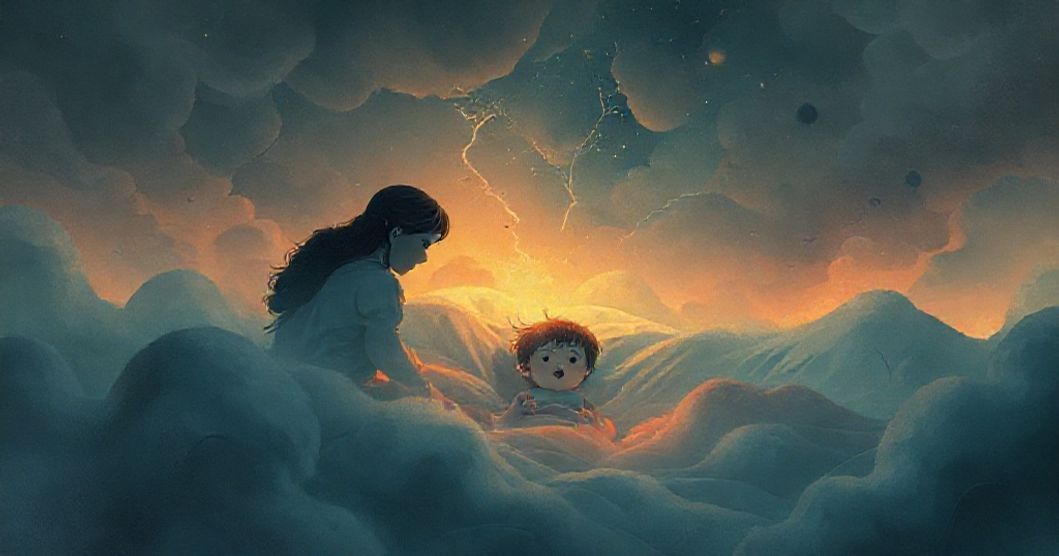
Last night, I found myself in a dream that felt simultaneously intimate and alien—a rare occurrence, as my unconscious typically favors landscapes and animals over human figures. The setting was a place I couldn’t quite identify, though its familiar contours whispered of childhood homes I’d left behind. My family surrounded me, yet their faces were blurred at the edges, like watercolor smudged by tears. The air hummed with an unspoken tension, and every movement felt heavy, as if gravity itself had shifted to press down on our interactions. It was not a nightmare in the traditional sense—no monsters or explicit terror—but rather a slow, gnawing dread that settled like ash in my throat. I tried to speak to them, to reach out, but my voice stuck in my chest, and their responses came in fragments, distorted by an invisible barrier between us. The dream’s symbolism lingered like a half-remembered song: doors that wouldn’t open, conversations that faded mid-sentence, and a sense that something vital was being communicated but forever out of reach. When I woke, my eyes stung with unshed tears, and I felt a strange mix of relief and unease—a rare emotional residue from a dream that rarely visits me, especially one so steeped in human presence.
Part 2: Clinical Analysis
Want a More Personalized Interpretation?
Get your own AI-powered dream analysis tailored specifically to your dream
🔮Try Dream Analysis FreeSymbolic Landscape of Family in Dreams
The unexpected appearance of family in this dream carries profound symbolic weight, particularly given the dreamer’s admission that human figures rarely appear in their nocturnal experiences. In dream analysis, family members often represent core aspects of the self rather than literal relatives, embodying archetypal energies like security, conflict, or unresolved emotional ties. The 'blurred faces' and 'invisible barrier' suggest a disconnection—either with specific family members or with the self’s relationship to family dynamics. The 'horrible' quality of the dream, while not overtly terrifying, manifests as an 'unspoken tension' and 'gnawing dread,' which may symbolize suppressed emotions or unaddressed family conflicts. The contrast between human and non-human dream content (places/animals vs. family) hints at a psychological focus on interpersonal relationships that typically remains unconscious.
Psychological Undercurrents: Family Archetypes and Unconscious Communication
From a Jungian perspective, family dreams often reflect the 'shadow' aspects of the self or collective unconscious themes. The family as a group archetype represents foundational relationships, security needs, and societal roles. The dream’s 'invisible barrier' could symbolize the dreamer’s psychological defenses against intimacy or emotional vulnerability. Freud might interpret the 'horrible' quality as repressed anger or guilt toward family members, while cognitive dream theory frames dreams as emotional processing mechanisms—suggesting the mind is integrating recent emotional experiences or unresolved family tensions. The rarity of human dreams, in contrast to animal and place dreams, may indicate a focus on self-exploration (places) or primal connections (animals) rather than interpersonal dynamics, until unconscious material demands attention.
Emotional Context: The Waking World Behind the Nightmare
Dreams rarely exist in isolation; they are reflections of waking emotional states. The 'horrible' family dream might signal recent stressors, unresolved grief, or relationship conflicts with family members. The dreamer’s note that they 'rarely dream of other humans' suggests a habitual avoidance of interpersonal themes in dreams, which could indicate either protective mechanisms or deep-seated emotional discomfort. The 'unspoken tension' and 'barrier' between dreamer and family might mirror real-life communication patterns—perhaps feeling misunderstood, unheard, or emotionally distant in waking interactions. The dream’s lingering emotional residue upon waking (relief and unease) suggests the unconscious is processing something significant, even if the conscious mind hasn’t fully recognized it.
Therapeutic Insights: Unpacking the Unconscious Message
This dream invites the dreamer to explore several layers of self-knowledge. First, reflecting on the 'rare' nature of human dreams can reveal what aspects of self are currently prioritized in waking life (places/animals may represent independence, creativity, or connection to nature). The 'horrible' quality, while uncomfortable, offers an opportunity for emotional processing—journaling about family interactions, identifying recurring emotions, and exploring unspoken feelings can provide clarity. For integration, the dream suggests the importance of acknowledging emotional barriers rather than avoiding them. Consider asking: 'What family relationships need my attention?' or 'What unspoken emotions am I carrying?' Small steps toward open communication, even in dreams, can translate to waking life growth. The dream’s 'symbolism' (doors, conversations) hints at opportunities for deeper connection if the dreamer chooses to engage with these themes.
FAQ Section
Q: Why do I rarely dream of humans despite usually dreaming of places or animals?
A: This pattern suggests your unconscious prioritizes self-exploration (places), nature connection (animals), or independence over interpersonal themes. When human figures appear, it may signal emotional material needing attention.
Q: What does a