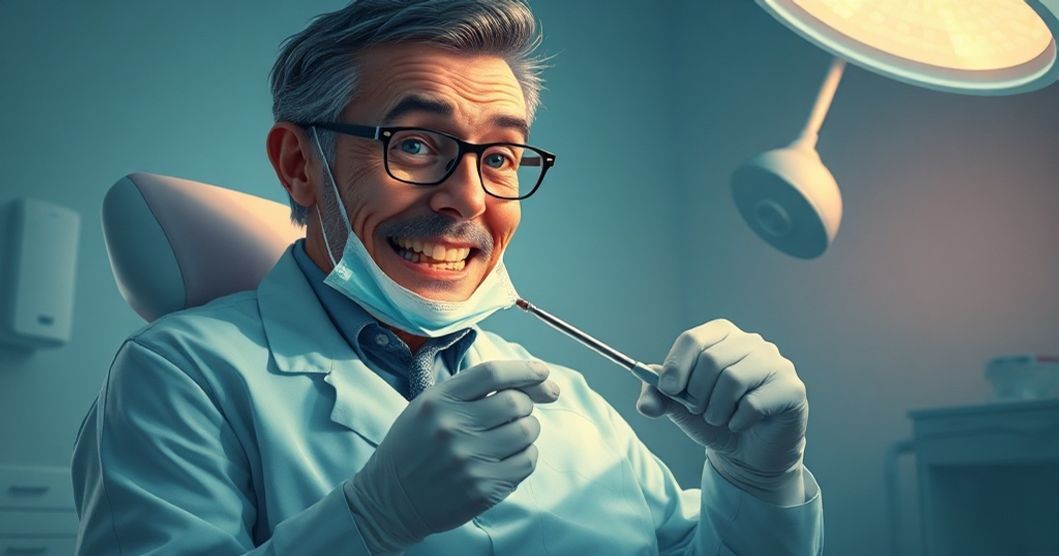
Part 1: Dream Presentation\n\nDreams have a remarkable way of reimagining the ordinary as something extraordinary, often using familiar faces and settings to deliver messages from the unconscious. In this particular dream, the dreamer finds themselves in a dentist’s office—a space universally associated with anxiety, medical intervention, and the fear of pain—yet the dentist is none other than Dick Van Dyke, a cultural icon whose warm, boyish charm has spanned decades. The dream unfolds with clinical precision: the sterile environment, the cold tools, the request for anesthesia, and the dentist’s firm refusal to comply. As the tooth is extracted, the dream transitions from a surreal encounter to a visceral experience of pain and relief, mirroring the complex relationship between fear and resolution in waking life.\n\nI was at the dentist in my dream. Dick Van Dyke was the dentist, and he told me I needed to have a tooth pulled. I asked if he could knock me out. He said he couldn’t. He just had to go ahead and pull the tooth. Any advice/insight would be helpful.\n\n## Part 2: Clinical Analysis\n\n### Symbolic Landscape: The Dentist, the Extraction, and the Unfamiliar Authority\n\nThe dentist’s office serves as a powerful symbolic space in this dream—a threshold between the known and the unknown, where the body is vulnerable and the mind confronts fears of pain and loss. The act of dental extraction, in particular, carries profound meaning: it represents the removal of something that is no longer functional or healthy, whether literally (a decayed tooth) or metaphorically (a relationship, habit, or belief that has outlived its purpose). Dick Van Dyke’s unexpected role as the dentist introduces an additional layer of symbolism: celebrities in dreams often embody qualities we associate with them, and Van Dyke’s persona—known for his comedic timing, adaptability, and fatherly warmth—contrasts sharply with the clinical, authoritative role of a dentist. This juxtaposition suggests a tension between the comfort we seek and the necessity of confronting discomfort directly.\n\nThe refusal of anesthesia is equally significant. Anesthesia in dreams typically represents the desire to avoid pain, either physical or emotional, by numbing the experience rather than facing it. The dentist’s insistence on proceeding without it can be read as a symbolic challenge to this avoidance: life often requires us to accept discomfort rather than seeking immediate relief or escape. The brief, sharp pain followed by resolution mirrors how real-world challenges, though painful, ultimately lead to healing or growth.\n\n### Psychological Undercurrents: Facing the Shadow and Confronting Unavoidable Change\n\nFrom a Jungian perspective, Dick Van Dyke’s appearance may reflect the dreamer’s “shadow” aspects—qualities they admire yet struggle to embody, or fears associated with the loss of control. The dentist archetype, meanwhile, can be seen as a “healer” figure who represents the need for necessary intervention in the self. The extraction becomes a metaphor for confronting the “shadow” of one’s psyche—parts of the self that feel broken, outdated, or harmful and require conscious attention.\n\nFreudian analysis might interpret the dream through the lens of childhood anxieties, particularly dental anxiety—a common phobia rooted in the fear of pain, loss of control, and the authority of medical professionals. Dick Van Dyke, with his wholesome, middle-class persona, could symbolize the internalized authority figure (like a father or teacher) who enforces rules and necessary changes, even when they feel uncomfortable. The dream’s tension between the desire for anesthesia (avoidance) and the dentist’s refusal (confrontation) thus reflects the conflict between id (desire for comfort) and superego (sense of duty to face reality).\n\nNeurologically, dreams process emotional memory and stress, and this dream may be processing waking life stressors related to upcoming changes, relationships, or responsibilities that feel “painful” to confront. The surreal element of a beloved actor in a clinical role suggests the dreamer’s need to integrate different aspects of themselves—perhaps the desire for comfort and the necessity for growth—into a cohesive sense of self.\n\n### Emotional Resonance: Discomfort, Uncertainty, and the Inevitable\n\nDental anxiety is a universal experience, and this dream likely taps into broader fears of pain, loss, or change in waking life. The dentist’s refusal to use anesthesia mirrors the dreamer’s internal conflict: wanting to avoid difficult conversations, necessary endings, or painful truths, yet recognizing that avoidance often prolongs discomfort. Dick Van Dyke’s role as a familiar figure in an unfamiliar context highlights how even the most ordinary fears can feel surreal or overwhelming when they disrupt our sense of safety.\n\nThe dream’s resolution—extraction followed by healing—suggests a pattern of resilience: the pain, though brief, leads to resolution. This may reflect the dreamer’s underlying belief in their ability to survive discomfort and emerge stronger, even if the process feels terrifying.\n\n### Therapeutic Insights: Embracing the Necessary Discomfort\n\nThis dream offers several opportunities for self-reflection and growth. First, it invites the dreamer to examine areas of their life that feel “decayed” or in need of removal—whether a toxic relationship, a self-defeating habit, or a project that drains energy. The dentist’s presence reminds us that sometimes, we need to take decisive action rather than delaying or avoiding.\n\nSecond, the refusal of anesthesia can be interpreted as a call to accept discomfort without seeking immediate escape. In waking life, this might manifest as approaching a difficult conversation, starting a new project, or making a change that feels “painful” but necessary. The dream encourages the dreamer to trust that the process, though challenging, will lead to positive outcomes.\n\nFinally, the surreal nature of Dick Van Dyke as a dentist suggests the need to approach life with flexibility and adaptability. Even when the familiar feels disrupted, there is wisdom to be found in unexpected situations, and the dreamer may benefit from embracing the unknown rather than resisting it.\n\n### Common Questions About This Dream\n\nQ: Why did Dick Van Dyke appear as a dentist in my dream?\nA: Celebrities in dreams often represent qualities or aspects of the self we admire or fear. Van Dyke’s presence might symbolize nostalgia, comfort, or the need for guidance in a challenging situation.\n\nQ: What does it mean when the dentist refuses anesthesia?\nA: This refusal can symbolize life’s inevitability—some changes require facing discomfort directly. It may reflect a need to accept challenges rather than avoiding them.\n\nQ: How does dental anxiety in dreams connect to waking life?\nA: Dental anxiety often mirrors fears of pain or loss in necessary changes. Your dream may process stress about upcoming tasks, relationships, or personal growth that feels “painful” to confront.\n