
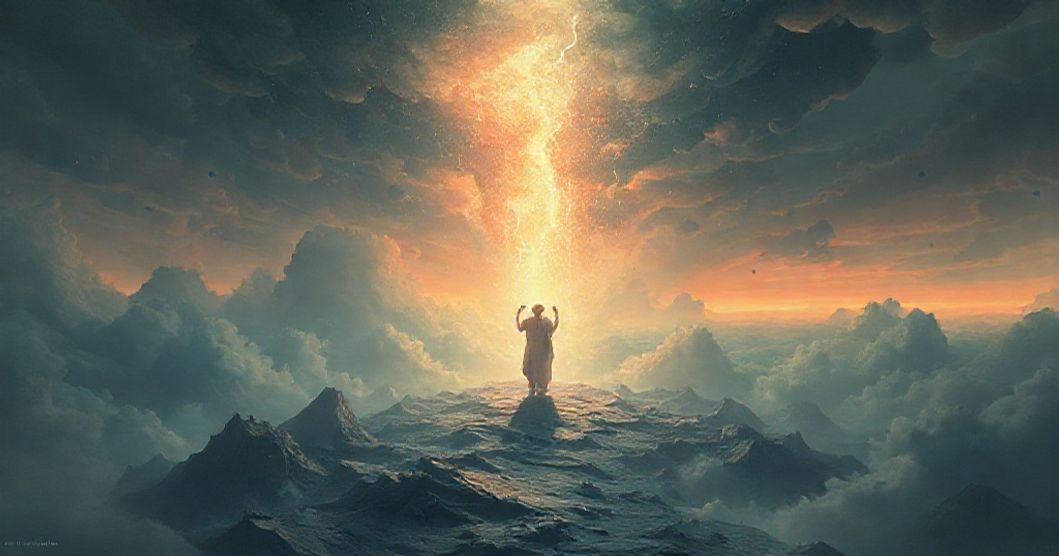
Part 1: Dream Presentation
Dreams often serve as profound portals into our unconscious, and few are as viscerally impactful as the falling dream. In this particular dream, the dreamer embarks on a surreal journey from the exhilaration of high altitude to the sobering reality of surrender, with a hauntingly unique twist: the dissolution of consciousness into pixelated fragments. This narrative, though unsettling, offers rich psychological territory for exploration.
I awoke with the lingering sensation of wind beneath my wings, though I couldn’t recall if I’d been soaring in a plane or standing atop a skyscraper. The world below appeared minuscule, distant, and irrelevant—a tapestry of tiny figures and roads that might have been rivers from such heights. I felt untethered, free, as though gravity itself had abandoned me. Then, without warning, everything shifted. The ground rushed upward, and I began to fall. My initial panic—an instinct to fight, to find purchase, to defy the inevitable—faded as I realized my usual strategies for overcoming obstacles had vanished. I couldn’t fly; I couldn’t grab onto anything. As the ground loomed closer, its texture and color becoming disturbingly clear, I experienced a paradoxical calm. My waking self, the one who always sought paths over, under, or around challenges, simply stopped resisting. I surrendered. Impact came with a sharp, brief pain, and then I felt myself die—not with terror, but with a strange clarity. Instead of darkness, I witnessed my life dissolving into a cascade of pixels, each one a memory or moment, flickering like dying embers before vanishing into blackness, one by one, random and disconnected.
Part 2: Clinical Analysis
Want a More Personalized Interpretation?
Get your own AI-powered dream analysis tailored specifically to your dream
🔮Try Dream Analysis FreeSymbolic Landscape: The Heights of Aspiration and the Descent of Surrender
The dream’s opening elements—flying or standing in a tall building at high altitude—speak volumes about the dreamer’s psychological state. High altitude in dreams typically symbolizes elevated aspirations, life direction, or existential awareness. The dreamer’s initial sense of freedom aligns with this interpretation: they may be experiencing a period of professional or personal growth, feeling untethered to traditional constraints. The sudden fall disrupts this sense of control, a common symbol of life transitions where external forces (or internal doubts) feel beyond one’s influence.
The act of surrendering to the fall is particularly significant. Unlike the dreamer’s waking personality, which thrives on overcoming obstacles, this surrender suggests a deeper psychological truth: sometimes, the most powerful response to life’s challenges isn’t resistance but acceptance. The dream’s unique twist—experiencing death rather than fearing it—indicates a potential shift in the dreamer’s relationship with mortality. This isn’t a fear of death but a recognition of its inevitability, a shift from denial to acceptance.
The pixelated death imagery introduces a distinctly modern layer of symbolism. In an era of digital consciousness, where we increasingly see life as a series of fragmented moments and digital interactions, this metaphor suggests the dreamer’s unconscious processing of how identity and memory might dissolve at the moment of death. Each pixel represents a discrete memory or experience, flickering before vanishing—a visual representation of how we often recall life in isolated, disconnected moments rather than as a cohesive whole.
Psychological Currents: Theoretical Perspectives on Surrender and Mortality
From a Jungian perspective, falling dreams often represent the descent into the unconscious, where we confront repressed emotions or shadow aspects of ourselves. The dreamer’s surrender could signify the integration of previously avoided feelings or life changes. The Jungian concept of anima/animus (the feminine/masculine aspects of the psyche) might also come into play here: the dreamer’s usual assertiveness (the