
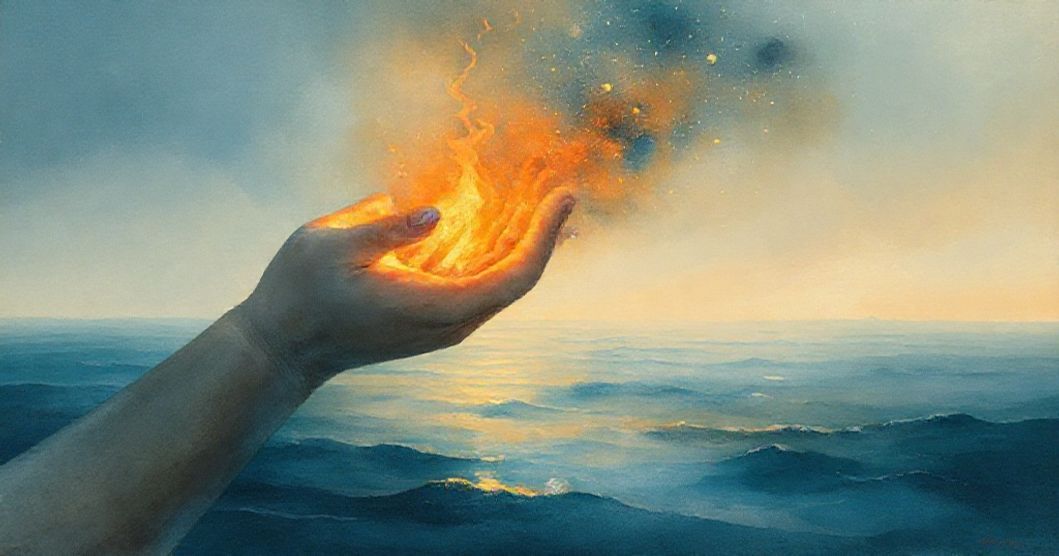
Core Symbols: Embers and Constellations in the Dreamscape
Embers, once vibrant and warm, now drown in the dreamer’s hands—a paradox of preservation and futility. These tiny, glowing remnants carry the residue of something once alive: a passion, a relationship, or a version of oneself that’s fading. Cradling them isn’t mere holding; it’s the subconscious’s plea to understand the nature of loss. Unlike a fully extinguished flame, embers retain potential—yet their 'drowning' suggests this potential is slipping beyond control, like a career that no longer ignites joy or a friendship fraying at the edges.
Constellations, by contrast, are fixed points of light in the night sky—human-made maps of meaning, guiding us through uncertainty. When they 'drown,' they represent lost anchors: a sense of purpose, a role we once embodied, or the collective identity we relied on for direction. The 'hum' adds another layer: sound, not just sight, a reminder that even as light fades, the subconscious communicates through subtle, persistent signals. Imagine a constellation’s hum as the echo of your inner voice, murmuring questions about what you’re leaving behind and what you might be gaining.
Together, these symbols create a visual metaphor for the paradox of transition: holding onto what’s dying while simultaneously losing the stars that once showed the way. This isn’t a dream of destruction but of discernment—the mind sorting through what’s essential and what’s expendable as life shifts.
Want a More Personalized Interpretation?
Get your own AI-powered dream analysis tailored specifically to your dream
🔮Try Dream Analysis FreePsychology Lens: Jungian Shadows and the Neuroscience of Fading Light
From a Jungian perspective, embers and constellations might represent the shadow self and the collective unconscious. The shadow—those parts of ourselves we repress or fear—often surfaces as embers: the aspects of identity we cling to even as they lose vitality. Jung’s concept of the conjunctio (the union of opposites) offers nuance: cradling drowning embers could be the psyche’s attempt to reconcile the shadow’s persistence with the need to let go.
Neuroscience adds another dimension: during REM sleep, the brain processes emotional memories through the amygdala, which activates more intensely during transitions. Dreams like this often occur when the mind is integrating new emotional data—perhaps from a recent loss, career change, or identity shift. The 'drowning' embers and 'drowning' constellations may mirror the brain’s struggle to reorganize neural pathways, turning old patterns into new ones. The 'hum' could even represent the brain’s default mode network, quietly processing these reorganizations while we sleep.
Freud, in contrast, might view this as a wish to preserve something lost—a desire to rewrite a painful ending. But the dream’s tension (cradling vs. drowning) suggests neither complete surrender nor stubborn denial, but a middle path of acceptance. This tension reflects the modern psychological truth: we rarely lose everything, just enough to feel adrift.
Life Triggers: When Do These Dreams Emerge?
This dream often surfaces during periods of deliberate letting go—whether literal (ending a relationship, leaving a job) or metaphorical (shedding old beliefs, redefining success). For example, consider James, a software engineer in his late 30s who dreamed of cradling embers while constellations hummed. He’d recently quit his high-paying job to pursue art, and the embers represented his fading identity as a 'tech expert,' the constellations his lost sense of professional purpose.
Social media overload can also trigger it: the 'drowning constellations' might symbolize the loss of authentic connection in a digital age, where curated profiles replace real relationships. The 'hum' could mirror the constant, low-level anxiety of maintaining online presence, even as the 'constellations' (real connections) dim.
Midlife transitions often spark this imagery, too. As we enter new phases, we confront the gap between who we were and who we’re becoming. The 'drowning' isn’t failure—it’s the necessary chaos of rebuilding. The 'cradling' is the quiet work of self-compassion, allowing the old to die so the new can emerge.
What To Do Next: Navigating the Fading Light
Short-Term Reflection: Ask Yourself
What in your life feels like 'drowning embers'? A project, relationship, or identity you’re clinging to despite its loss of spark?
What 'constellations' once guided you now feel lost? Career goals, spiritual practices, or social roles that no longer resonate?
Notice the 'hum'—is it a voice urging you to let go, or a reminder to honor what’s being released?
Medium-Term Experimentation: Create Rituals of Letting Go
If embers represent a fading passion, try a small 'extinguishing ritual': write down what you’re leaving behind, then burn the note (safely) or bury it. This literal act mirrors the subconscious’s need to process endings.
For the 'drowning constellations,' map your new 'constellations': What small, meaningful actions or relationships now guide you? Paint a new star chart of your values, not your past achievements.
Long-Term Integration: Cultivate Resilience in Fading Light
Practice 'active letting go': Identify one habit or belief you can release each month, not as a rejection of self, but as a clearing for growth.
Develop 'embership' habits: Find ways to honor what’s ending while preserving its essence. For example, if you’re leaving a job, create a ritual to celebrate its lessons before moving on.
FAQ
Q: What if I feel guilty for 'cradling' embers that should be left to die? A: Guilt often arises from conflating 'letting go' with 'abandonment.' This dream asks you to discern: Are you preserving something essential, or clinging to the past? Journal about how the embers made you feel—warmth, frustration, or fear—and let that guide your next steps.
Q: How do I differentiate this dream from dreams of actual drowning? A: Dreams of drowning trigger panic and helplessness; this dream feels calm yet urgent. The 'drowning' here is metaphorical—about losing direction or purpose, not physical survival. The 'hum' and cradling add a layer of intentionality, not terror.
Q: Is there cultural significance to constellations in dreams? A: In Greek mythology, constellations like Orion guided travelers; drowning them might reflect modern disorientation. In Indigenous traditions, stars are ancestral guides—drowning constellations could symbolize losing intergenerational connection. Both highlight the universal human need for guidance, even as it shifts.