
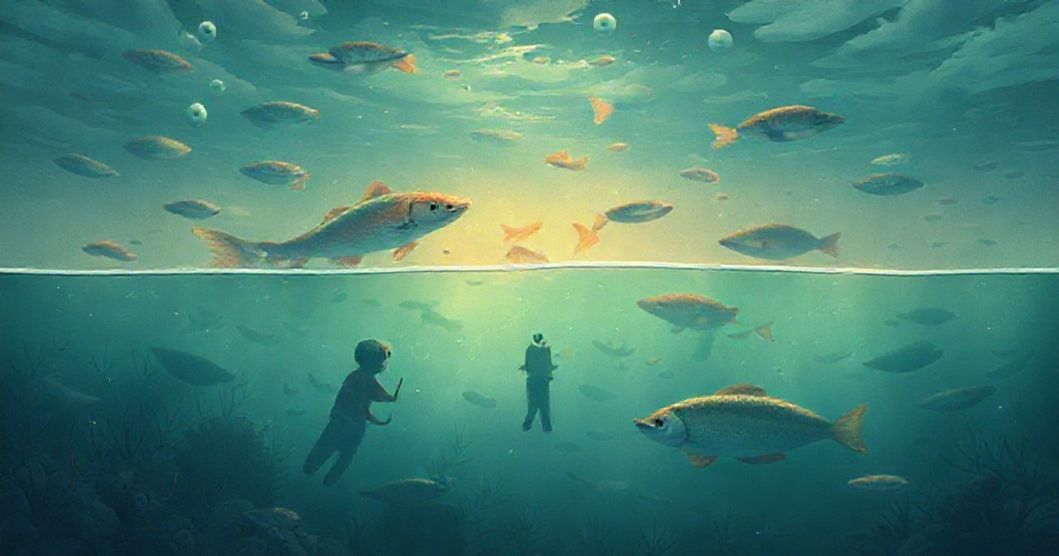
Part 1: Dream Presentation
Dreams often arrive unannounced, carrying symbolic messages from our deeper consciousness. Consider this vivid dream experience that has persisted for over a decade: Since I was five years old, I’ve been haunted by recurring dreams of a 30-gallon tank brimming with strange aquatic and reptilian creatures. The tank, always isolated in these dreamscapes, contains tilapia that appear lifeless, black eels that move with predatory precision, slithering snakes that seem to consume everything in their path, and vibrant tropical fish that flicker in and out of stillness. Invariably, I find myself reaching into the tank—my arm extended toward the creatures, my hand hovering over the water’s surface. Sometimes the fish are locked in violent combat, their scales glinting red as they tear at one another; at other times, the eels coil around smaller fish, their slimy bodies constricting prey until it’s still. The snakes, sleek and black, glide through the chaos, swallowing fish whole with a disturbing slowness. In lucid moments, I recognize the dream’s boundaries and seek an object I believe exists somewhere in the tank’s vicinity—yet when I find it, the fish are either stilled in death or eerily calm, their eyes reflecting my own confusion. The emotional tone shifts between frustration and bittersweet wonder: I cry out in either exasperation or happiness, though I can never quite tell which emotion dominates.
As a child, these dreams bled into my waking life. The tactile and visual hallucinations that accompanied them—fish slithering across my skin, eels writhing in my peripheral vision—made even simple tasks terrifying. I avoided baths, pools, and any still water, requiring my sister’s constant presence to feel safe. Rainy days brought additional dread, as puddles seemed to pulse with the same creatures from my dreams. Now, at twenty, the dreams have softened. They occur rarely, and when they do, they lack the ferocity of my childhood. About 70% of these recurring visions now feature only dead fish, their forms floating serenely rather than fighting. My relationship with these dreams has evolved: I recognize 80% of my dreams as lucid, but these aquatic nightmares rarely intrude in those moments anymore. Non-lucid dreams still center on live fish, though only about 90% of those now involve the predatory chaos I once feared. I’ve learned to observe rather than control, yet the tank always appears unexpectedly—whether in the corner of a familiar house, the back of a crowded store, or the edge of a forgotten street. The creatures, once terrifying, now exist as silent witnesses to a deeper truth I’m still learning to understand.
Symbolic Landscape
Want a More Personalized Interpretation?
Get your own AI-powered dream analysis tailored specifically to your dream
🔮Try Dream Analysis FreeThe recurring 30-gallon tank serves as the dream’s central symbol—a contained space that both isolates and contains complex emotions. In Jungian psychology, tanks often represent the unconscious mind, a container holding symbolic elements that demand attention. The 30-gallon specification, a precise measurement, suggests a structured approach to the dreamer’s inner world—an attempt to quantify or organize chaotic emotions that feel overwhelming. The variety of creatures (dead tilapia, live eels, snakes, tropical fish) represents different aspects of the self: the dead tilapia may symbolize lost potential or suppressed emotions, while the eels and snakes embody primal instincts or repressed fears. The fish-eating-each-other dynamic reflects internal conflict, a common theme in dreams of predatory behavior.
The act of reaching into the tank is particularly significant. In dream imagery, hands often represent agency and connection to one’s environment. Reaching into the water suggests an attempt to interact with the unconscious mind, to grasp or understand repressed emotions. The resistance encountered—fish attacking the arm, creatures slipping from hands—may symbolize the difficulty of integrating these aspects of self. The contrast between dead and live fish offers a powerful narrative: the dead fish, once symbols of decay, transform into calm, floating forms, suggesting a process of acceptance over time.
Psychological Undercurrents
From a psychoanalytic perspective, Freud might interpret these dreams as manifestations of repressed childhood anxieties. The recurring tank could represent the dreamer’s attempt to contain overwhelming feelings, while the predatory fish symbolize aggressive instincts. The author’s mention of schizophrenia adds a layer of complexity: tactile and visual hallucinations are not uncommon in this condition, and dreams often serve as a precursor to or reflection of these experiences. The dream’s evolution from childhood terror to adult calm aligns with the natural process of psychological development, where previously overwhelming symbols become more manageable with time and self-awareness.
Jungian analysis offers a complementary view, emphasizing the tank as a mandala—a symbol of wholeness and integration. The gradual shift from chaotic, predatory scenes to calm, floating fish suggests a movement toward individuation, where the dreamer is integrating previously fragmented aspects of self. The lucid dream component, where the dreamer can observe rather than control, represents the shift from being overwhelmed by one’s inner world to gaining perspective and agency over it. This aligns with Jung’s concept of the ‘shadow,’ where integrating these previously feared elements leads to greater self-awareness and balance.
Emotional and Life Context
The dreamer’s description of avoiding water and needing a sister’s presence reflects a deep-seated fear that began in childhood and persisted into adolescence. This fear likely stemmed from the intensity of the dream imagery, which felt so real it invaded waking life. The connection between dreams and hallucinations suggests a heightened sensitivity to internal stimuli, a common experience for those with schizophrenia. As the dreamer reaches adulthood, the reduction in frequency and intensity of these dreams parallels the natural maturation process, where psychological defenses strengthen and emotional regulation improves.
The 70% dead fish, 80% lucid dreams, and 90% live fish in non-lucid dreams create a statistical portrait of the dreamer’s inner world. The dominance of dead fish in lucid dreams might indicate a shift toward acceptance in conscious awareness, while the live fish in non-lucid dreams suggest unresolved issues still emerging in the unconscious. The author’s statement that they ‘don’t like lucid dreams’ but find themselves drawn to them anyway reflects a tension between wanting control and needing to surrender to the process of self-discovery.
Therapeutic Insights
For the dreamer, this recurring dream offers several therapeutic lessons. First, the tank as a contained space can be reframed as a safe environment for self-exploration. By observing the dream without judgment, the dreamer has already taken a significant step toward integration. The shift from fear to calm in the fish suggests that confronting these symbols, rather than avoiding them, leads to emotional resolution.
Practical reflection exercises might include keeping a dream journal to track the evolution of the tank imagery and noting how the dreamer’s emotions change from one dream to the next. Mindfulness practices, such as grounding techniques when water-related anxiety arises, can help manage the overlap between dream imagery and waking life. For those with schizophrenia, maintaining a consistent therapeutic relationship and medication management alongside dream work can provide additional support.
FAQ Section
Q: Why do dead fish appear in the dream, and what do they symbolize?
A: Dead fish often represent suppressed emotions or lost potential. Their transformation from chaotic to calm suggests a process of acceptance over time.
Q: How does the dreamer’s relationship with lucid dreams change over time?
A: Initially, lucid dreams felt overwhelming, but now they offer perspective. The dreamer’s shift from control to observation reflects growing self-awareness.
Q: Why does the tank always appear unexpectedly in broader dreams?
A: The tank’s unexpected appearance suggests the unconscious mind’s persistent need to address unresolved issues, even within more ordinary dream narratives.