
Part 1: Dream Presentation
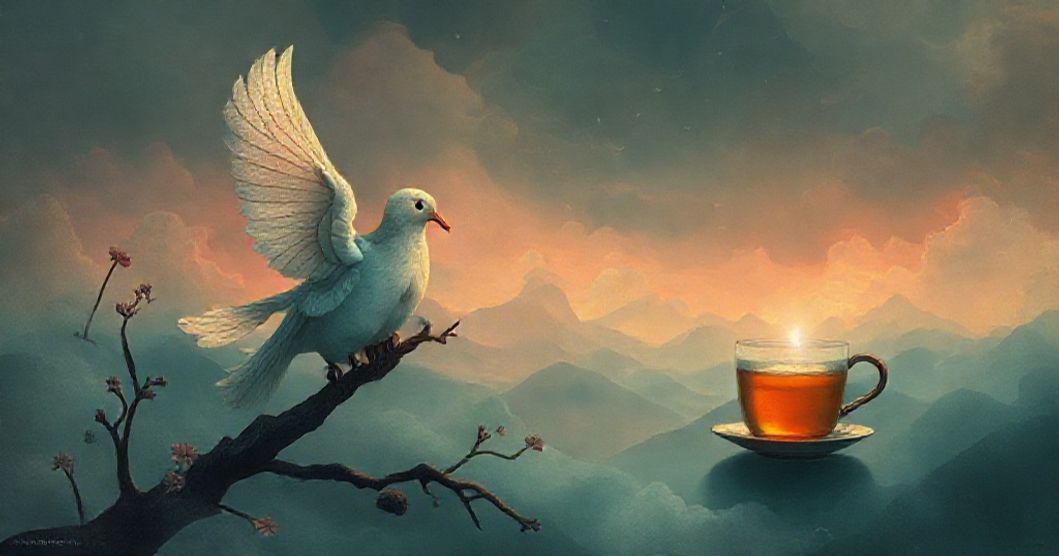
Dreams often serve as mirrors to our inner landscapes, reflecting unresolved tensions, forgotten connections, and symbolic truths we may not yet name. This particular vision—with its stark contrasts of red and white, symbols of revolution and spirituality, and a haunting scene of a dove in tea—lingers like an unsolved puzzle. The dream unfolds in distinct, fleeting scenes, each leaving an indelible impression on the psyche. First, the dreamer encounters a friend they’ve not seen in years—a woman whose spiritual nature has always felt like a bridge to deeper understanding. She stands before them, brush in hand, working on an aged parchment. With deliberate strokes, she paints the hammer and sickle symbol, its red ink vivid against the parchment’s muted tones, no star accompanying it. The scene feels charged with purpose, yet oddly detached, as if she were channeling something beyond herself. Then the setting shifts to a dining room bathed in low, warm light, unfamiliar yet oddly comforting. Around a wooden table, other figures sit, their faces obscured, voices melding into indistinct murmurings. On the table lies a plain glass tea set, its transparency catching the ambient glow. My spiritual friend returns, pouring a deep crimson liquid into an oval punch bowl. Nestled within this red tea is a white dove, its feathers stained faintly yellow—like iodine had seeped into its plumage, transforming its purity. The tea itself holds the appearance of blood, though it lacks the thickness of crimson fluid. As the dreamer watches, the dove meets their gaze, unblinking, as if judging their next move. The dreamer reaches for a ladle, stirring the tea without touching its surface, movements deliberate and cautious, avoiding contact with the spoon. The dream’s intensity lingers as they wake, leaving them both curious and unsettled—wondering why these symbols resonate so deeply.
Part 2: Clinical Analysis
Symbolic Landscape: Decoding the Dream’s Visual Language
Want a More Personalized Interpretation?
Get your own AI-powered dream analysis tailored specifically to your dream
🔮Try Dream Analysis FreeThe hammer and sickle, rendered without its traditional star, introduces a nuanced layer of symbolism beyond mere political reference. In dreamwork, this tool of revolution often represents collective action, idealism, or repressed ideals—particularly when wielded by a spiritual figure. The aged parchment suggests these symbols carry historical weight, perhaps tied to forgotten beliefs or lost values. The white dove, a universal symbol of peace, purity, and the divine, becomes stained yellow like iodine—a chemical associated with purification, yet also contamination. This contrast hints at spiritual compromise or the corruption of idealism through practicality. The red tea, appearing blood-like but not thick, evokes both nourishment and danger, while the glass tea set’s transparency underscores vulnerability and exposure. The dining table, a space of community and connection, becomes a site of mystery with unseen figures, suggesting relationships or conversations we can’t fully grasp. The dreamer’s careful avoidance of the tea—ladling without touching—reveals a tension between action and caution, as if navigating choices with reverence for potential consequences.
Psychological Currents: Jungian and Freudian Perspectives
From a Jungian framework, the spiritual friend embodies the dreamer’s anima or animus—an archetype representing the spiritual or emotional self they may have neglected. The hammer and sickle as a creative act could signify the shadow self’s attempt to reclaim revolutionary ideals, while the dove represents the self’s spiritual core. The iodine-stained dove suggests the shadow’s influence on spiritual purity, a common theme in dreams about spiritual evolution. For Freud, the red tea might symbolize repressed desires or conflicts related to political beliefs, past relationships, or unacknowledged anger. The unfamiliar dining room could reflect the dreamer’s unconscious processing of recent social or relational shifts. The act of painting the symbol—an active, intentional gesture—contrasts with the passive, observed nature of the dove, suggesting a tension between action and surrender in the dreamer’s psyche.
Emotional and Life Context: Unpacking the Dreamer’s Inner World
The spiritual friend, a figure from the past, may represent a connection to lost values or a forgotten self. The dreamer’s vivid reaction suggests this relationship holds emotional weight, perhaps tied to a period of spiritual exploration or idealism they’ve since abandoned. The hammer and sickle could symbolize repressed revolutionary impulses—either literal political beliefs or metaphorical ideals like social justice, personal growth, or creative expression. The red tea, with its ambiguous nature, might reflect the dreamer’s current emotional state: nourishing yet potentially harmful, like relationships or commitments that feel both necessary and threatening. The dining room’s unfamiliarity hints at uncertainty about current social circles or life directions, while the obscured faces suggest relationships where true communication remains elusive. The careful avoidance of the tea mirrors the dreamer’s anxiety about making choices, fearing contamination or judgment. This could reflect a period of indecision, where the dreamer is navigating between past ideals and present reality.
Therapeutic Insights: Navigating the Dreamer’s Symbolic Journey
This dream invites reflection on the tension between revolutionary ideals and spiritual growth. The stained dove suggests that purity and idealism can become compromised through practicality—a common challenge in adulthood. The dreamer might benefit from exploring how they’ve balanced idealism with realism in their life, asking: What revolutionary ideals do I still hold, and how have I adapted them? The spiritual friend, as a figure from the past, could represent an invitation to reconnect with core values or forgotten passions. Journaling exercises that explore the emotions tied to the hammer and sickle—whether excitement, fear, or nostalgia—might clarify these repressed feelings. The act of painting the symbol in the dream suggests creative expression of ideals, while the dove in tea urges the dreamer to recognize the beauty in compromise without losing spiritual integrity. Practices like mindfulness meditation to observe rather than avoid uncertainty could help the dreamer embrace ambiguity without excessive caution.
FAQ Section
Q: What does the hammer and sickle symbolize in a spiritual context?
A: In dreams, this symbol often represents collective ideals, repressed values, or the tension between personal and societal goals. Without its star, it may signify a more personal, less dogmatic interpretation of revolutionary or idealistic impulses.
Q: Why is the dove stained yellow like iodine?
A: The iodine stain suggests spiritual compromise or the corruption of purity through practicality. It may represent how ideals become altered by real-world pressures, or the dreamer’s struggle to maintain integrity while navigating life’s complexities.
Q: What does the careful avoidance of the tea represent?
A: This action reflects the dreamer’s anxiety about making choices, fear of contamination, or the need to maintain distance in relationships. It suggests a desire to protect oneself while still engaging with life’s complexities, perhaps through careful, deliberate action.