
Part 1: Dream Presentation
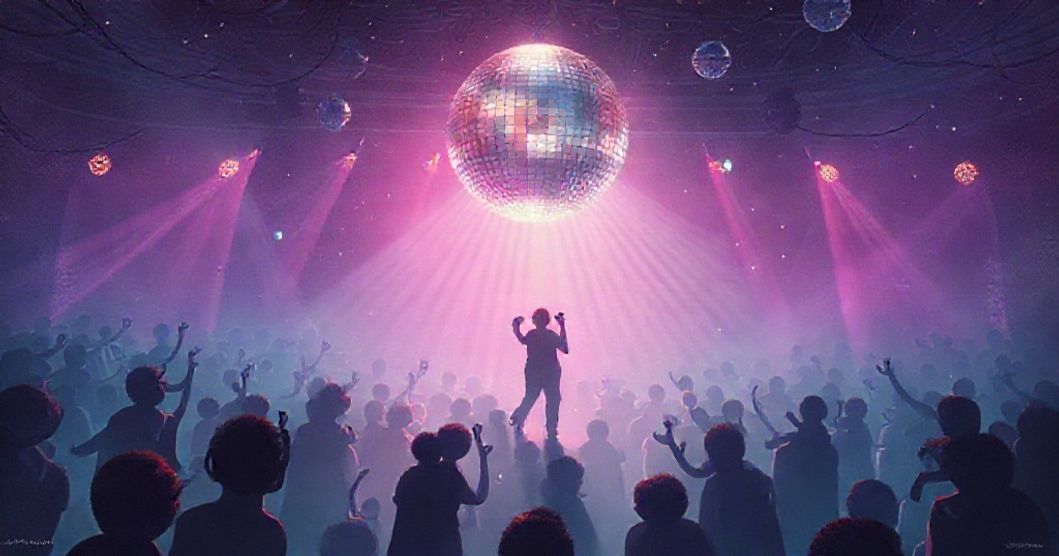
Dreams often arrive unannounced, carrying symbolic messages from our deeper consciousness. Consider this vivid dream experience: At eight years old, I found myself on a movie set bathed in harsh studio lights, my role as an actor in a horror film production. The air hummed with crew activity, cameras ready, and the unmistakable tension of a scene about to unfold. My character faced a supernatural killer whose head spun like a disco ball, refracting light into prismatic patterns across the concrete floor, while his body glimmered in a sleek silver suit. As the killer raised an axe to decapitate me, I executed my role with practiced calm—until the scene blurred into reality, revealing the crew’s detachment and the dream’s terrifying authenticity. The axe descended, and I woke gasping, heart pounding, the image of the silver-suited figure and spinning disco ball etched into my mind. A year later, I began acting professionally, and this childhood nightmare has haunted my relationship with performance ever since.
Part 2: Clinical Analysis
Symbolic Landscape: The Killer’s Unusual Form
Want a More Personalized Interpretation?
Get your own AI-powered dream analysis tailored specifically to your dream
🔮Try Dream Analysis FreeThe dream’s most striking element is the supernatural killer’s distinctive appearance—a disco ball head and silver suit. In dream symbolism, the disco ball functions as a multifaceted mirror, reflecting fragmented aspects of identity or the 'surface' nature of performance. Its spinning motion suggests instability or the feeling of being watched from multiple angles, perhaps mirroring the pressure to maintain a polished public persona. The silver suit, meanwhile, embodies the constructed self in performance—something both protective and confining, shimmering to attract attention while potentially hiding vulnerability beneath. The killer’s decapitation of the dreamer—an actor role—represents a deeper fear: the loss of self in professional identity, where 'acting' becomes indistinguishable from 'being.'
Psychological Currents: Archetypes and Unconscious Processing
From a Jungian perspective, the killer embodies the shadow archetype—those aspects of the self we fear or repress. The disco ball, with its association with entertainment and spectacle, might symbolize how society demands performance, reducing the self to a 'display' rather than a whole person. The child’s 'professional' demeanor during the attack reflects a survival instinct: adapting to perceived danger by assuming a role, a common defense mechanism in childhood. This aligns with Freud’s theory of dreams as wish fulfillment and repressed anxiety, where the decapitation could represent the fear of losing one’s voice or agency in the professional world. Cognitively, the dream may process the transition into acting by externalizing fears through a symbolic 'killer'—a personification of the anxieties inherent in performing.
Emotional and Life Context: Childhood, Performance, and Identity Formation
The dream occurs at age 8, a period of intense identity formation where children begin exploring roles and expectations. The subsequent transition to acting at age 9 suggests the dream may have been processing the upcoming shift into performance. The 'movie set' as a metaphor for life as a stage is powerful: the dreamer is both actor and audience, watching their own performance unfold. The supernatural killer could represent the fear of 'exposure' in performance—of being 'decapitated' by criticism, failure, or the pressure to maintain a perfect public image. The contrast between the dreamer’s 'professional' demeanor and the sudden terror highlights a core tension: the adulting of the self versus the child’s vulnerability, a theme that often surfaces in dreams during periods of life transition.
Therapeutic Insights: Integrating the Dreamer’s Journey
This recurring nightmare offers valuable clues for the dreamer’s self-awareness. First, journaling about the 'killer' as a shadow aspect can help identify areas where performance anxiety manifests in waking life. Reflecting on the 'professional' facade versus the 'terrified' reality reveals the need to honor vulnerability rather than suppress it. The silver suit, once a symbol of armor, can be reimagined as a costume that protects while allowing authenticity—perhaps exploring roles that balance self-expression with self-compassion. Finally, the connection between the dream and acting career suggests a need to reconcile 'being' with 'doing': the dreamer might benefit from grounding themselves in authenticity rather than always performing for external approval.
FAQ Section
Q: What does a decapitation dream symbolize in childhood?
A: Decapitation dreams often represent fears of losing identity, voice, or agency—especially relevant for children navigating new social roles. In this case, it reflects anxiety about the loss of self in performance.
Q: Why did the killer have a disco ball head?
A: The disco ball symbolizes fragmented identity or the 'surface' of performance, contrasting with the 'inner' self. It may represent how society views individuals as 'performances' rather than whole people.
Q: How does this dream relate to the dreamer’s acting career?
A: The dream may process anxieties about losing authenticity in professional performance. It suggests the need to integrate the 'killer' (fear) into the 'actor' (self) rather than seeing them as separate entities.