
Part 1: Dream Presentation
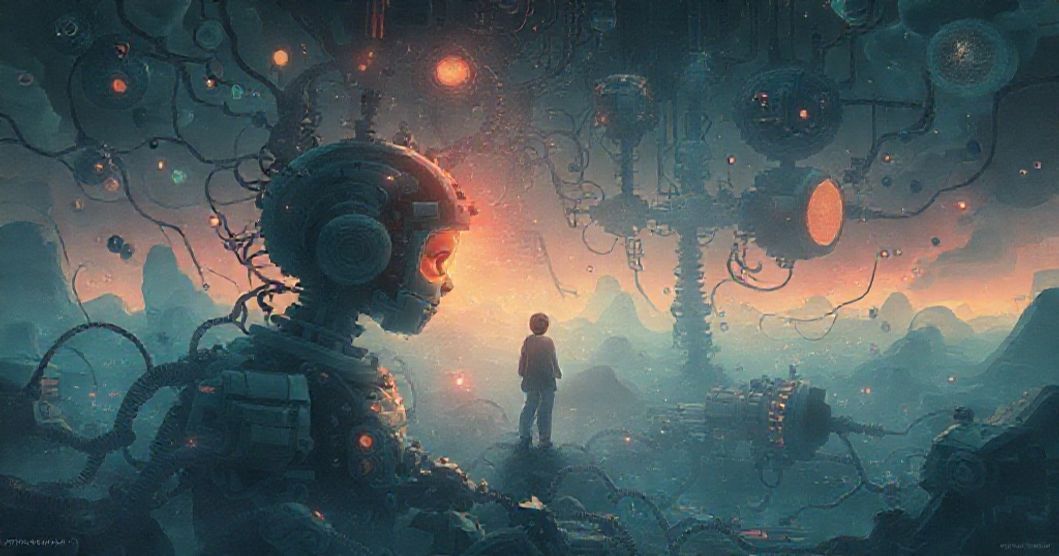
Dreams from early childhood often carry the weight of emerging consciousness, processing experiences too profound for verbal expression. This particular dream narrative, spanning ages 2-4, reveals a recurring nightmare landscape filled with mechanical imagery, geometric patterns, and overwhelming physical sensations that continue to haunt the dreamer decades later. The dream unfolds in stark black-and-white tones, evoking the raw visual language of a developing mind grappling with complex emotions and experiences. The dreamer describes navigating through massive machinery, squeezing through impossible holes, and encountering spaces reminiscent of oversized meat grinders—all while experiencing intense pressure that translates into waking anxiety. The abrupt cessation of the final dream and the lingering emotional impact suggest this nightmare was not merely random neural activity but a meaningful communication from the subconscious.
When I was between two and four years old, I experienced recurring nightmares that felt both physically and psychologically overwhelming. These dreams unfolded in stark black-and-white, their geometric patterns reminiscent of op-art illusions—sharp angles, alternating dark and light planes that seemed to shift and pulse beneath my closed eyelids. The setting always felt like navigating through massive, impersonal machinery: vast, industrial spaces where every movement required squeezing through impossibly small holes or passing through areas that resembled oversized meat grinders, their metallic teeth threatening to close around me at any moment. Intense pressure permeated my body, a sensation so real I’d wake up sweating, heart pounding, convinced I’d just experienced something physically painful. There were three or four such dreams, each following a similar pattern, until one night the dream simply stopped—an abrupt stillness that felt as foreign as the terror had been. The contrast between the dream’s heavy, mechanical geometry and its sudden cessation created an emotional whiplash I’ve carried with me ever since. These dreams felt both abstract and visceral, like my mind was processing something beyond conscious understanding. The black-and-white palette, so different from the colorful world of childhood, felt like a visual representation of internal conflict. I sometimes wonder if these dreams were echoes of something primal—the birth canal experience I’d never consciously remembered—or if they were simply the chaotic firing of young neurons, creating patterns that felt like nightmares rather than ordinary sleep imagery. The Mario Bros reference suddenly emerged: that level where Mario navigates through mechanical structures, as if my subconscious was drawing on both cultural imagery and the raw, primal fears of that developmental period.
Part 2: Clinical Analysis
Want a More Personalized Interpretation?
Get your own AI-powered dream analysis tailored specifically to your dream
🔮Try Dream Analysis FreeSymbolic Landscape of the Dream
The recurring nightmare’s symbolic elements reveal a subconscious preoccupied with boundaries, confinement, and internal pressure. The mechanical imagery—machines, meat grinders, and geometric patterns—represents the dreamer’s struggle with control and vulnerability during early childhood. In Jungian psychology, machinery often symbolizes the 'shadow' of modern life, but in this case, it more likely reflects the child’s experience of being 'contained' within a world of adult structures and expectations they could not yet fully comprehend. The black-and-white color palette is significant: it strips away emotional nuance, representing the binary thinking of a developing mind still learning to process complex feelings. The 'impossible holes' and 'meat grinder' spaces function as liminal thresholds—passages that feel simultaneously dangerous and necessary for growth. In dreamwork, such thresholds often symbolize psychological or emotional transitions, even if the child lacks the vocabulary to articulate them.
The Mario Bros reference adds a layer of cultural context, connecting the dream to collective childhood experiences of video game worlds. This cultural touchstone suggests the dreamer’s mind was synthesizing both internal fears and external media, creating a hybrid symbolic language. The 'machine level' in Mario games represents a confined, industrial environment—fitting with the dream’s mechanical imagery—while the 'impossible holes' mirror the child’s experience of navigating a world filled with adult structures that felt both impenetrable and inescapable.
Psychological Undercurrents
From a developmental psychology perspective, dreams in early childhood often reflect the consolidation of new neural pathways and emotional regulation. The intense pressure and physical sensations suggest the dreamer’s body was processing stress responses they couldn’t yet consciously label. In Freud’s theory of dreams as 'the royal road to the unconscious,' these nightmares might represent repressed fears of loss of control—a common theme in early childhood as children gain independence while remaining dependent on caregivers. The recurring nature of the dreams indicates an unprocessed emotional conflict that persisted until the final dream’s abrupt cessation.
Jungian analysis would interpret the mechanical imagery as a manifestation of the 'anima/animus' archetype—the feminine/masculine aspects of the psyche—though in this case, it more likely reflects the child’s struggle with the 'shadow' of emerging selfhood. The geometric patterns and mechanical structures could symbolize the child’s attempt to impose order on chaos, a natural response to the unpredictability of early life. The pressure sensations align with physiological stress responses during sleep, particularly in REM cycles when the brain processes emotional memories. Cognitive neuroscience research suggests that children’s brains are more plastic, allowing for stronger emotional imprints from intense experiences, which explains why these dreams persist decades later.
Emotional and Life Context
The timing of these nightmares—ages 2-4—coincides with significant developmental milestones: emerging motor skills, language acquisition, and the formation of attachment bonds. The dream’s mechanical imagery may reflect the child’s experience of being 'squeezed' through new social and physical boundaries. The 'meat grinder' spaces could symbolize the anxiety of separation from caregivers, a common theme in toddlerhood as children begin asserting independence while still needing protection. The sweating and waking terror suggest the child was experiencing physiological stress responses to these internal conflicts.
The birth canal theory, while speculative, connects to the biological transition from fetal to postnatal life. The physical sensations of pressure and constriction during birth might be unconsciously replayed in dreams, creating a primal fear of confinement. For young children, the transition from womb to world involves a shift from a protected, contained environment to one filled with external stimuli—a change that can feel threatening. The black-and-white color palette could represent the binary nature of this transition: safety vs. danger, confinement vs. freedom.
Therapeutic Insights
For anyone carrying such childhood nightmares, therapeutic approaches can help transform these symbols into tools for self-understanding. Creative visualization exercises offer a way to reframe the dream: imagine entering the mechanical world with confidence, choosing different paths, or even 'fixing' the machinery. Journaling about the emotions triggered by the dream can help identify patterns in waking life that mirror the pressure and confinement.
Dream reprocessing techniques, such as lucid dreaming or guided imagery, can help the dreamer take control in the dream space, reducing the terror. In cognitive behavioral therapy, nightmares often respond well to exposure therapy, where the dreamer gradually confronts the feared elements in a safe, controlled manner. The key insight is recognizing that these dreams were not random but messages from the subconscious about unresolved emotions or developmental challenges.
For those experiencing persistent nightmares, especially with physical symptoms like sweating or panic upon waking, professional support can help differentiate between normal childhood development and trauma. The dreamer’s lifelong reflection on these nightmares suggests they hold emotional significance, making them ripe for exploration in therapy.
FAQ Section
Q: Why do these specific childhood dreams feel so vivid later in life?
A: Childhood dreams often create stronger emotional imprints because the brain is more plastic during early development, and these dreams may represent the consolidation of new neural pathways. The recurring nature indicates unresolved emotional themes that persist into adulthood.
Q: Could the 'meat grinder' imagery relate to actual physical experiences?
A: While literal meat grinder experiences are unlikely, the metaphorical 'grinding' likely symbolizes overwhelming pressure or loss of control in early development. Dreams often use visceral imagery to process abstract emotions the child cannot yet name.
Q: How does the Mario Bros reference add meaning to the dream?
A: The Mario reference connects the dream to collective childhood experiences, suggesting the mind synthesizes internal fears with external cultural touchstones. This hybrid imagery reflects how children integrate both personal and shared symbolic systems into their dreams.