
Core Symbols: Beyond the Fanged Archetype and Liminal Doorways
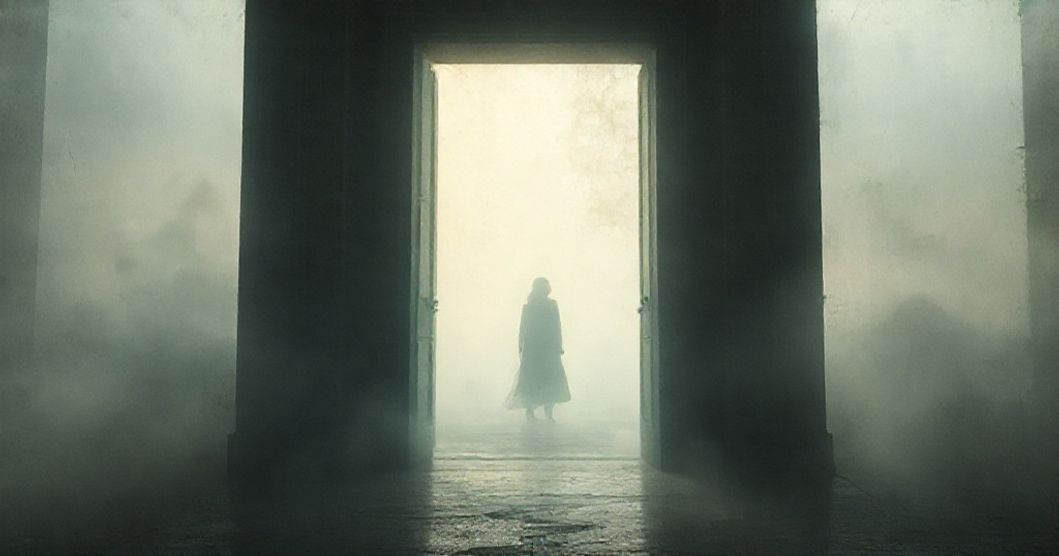
Vampire imagery in dreams rarely speaks of literal monsters; instead, it channels deeper archetypal currents. In Carl Jung’s framework, the vampire functions as a shadow archetype—an exaggerated projection of the self we fear to acknowledge: repressed desires, unintegrated parts of your personality, or even energy-draining relationships. The 'echoes' that pursue you through doorways amplify this shadow’s persistence, suggesting these elements refuse to stay buried. Doorways, meanwhile, embody liminal spaces—thresholds between known and unknown, safety and risk, as defined by anthropologist Victor Turner. A cracked doorway might signal curiosity about new paths, while a slammed portal hints at fear of crossing boundaries you’ve outgrown.
The 'vampire' itself carries layered symbolism: in folklore, these creatures often represent life force (blood as energy) or transformation (undead beings evolving beyond human limits). In dreams, this can translate to fears of losing vitality, or conversely, the urge to shed old identities. Echoes, as transient yet persistent as memory, tie directly to unprocessed emotional loops—think of a regret that repeats, or a relationship ending that leaves your subconscious craving resolution. Together, these symbols create a surreal puzzle: you’re not fleeing a monster, but confronting something that’s already part of you, seeking to be understood.
Psychology Lens: From Repression to Shadow Integration
Want a More Personalized Interpretation?
Get your own AI-powered dream analysis tailored specifically to your dream
🔮Try Dream Analysis FreeSigmund Freud might interpret vampire dreams as manifestations of repressed sexual or aggressive impulses—'vampiric' hunger as unacknowledged desires. Yet Jung’s shadow theory offers richer context: the vampire isn’t an enemy but a mirror, reflecting parts of yourself you’ve projected outward. If you feel 'chased' by echoes, it’s less about external threats and more about your unconscious urging integration. During REM sleep, the brain processes emotional memories through the amygdala, which amplifies fear responses. Your mind’s choice to cast these emotions as 'vampires' could be a defense mechanism—making the unknown feel manageable by giving it a familiar, terrifying shape.
Neuroscience adds another layer: the prefrontal cortex, responsible for decision-making, often struggles to resolve ambiguous emotions during sleep. When you 'chase' through doorways in dreams, your brain might be rehearsing real-life threshold moments—job changes, breakups, or creative risks—where the future feels as uncertain as a shadowy corridor. The 'echoes' could be your hippocampus trying to link past experiences to present anxieties, creating a narrative that feels both urgent and out of reach.
Life Triggers: When Doorways and Echoes Resonate
These dreams rarely emerge from nowhere; they’re often triggered by life’s liminal moments. Major transitions—ending a relationship, starting a new career, or moving cities—create psychological doorways you’re forced to cross. If you’ve recently left a role that drained your energy, the 'vampire' might symbolize the part of you that’s still clinging to that identity, while the 'echoes' remind you of unmet needs. Digital age living exacerbates this: social media profiles, online personas, and curated identities can feel like 'echoes' of who you think you should be, clashing with your authentic self.
Boundary issues often fuel these dreams, too. If you’ve been people-pleasing or overextending, the 'vampire' might represent the energy you’re unconsciously 'draining' or giving away. A closed doorway could reflect your fear of setting boundaries, while an open one might signal a desire to reclaim autonomy. Even mundane choices—like avoiding difficult conversations or procrastinating on creative projects—can leave emotional 'echoes' that your subconscious dramatizes into supernatural narratives.
What To Do Next: Navigating the Thresholds of Unconscious Echoes
Start by journaling about recurring themes: note the door’s state (open/closed), the 'vampire’s' behavior (pursuing, retreating, silent?), and your emotional response. Ask yourself: What threshold in my life feels unresolved? This reflection helps map the 'echoes' to real-world patterns. For example, a dream of a crumbling doorway might tie to a project you’ve neglected, while a shadowy figure lingering at the threshold could represent a fear of failure.
Medium-term, experiment with small boundary crossings. If the 'vampire' feels like an energy drain, try saying 'no' to one obligation this week. Notice how this small act affects your sense of agency—does the 'echoes' in dreams soften? If doorways symbolize new paths, schedule one 'low-stakes' exploration (a new coffee shop, a solo walk) to test your comfort with uncertainty.
Long-term integration requires shadow work: identify what parts of yourself feel 'vampiric'—the habits, relationships, or beliefs that deplete you. Create rituals to honor these parts without suppressing them: write a letter to your 'unintegrated self,' or paint a symbolic portrait of the 'vampire' as a friend rather than a foe. Over time, these practices transform 'chasing echoes' into a dialogue with your authentic self.
FAQ: Unpacking the Vampire Doorway Mystery
Q: Why do I feel 'chased' rather than scared in these dreams? A: 'Chasing' often signals curiosity or longing, not fear. It may mean your subconscious is drawn to something it needs to understand—an opportunity, relationship, or part of yourself you’ve avoided. The 'vampire' isn’t evil; it’s a symbol of energy you’re either craving or trying to protect.
Q: Does the door’s state matter? An open vs. closed doorway—what’s the difference? A: An open door suggests invitation to explore (vulnerability), while a closed one reflects fear of change. A door that won’t open might mean you’re resisting growth, while one that slams shut could signal a boundary you’ve crossed without realizing.
Q: How can I tell if these dreams are about the past or future? A: Past echoes feel familiar (old relationships, regrets), while future-focused dreams often involve doorways to new opportunities. If the 'vampire' is silent, it may be urging you to trust your intuition about upcoming choices rather than overthinking.