
Part 1: Dream Presentation
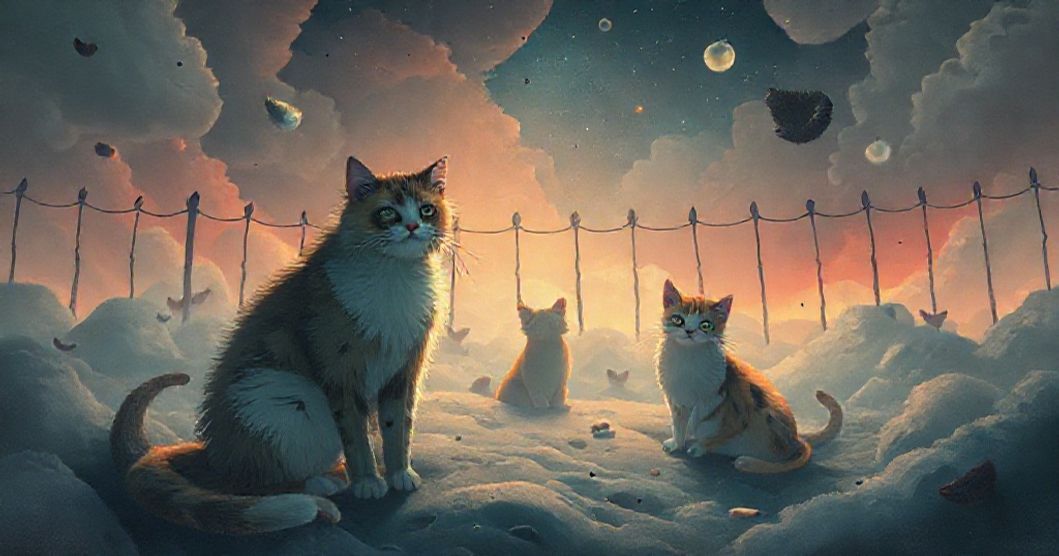
Dreams often serve as psychological mirrors, reflecting our unconscious conflicts through symbolic imagery and emotional states. In this dream, the dreamer’s primal fear of cats intertwines with a paradoxical scenario involving a gate, a house, and an overwhelming presence of these animals. The narrative unfolds as follows: A house with an open gate stands before the dreamer, who encounters numerous cats—both inside and outside the gate—sleeping or resting at the threshold. The dreamer, clearly terrified of cats, attempts to clear them away but finds the animals stubbornly immobile, their stillness evoking a sense of illness or vulnerability. Despite the gate being open, the dreamer cannot enter the house, trapped by a combination of fear and frustration.
Part 2: Clinical Analysis
Symbolic Landscape: Cats, Gate, and the Unconscious
Want a More Personalized Interpretation?
Get your own AI-powered dream analysis tailored specifically to your dream
🔮Try Dream Analysis FreeThe cat, a universal symbol in dream psychology, carries multifaceted meanings rooted in cultural mythology and personal experience. In this dream, the cats function as a manifestation of the dreamer’s repressed fears and anxieties—their formless, slumberous presence embodying the dreamer’s inability to confront these emotions directly. The cats’ stillness contrasts with the dreamer’s active attempts to resolve the situation, suggesting a conflict between the urge to control external triggers and the reality of internalized fear. The gate itself represents psychological boundaries: open yet impassable, it symbolizes both accessible opportunities and the invisible barriers we construct around ourselves to avoid discomfort. The house, a central element of security and identity, stands as the dreamer’s desired state—safety, connection, or self-expression—blocked by the symbolic weight of fear.
The cats’ sickly appearance adds another layer of meaning, possibly reflecting the dreamer’s perception of themselves or their environment as depleted, unwell, or in need of care. Their collective presence at the threshold suggests that these fears have accumulated, creating a barrier to emotional growth. The dreamer’s inability to enter despite the gate being open mirrors a common psychological paradox: we often encounter open doors to growth or safety, yet our internal barriers prevent us from stepping through, driven by unresolved anxieties.
Psychological Currents: Jungian, Freudian, and Modern Perspectives
From a Jungian perspective, the cats may represent the shadow aspect—the repressed, feared parts of the self that demand integration. The dreamer’s fear of cats, a seemingly irrational phobia, could be a projection of deeper, more abstract anxieties: uncertainty about boundaries, fear of vulnerability, or resistance to change. The house, as a symbol of the conscious self, stands open to the unconscious, yet the cats’ presence blocks access to this inner realm.
Freudian theory might interpret the cats as a manifestation of repressed sexual or aggressive impulses, though the dreamer’s explicit fear of cats suggests a more personal, idiosyncratic trigger. The dream’s emphasis on control (attempting to “send away” the cats) reflects the ego’s struggle to manage anxiety-producing stimuli, while the cats’ immobility represents the unconscious’s resistance to being forced into compliance.
Modern dream psychology, rooted in cognitive neuroscience, frames this dream as a processing of emotional triggers. The amygdala’s role in fear responses is mirrored in the dream’s visceral terror, while the prefrontal cortex’s attempt to problem-solve (opening the gate, trying to clear the cats) illustrates the tension between rational thought and emotional reaction. The cats’ sickly appearance may even reflect the dreamer’s real-life health concerns or emotional depletion, manifesting symbolically through this animal imagery.
Emotional & Life Context: Facing Fears in the Unconscious
This dream likely emerges from waking life experiences that activate the dreamer’s fear response. The dreamer’s explicit statement—“I am someone who does not like cats, it always scars me when I see them”—reveals a deeply ingrained emotional pattern: avoiding or fearing a specific stimulus (cats) while simultaneously encountering it in various forms. The open gate represents opportunities or emotional states the dreamer craves access to, yet the fear of cats (a symbolic stand-in for broader anxieties) prevents them from fully engaging with these possibilities.
The cats’ inability to move despite the dreamer’s attempts to clear them may symbolize the dreamer’s own sense of being “stuck” in a situation, unable to progress toward a goal (entering the house) due to internalized fears. The contrast between the open gate (potential access) and the closed-off dreamer (emotionally blocked) suggests a disconnect between rational understanding (the gate is open) and emotional response (fear paralyzes action). This pattern often emerges during periods of transition, uncertainty, or when significant life changes are pending—moments where the unconscious urges us to confront unresolved anxieties.
Therapeutic Insights: Navigating Fear, Boundaries, and Growth
This dream offers valuable insights for the dreamer and anyone navigating similar fears. First, the cats symbolize not just feline phobia but the broader theme of confronting what we fear most. The dream urges reflection: What real-life situations feel as “blocking” as these cats, even when the path seems open? Identifying these symbolic barriers is the first step toward resolution.
The open gate, despite the dreamer’s inability to enter, suggests that the opportunity for growth or emotional safety is indeed accessible—yet only when we address the underlying fear. Practical reflection exercises might include journaling about specific fears and their manifestations in daily life, separating the symbolic (cats) from the real (specific triggers). Mindfulness practices, such as grounding techniques for anxiety, can help the dreamer recognize when fear is hijacking rational decision-making.
For long-term integration, the dream invites the dreamer to consider whether their fear of cats represents a larger pattern of avoiding necessary challenges. By approaching these fears with curiosity rather than avoidance, the dreamer may discover that the “cats” in waking life are not as threatening as they appear in the unconscious. This process of gradual exposure—like desensitization therapy—can transform the paralyzing fear into manageable anxiety, allowing access to the “house” of emotional growth.
FAQ Section
Q: Why do I dream about cats if I’m scared of them?
A: Dreams often externalize internal conflicts. The cats represent your unconscious processing of fear, anxiety, or boundary issues, using a familiar trigger (your fear of cats) to highlight unresolved emotions needing attention.
Q: What does it mean when I can’t enter my house despite the gate being open?
A: This paradox symbolizes psychological barriers—your fear prevents you from accessing emotional safety or opportunities, even when logically accessible. It suggests a disconnect between rational understanding and emotional response.
Q: Why do the cats look sick in my dream?
A: The sick cats may reflect your perception of depleted energy, emotional exhaustion, or unaddressed health concerns. Their vulnerability mirrors your own need for self-care or attention to underlying issues.