
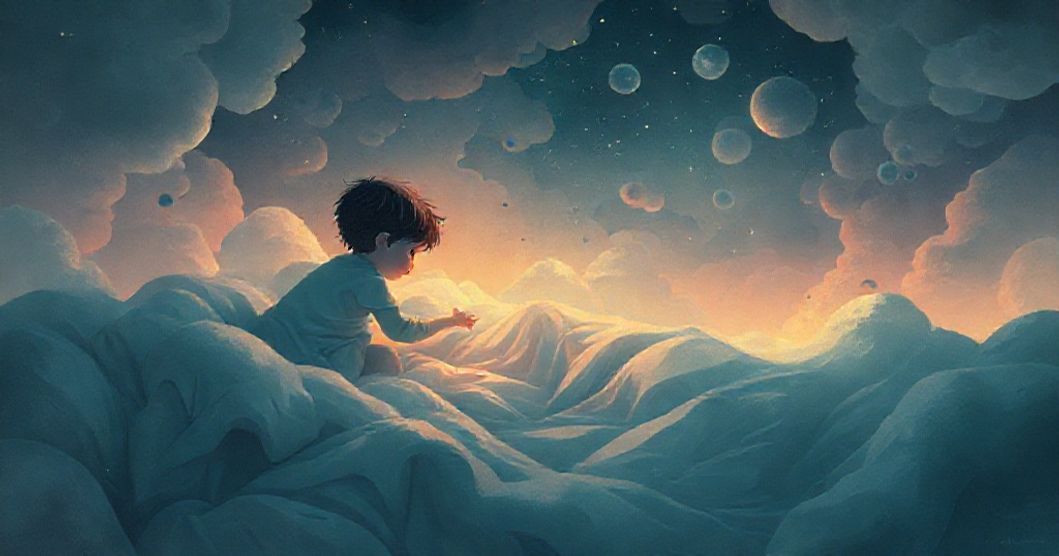
Part 1: Dream Presentation
Dreams often preserve the emotional textures of childhood with remarkable precision, offering windows into our earliest psychological landscapes. This dream narrative recounts a recurring lucid experience that persisted through the early years, carrying with it both wonder and terror. From the age of four to seven, the dreamer experienced lucid dreams every second night—a pattern so distinct it remains etched in memory like a faded photograph. In these dreams, the individual was acutely aware of dreaming yet trapped in a paradox: able to control movements and surroundings, yet unable to rouse themselves from the dream state. Attempts to open eyes wider, pinch arms, or shout for help failed to break the spell. Instead, a desperate ritual emerged: placing the 'character' into different sleeping locations to escape the cycle. Beginning with the bedroom, this practice exhausted familiar spaces, leading to increasingly surreal settings—backyards, parks, and finally, Paris. The contrast of New Zealand home to this foreign city felt jarringly vivid, yet strangely real, as if the mind mapped new territories to escape the dream's grip. By age seven, panic escalated, with the dreamer dreading sleep and fearing permanent entrapment. Alongside these lucid dreams came a terrifying nightmare: the world transforming into mannequins forcing conformity. A later bizarre dream—2021's diabetic power socket—added another layer of surreal self-identification. The pattern ceased around seven or eight, yet hints of recurrence emerged in recent years, leaving lingering curiosity about its meaning.
Part 2: Clinical Analysis
Symbolic Landscape of the Recurring Lucid Dream
Want a More Personalized Interpretation?
Get your own AI-powered dream analysis tailored specifically to your dream
🔮Try Dream Analysis FreeThe recurring lucid dreams present a fascinating psychological paradox: the dreamer's awareness of dreaming (lucid control) versus the inability to wake. This tension mirrors the broader human experience of self-awareness clashing with unconscious forces. The ritual of 'placing self to sleep' in different locations represents an early attempt at agency—a fundamental psychological strategy in childhood. By 'using up' home locations and venturing to Paris, the dreamer illustrates the unconscious's exploration of new territories when familiar ones feel limiting. Paris, a symbol of cultural and emotional exploration, may represent the dreamer's emerging sense of self beyond childhood boundaries, yet its strangeness suggests anxiety about this transition. The mannequin nightmare embodies fear of identity loss and conformity, while the diabetic power socket dream hints at fragmented self-perception—a surreal metaphor for modern life's demands on identity.
Psychological Undercurrents: Jungian and Freudian Perspectives
From a Jungian framework, these dreams reflect the developing 'shadow' self—the unconscious aspects of identity that resist integration. The recurring inability to wake despite control mirrors the shadow's resistance to conscious understanding. The mannequin transformation symbolizes the shadow's urge to conform to societal expectations, while the power socket dream represents the 'anima/animus'—the unconscious feminine/masculine aspects—fragmented into unexpected forms. For Freud, the lucid dreams may stem from childhood conflicts around control and separation anxiety. The 'every second night' pattern suggests a structured defense mechanism against repressed fears. The Paris sequence could represent displaced aggression or repressed desires for travel and exploration, common in childhood dreams as the mind processes emerging cognitive abilities. Cognitive dream theory offers another lens: the dreamer's control attempts reflect the developing prefrontal cortex's influence on sleep architecture, while the inability to wake may indicate a temporary disconnection between conscious intention and brainstem processes.
Emotional and Life Context: Childhood Anxiety and Unconscious Processing
The 4-7 age range marks a critical period of developing self-identity and emerging cognitive abilities. The recurring dreams likely emerged during this phase of rapid psychological growth, as the child grappled with newfound self-awareness and fear of the unknown. The 'every second night' pattern suggests a regulated emotional cycle, perhaps tied to circadian rhythms or unresolved anxieties. The panic about not waking up reflects the primal fear of losing control over one's existence—a universal childhood anxiety. The transition to waking life around age seven may have coincided with the end of these dreams, as the child's cognitive development shifted from magical thinking to more rational perceptions. The 2021 dream hints at a reemergence of these childhood themes in adult life, suggesting that unresolved childhood conflicts may resurface in unexpected forms, manifesting as identity confusion and existential unease.
Therapeutic Insights: Integrating the Unconscious Messages
For the dreamer, these recurring dreams offer valuable clues about psychological patterns that persist into adulthood. Reflective journaling about dreams, particularly the mannequin nightmare, can help identify current life situations triggering conformity fears. The 'Paris' dream suggests a need to explore new psychological territories while honoring familiar foundations. Acknowledging the childhood fear of entrapment can transform it into an opportunity for conscious agency in waking life. Mindfulness practices before sleep may help integrate the dream's themes, fostering a bridge between conscious intention and sleep states. For adults, revisiting childhood dreams can illuminate how unresolved issues manifest in unexpected ways, providing a roadmap for healing.
FAQ Section
Q: Why did the dreamer use different locations to 'wake up'?
A: This ritual represents an early attempt at agency in an uncontrollable situation, a common childhood psychological strategy to regain control over anxiety.
Q: What might the Paris dream symbolize?
A: Paris often symbolizes the unconscious's exploration of unfamiliar territory, representing both adventure and anxiety about stepping outside comfort zones.
Q: How might the mannequin nightmare connect to later dreams?
A: It may reflect fears of conformity, identity loss, or loss of agency that resurface in different forms, manifesting as surreal self-identification in adulthood.