
Part 1: Dream Presentation
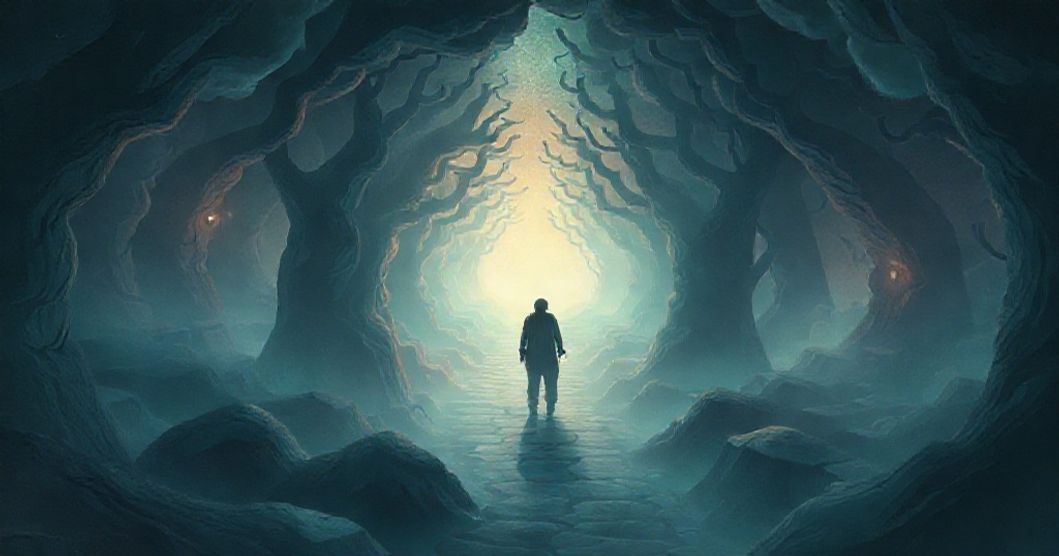
Dreams often serve as emotional compasses, guiding us through the fog of unconscious conflicts we cannot fully articulate in waking life. This particular sequence of nightmares manifests as a psychological odyssey, unfolding across three consecutive nights with increasing intensity. The narrative begins in a children’s party, where a young girl’s unkindness introduces a tension between curiosity and repulsion. As the dream progresses, the setting shifts to a residential neighborhood that transforms into a hospital—a space of healing that becomes a prison of dread. The recurring figure of a man at a podium embodies authority and judgment, while the little girl’s escalating torment mirrors the dreamer’s internalized pain. Each element—the tangled hair, the hospital corridors, the gate opening—functions as a symbolic bridge between the dreamer’s waking reality and the deeper recesses of their psyche.
The Rewritten Dream Narrative (as above)
Part 2: Clinical Analysis
Want a More Personalized Interpretation?
Get your own AI-powered dream analysis tailored specifically to your dream
🔮Try Dream Analysis FreeSymbolic Landscape of the Dream
The little girl with tangled hair and unruly behavior emerges as the dream’s central symbolic figure, representing the dreamer’s inner child—specifically, the part of themselves that experienced childhood trauma and never fully processed it. Her aggression is not random but a defense mechanism, her tangled hair a visual metaphor for emotional disarray and unaddressed pain. The hospital, appearing in both dreams, functions as a liminal space—neither fully real nor unreal, yet charged with medical imagery that conflates healing with imprisonment. In dream symbolism, hospitals often represent emotional processing or unresolved psychological wounds needing attention. The podium man embodies authority figures who may have perpetuated or witnessed the trauma, his critical comments about the dreamer’s happiness reflecting the dreamer’s internal conflict between healing and fear of exposure.
The recurring act of driving away after each encounter with the man and the girl’s screams represents the dreamer’s repeated attempts to escape emotional triggers in waking life, yet feeling trapped by the trauma’s persistence. The gate opening—manual, laborious, and fraught with tension—symbolizes the effort required to break free from psychological chains, while the 'thick, evil air' outside embodies the inescapable nature of trauma’s emotional residue.
Psychological Undercurrents
From a Jungian perspective, this dream sequence functions as a 'shadow integration' process, where the dreamer confronts repressed aspects of self—specifically, the angry, wounded child within. The podium man is the shadow archetype: a projection of the dreamer’s fear of authority and judgment, his fixed gaze representing the lingering shame of childhood abuse. The repetition of the same scenario across three dreams indicates the unconscious’s persistence in processing trauma, as dreams often revisit unresolved conflicts until their emotional charge is addressed.
Freudian theory would interpret the dreams as wish-fulfillment and displacement: the dreamer’s desire to protect the girl (and thus heal the inner child) is displaced onto the external scenario, while the aggressive man represents repressed anger toward abusers. The sexual undertones in the first dream’s 'rivalry' might symbolize the dreamer’s need to reclaim power in relationships, as the man’s jealousy of their happiness mirrors the dreamer’s own fear of vulnerability.
Neuroscientifically, these dreams activate the amygdala (fear response) and hippocampus (memory processing), suggesting the brain is reprocessing traumatic memories during REM sleep—a natural mechanism for emotional healing. However, the intensity of the dreams indicates that this processing is incomplete, requiring external intervention.
Emotional Resonance and Life Context
The dreamer’s self-identified connection to childhood trauma provides critical context. The recurring motif of the girl’s screams directly evokes the dreamer’s own unprocessed emotional pain from childhood abuse. The dreamer’s partner, present throughout the sequence, symbolizes the protective relationship dynamic—someone to shield from harm, yet the partner’s fear ('I don’t want to make it out') reveals how trauma affects even those closest to us. The hospital’s maze-like structure mirrors the dreamer’s internal emotional confusion, while the 'secret mission' to help others reflects a subconscious desire to assist not just the inner child but all victims of similar trauma.
The contrast between the tender moment in the lobby (flirting, connection) and the surrounding horror underscores the dreamer’s capacity for both healing and terror. This duality suggests the dreamer is in a transitional phase: beginning to heal but still haunted by the past, unable to fully escape the trauma’s gravitational pull.
Therapeutic Insights
For the dreamer, these recurring nightmares offer a roadmap for healing. First, journaling each dream’s details—especially the emotions and specific images—can help identify patterns in waking triggers (e.g., authority figures, enclosed spaces). Trauma-focused therapies like EMDR or CBT can process the emotional charge of these dreams, allowing the dreamer to separate past from present.
Practical exercises include creating a 'safety ritual' before sleep: writing down the dream’s key symbols, then visualizing the girl in a safe space (e.g., a garden) where she can express her anger without fear. This practice externalizes the inner child’s pain, transforming it into a manageable emotional object. The partner’s role is crucial: encouraging open dialogue about the dreams, validating the dreamer’s feelings, and creating a secure environment to process trauma.
Long-term healing involves integrating the protective instinct seen in the dream into daily life—setting boundaries with toxic relationships, advocating for oneself, and creating spaces of safety. The recurring hospital imagery can be reframed as a metaphor for ongoing self-care: scheduling regular 'healing check-ins' to address emotional needs before they escalate.
FAQ Section
Q: Why does the little girl’s anger feel so personal in my dreams?
A: The girl represents your inner child, whose unprocessed anger and fear were never allowed to surface healthily. Her behavior is your subconscious’s way of expressing that repressed pain.
Q: How can I differentiate between trauma triggers in dreams and current stressors?
A: Dreams with recurring symbols (podium man, hospital) signal unresolved trauma. Note waking stressors (e.g., work deadlines) and see if they align with the dream’s intensity; if not, focus on the symbol’s emotional resonance.
Q: Is there a risk of these dreams worsening without intervention?
A: Unprocessed trauma can manifest as nightmares, anxiety, or dissociation. Consistent journaling and therapeutic support help integrate the dream’s emotional lessons, reducing its power over waking life.