
Part 1: Dream Presentation
Dreams often arrive as cryptic messengers, bridging the conscious and unconscious realms with symbolic language that resists easy translation. In this nocturnal vision, the dreamer stands at a threshold between safety and exposure, confronting a striking tableau of wild animals that mirror deeper emotional landscapes. The scene unfolds with the clarity of a waking moment yet carries the surreal logic of dreams: a black wolf, its form stark against the night, locks eyes with the dreamer, followed by a pack of coyotes that shift and move with predatory precision. The dreamer’s immediate response—running to protect loved ones—reveals a primal concern for safety and connection that permeates the narrative.
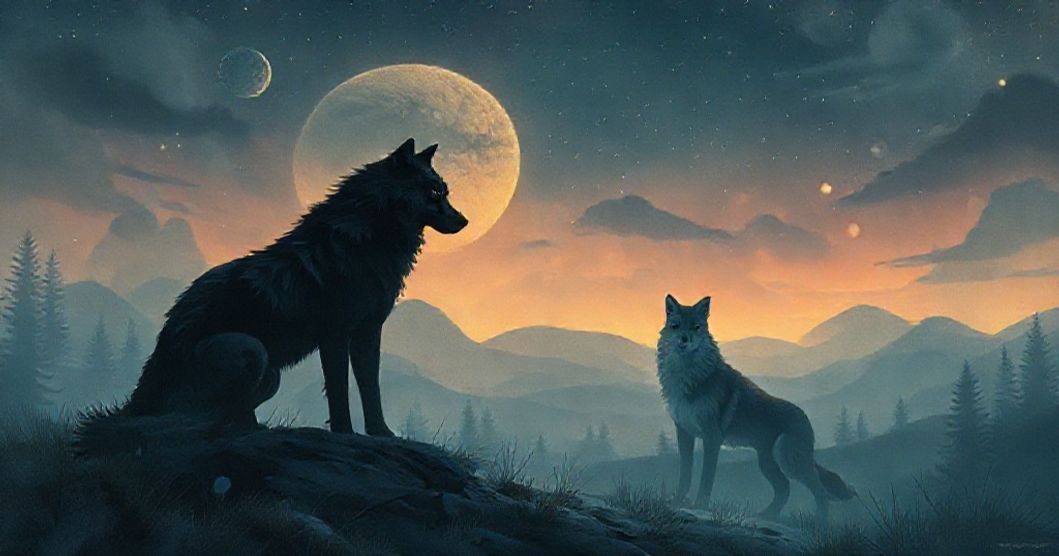
Last night, as I drifted between sleep and wakefulness, I found myself standing at a familiar window, the glass cool beneath my fingertips. Outside, the night air felt thick with an unspoken tension, and my gaze was drawn to a figure silhouetted against the darkening sky—a black wolf, its form stark against the muted tones of the evening. It held my stare with an intensity that felt both primal and knowing, as if it had been waiting for me to notice it. Behind it, a shifting mass of movement revealed a pack of coyotes, their eyes glinting like scattered embers in the dim light. My heart quickened as I recognized the threat, not just to myself but to those I loved. Without conscious thought, I turned and sprinted through the house, my feet pounding against the floorboards, driven by an urgent need to check on my dog and my brother. In my dream, the world felt both fragile and charged with danger, and I raced to ensure safety before the shadows could claim what mattered most. Now, I find myself curious about the meaning behind this encounter, especially since I recalled reading that black wolves often symbolize loneliness in dreams—yet this one traveled with a pack of four or five coyotes, a contradiction that demands deeper exploration.
Part 2: Clinical Analysis
Want a More Personalized Interpretation?
Get your own AI-powered dream analysis tailored specifically to your dream
🔮Try Dream Analysis FreeSymbolic Landscape: The Wolf, Coyotes, and Protective Urges
The black wolf stands as a central symbol in this dream, carrying multiple layers of meaning rooted in both cultural mythology and psychological symbolism. In dream imagery, wolves typically represent instinctual power, intuition, and the wild aspects of the self that may feel untamed or misunderstood. The black coloration adds another dimension: in many traditions, black animals symbolize the unconscious mind, hidden truths, or aspects of the self that remain unacknowledged in waking life. The wolf’s direct stare introduces a crucial dynamic of confrontation—this is not a passive observer but an active presence demanding attention.
The coyote pack, however, introduces a significant contrast to the wolf’s solitary reputation. Coyotes, often associated with adaptability, community, and sometimes cunning, represent social connections and collaborative energy. The juxtaposition of the lone-wolf symbolism (often linked to independence or isolation) with the coyote pack creates a tension that invites exploration: is this a representation of the dreamer’s inner conflict between needing solitude and craving connection? Or does it suggest a shift from feeling alone to finding strength in community?
The window serves as a threshold symbol, separating the safe interior space from the potentially dangerous exterior world. The act of running to check on loved ones (dog and brother) reveals a core protective instinct—a desire to safeguard those who matter most. This action underscores themes of care, vulnerability, and the fear of loss, all common emotional undercurrents in dreams that involve loved ones in perilous situations.
Psychological Undercurrents: Jungian, Freudian, and Modern Perspectives
From a Jungian perspective, the wolf may represent the animus or animus archetype—the masculine or instinctual aspects of the self that seek integration. The black wolf’s intensity could signify a shadow aspect that demands recognition; the shadow in Jungian theory represents repressed parts of the psyche that need conscious awareness to achieve wholeness. The coyote pack, as a collective, might symbolize the dreamer’s social connections or the need for collaboration in addressing inner conflicts.
Freudian analysis might interpret the wolf and coyotes as manifestations of repressed emotions or instincts. The wolf’s staring could represent an unresolved fear or anxiety that has been