
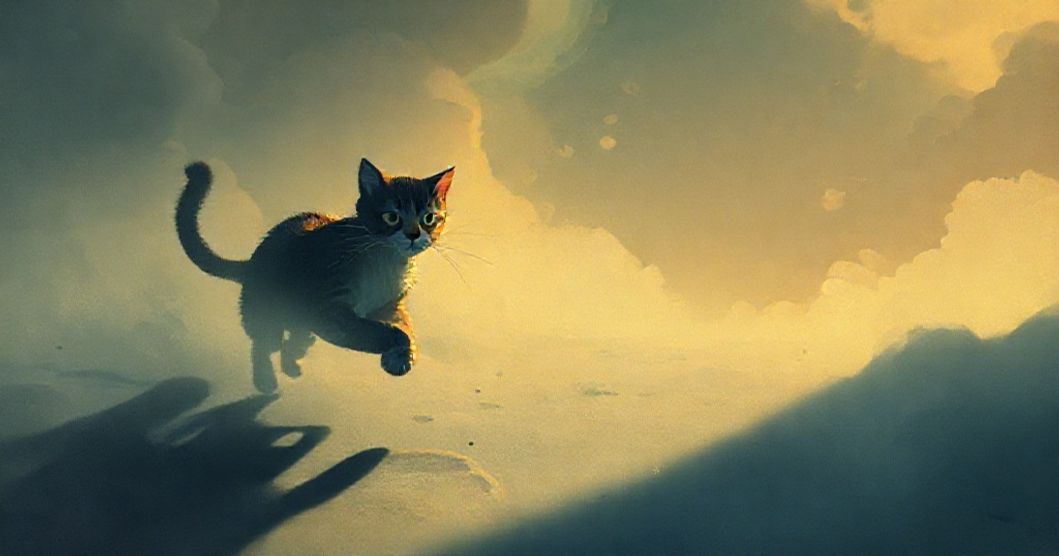
Part 1: Dream Presentation
Dreams often serve as mirrors held up to our inner lives, reflecting tensions we may avoid in waking moments with unsettling clarity. This particular dream plunges the dreamer into a surreal chase through shifting landscapes, where feline figures embodying primal fears transform before the eye. The dream begins with two black cats—their sleek, midnight coats glinting with an almost predatory intelligence—pursuing the dreamer relentlessly. Their pursuit feels both inescapable and deeply personal, as if these creatures represent aspects of the self we’ve disowned or fears we’ve suppressed. A physical bite to the elbow introduces a violation of boundaries, a sensation of being wounded by forces we cannot fully name. When the dreamer throws melting ice cream—a symbol of fleeting comfort or vulnerability—to create an opening, the cats’ color shift to vivid orange is a pivotal moment of transformation. This sudden hue change suggests that what initially appeared as threatening shadows might contain unexpected potential for change, even as the dream escalates to three cats with shared eyes, heightening the surrealism and emotional intensity.
The dream concludes in a recurring room, a space both familiar and transformed, bathed in the darkness of night. The dreamer’s perception of being eighteen again hints at a period of identity formation, where the self is still evolving and uncertain. This setting of transition—between past and present, safety and danger—frames the entire dream as a psychological journey through the unconscious.
Part 2: Clinical Analysis
Want a More Personalized Interpretation?
Get your own AI-powered dream analysis tailored specifically to your dream
🔮Try Dream Analysis FreeSymbolic Landscape: The Language of Feline Figures
Black cats in dreams typically embody the shadow archetype—those hidden, often feared aspects of ourselves we project onto the external world. Their relentless pursuit mirrors an internal conflict: the dreamer may feel hunted by unacknowledged anxieties, responsibilities, or unresolved emotions. The bite to the elbow represents a violation of personal boundaries, suggesting the dreamer feels vulnerable to external pressures or internal self-doubt. The melting ice cream, though initially a desperate act of self-preservation, becomes a paradoxical tool of transformation. Its sticky, fleeting nature symbolizes attempts to control chaotic emotions through temporary solutions that ultimately fail, yet create space for unexpected shifts.
The color transformation from black to orange is particularly significant. Black often signifies the unknown, mystery, or repressed darkness, while orange carries associations with creativity, energy, and warmth—suggesting the dreamer’s shadow self might contain untapped potential for vitality. The three cats with shared eyes introduce a more complex symbolic layer: shared vision implies both unity and fragmentation, as if the dreamer’s perception of reality is merging or splitting into new perspectives. This shared eye could represent the integration of previously separate aspects of self or the loss of individual identity in the face of overwhelming forces.
Psychological Currents: Theoretical Frames of Interpretation
From a Jungian perspective, the cats embody the shadow—archetypal figures representing repressed aspects of the psyche that demand integration. The relentless pursuit is a classic shadow confrontation, where the unconscious forces the dreamer to face these neglected parts. The color shift from black to orange reflects the shadow’s potential for transformation when brought into consciousness, suggesting the dreamer may be on the verge of integrating previously feared or rejected traits.
Freudian analysis might interpret the cats as manifestations of repressed childhood anxieties or unresolved conflicts. The biting could symbolize aggressive impulses or fears of being “attacked” by internal pressures, while the ice cream represents the dreamer’s attempt to soothe or control these anxieties through temporary, comforting measures that ultimately fail.
Neuroscientifically, dreams process emotional memories and unresolved stressors, with the cats’ transformation suggesting the brain’s attempt to reorganize emotional responses to threatening stimuli. The recurring room in multiple dreams indicates a persistent theme or unresolved issue, as the mind revisits this space to process underlying emotions.
Emotional and Life Context: Navigating Transition and Uncertainty
The dream’s setting and emotional tone suggest the dreamer is navigating a period of significant life transition—perhaps a new phase of adulthood, career uncertainty, or identity exploration. The feeling of being 17 or 18 hints at a return to a time of self-discovery, where the future felt both exciting and terrifying. The recurring room in multiple dreams may symbolize a “safe” yet evolving space, where the dreamer seeks to reconcile past experiences with present reality.
The cats’ unrelenting pursuit likely reflects fears of being overwhelmed by responsibilities, relationships, or self-doubts. The dream’s conclusion in a transformed room suggests a need to revisit and reinterpret this familiar space—perhaps to recognize its new potential rather than its past limitations. The melting ice cream, though initially ineffective, creates a brief opening, mirroring how even small acts of courage can create opportunities for transformation.
Therapeutic Insights: From Confrontation to Integration
This dream offers a call to confront rather than avoid shadow aspects. The dreamer might benefit from journaling about recent stressors or anxieties that feel “chasing” them. The color shift from black to orange suggests that darkness can transform into something vibrant, inviting the dreamer to explore creative outlets or emotional resilience.
Reflective practices could include asking: What aspects of myself feel “pursued” and how might I redirect that energy? The shared-eyed cats invite the question: How might I integrate seemingly disparate parts of myself into a unified whole? The recurring room suggests revisiting past dreams or memories with fresh perspective, acknowledging how they shape current identity.
Practical steps might involve mindfulness exercises to recognize when anxiety feels “chasing” them, and creative visualization to transform fear into purposeful action. The dream’s transformative color shift encourages embracing uncertainty as a catalyst for growth rather than a source of dread.
FAQ: Unpacking the Dream’s Most Symbolic Elements
Q: What does it mean to have three cats with one shared eye?
A: This imagery suggests psychological fragmentation or the merging of distinct self-aspects. The shared eye may represent seeing the world from a unified perspective rather than through conflicting lenses, signaling potential integration of previously separate parts of your psyche.
Q: Why did the cats change from black to orange?
A: Black often symbolizes fear or the unknown, while orange signifies warmth, creativity, and vitality. This shift suggests your unconscious is revealing hidden potential within what felt threatening, inviting you to transform anxiety into energy.
Q: What’s the significance of the recurring room in multiple dreams?
A: The recurring room represents an unresolved theme or emotional pattern you’re revisiting to process. Its changing aesthetic suggests your perception of this space (and yourself within it) is evolving, requiring you to adapt your relationship to past experiences.