
Part 1: Dream Presentation
Dreams often serve as the unconscious mind’s way of processing unresolved emotions, unspoken desires, and emerging life transitions. Consider this recurring dream that haunted its young dreamer for years, a narrative rich with symbolic tension between the unreal and the real, the expected and the unexpected.
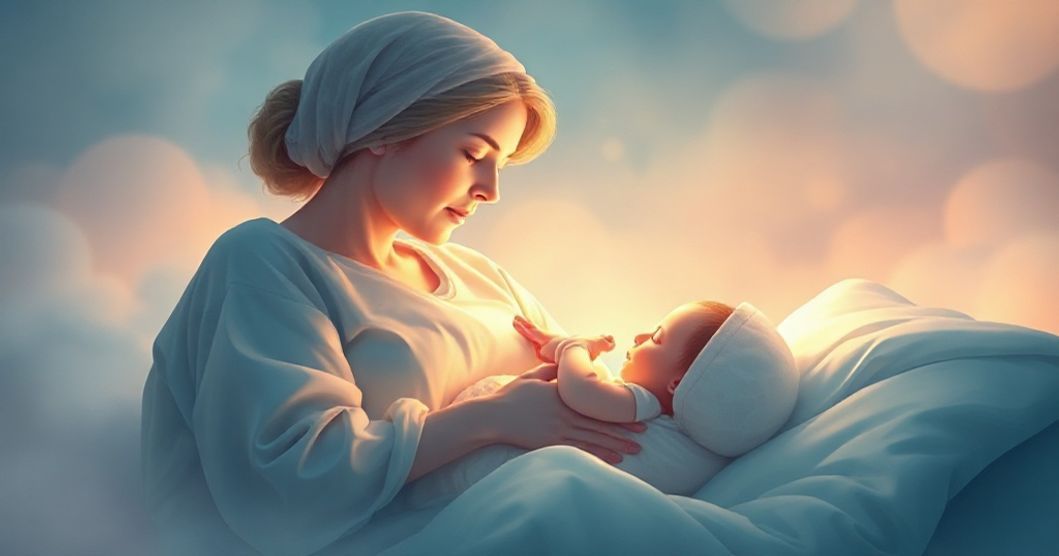
During my adolescence, I experienced a recurring dream that felt both vivid and perplexing. In each iteration, I found myself in a softly lit hospital room, surrounded by the reassuring presence of loved ones. The labor process unfolded with surprising ease—painless, almost dreamlike, with no trace of the agony I’d later learn real childbirth entails. When the moment arrived, I cradled a baby in my arms, but it was not a living infant. It was a baby doll, its plastic features smooth and unblinking, its limbs impossibly still. What struck me most was the world’s reaction: everyone around me treated this doll as if it were perfectly real. My family cooed over its 'cuteness,' my friends offered advice on 'baby care,' and even the nurses checked its 'vital signs' with solemn seriousness. I alone knew the truth—it was a doll, a facsimile of life—but an overwhelming wave of love surged through me, tender and protective, as if the doll’s synthetic form could somehow contain the depth of my maternal instincts. This dream repeated for years, each time identical in structure yet uniquely intense in its emotional resonance. The painless labor felt like a metaphor for something I couldn’t name—a desire to nurture without fear, or perhaps a longing to fulfill a role I’d never explicitly acknowledged. When I turned twenty-two, I became a mother to a real baby girl, and the dream vanished overnight. The moment I held my actual child, warm and squirming and alive, the plastic baby in my dreams felt irrelevant, replaced by the tangible reality of a living heartbeat. I’ve often wondered about the meaning of that recurring vision, its connection to my unexpected journey into motherhood, and whether it was a prophecy or merely a reflection of the expectations I carried, even unconsciously, about what it meant to be a parent.
Part 2: Clinical Analysis
Want a More Personalized Interpretation?
Get your own AI-powered dream analysis tailored specifically to your dream
🔮Try Dream Analysis FreeSymbolic Landscape of the Dream Baby
The baby doll in this dream functions as a powerful symbol of the unconscious’s attempt to process maternal identity before it was fully formed in waking life. The doll itself represents an idealized, uncomplicated version of motherhood—free from the physical and emotional complexities of real childbirth, yet still capable of evoking profound love and care. The dreamer’s knowledge that the baby was not real while others treated it as such suggests a split between conscious awareness and collective projection: the dreamer alone recognized the doll’s artificiality, while the external world (family, friends, medical professionals) embodied the social script for motherhood. This division hints at the tension between personal experience and societal expectations of what it means to be a mother.
The 'painless labor' deserves special attention as a symbolic element. In dreams, painless childbirth often represents a desire for ease in assuming new roles or identities—particularly maternal ones. For the dreamer, who had never experienced real labor, the painless process mirrored a wish for maternal fulfillment without the fear or struggle associated with real life transitions. It suggested an unconscious belief that motherhood could be both desirable and effortless, a comforting fantasy that would later collide with the reality of raising a real child.
Psychological Perspectives: Unpacking the Layers
From a Freudian lens, the recurring baby doll dream may reflect repressed maternal instincts or unresolved childhood fantasies about caregiving. Freud often emphasized how dreams manifest unacknowledged desires, and here the doll could represent a sublimated longing for nurturing that the dreamer had not yet integrated into waking life. The dreamer’s lack of explicit longing to be a mother in adulthood suggests these desires were not conscious but rather operating in the unconscious, waiting to be activated by real life events.
Jungian analysis, meanwhile, would interpret the baby as an archetypal symbol of the Self—wholeness, potential, and new beginnings. The recurring nature of the dream suggests the unconscious was working through a significant life transition, using the doll as a placeholder for the real thing until the time was right for its emergence. The dream’s resolution upon the arrival of a real child aligns with Jung’s concept of synchronicity, where external events mirror internal psychological processes.
Object relations theory adds another layer, exploring how the dreamer’s relationship to the baby doll reflects early attachment patterns. The doll’s perfect, static form might represent an idealized mother-child bond, while the dreamer’s love despite its artificiality hints at an innate capacity for care that transcends the limitations of reality. This aligns with Winnicott’s concept of the 'good enough mother,' where even imperfect care can foster healthy development—suggesting the dream’s symbolic doll represented the dreamer’s internal blueprint for motherhood.
Emotional and Life Context: The Transition to Motherhood
The dream’s timing—resolving upon the arrival of a real child at age 22—suggests it was closely tied to the dreamer’s emerging adult identity. Before this, the dreamer reports 'never having this longing to be a mother' yet being 'open to the idea.' This tension between conscious openness and unconscious preparation for motherhood is key. The recurring dream may have been the mind’s way of processing the fear of new responsibilities, the excitement of potential parenthood, and the uncertainty of stepping into an identity that felt both new and inevitable.
The dream’s emotional core—the 'immense love' for a fake baby despite its artificiality—reveals an important truth about maternal capacity: it can exist in the absence of a biological child, suggesting that the dreamer’s unconscious was already capable of nurturing, even in the form of symbolic representation. This love, untainted by the messiness of real life, hints at the purity of maternal potential before it is tested by the realities of parenting.
The dream’s resolution upon the arrival of a real child suggests that the unconscious was preparing the dreamer for the transition, using the doll as a rehearsal for the real thing. This aligns with the psychological concept of 'preparation for birth'—the dreamer’s internal world was 'giving birth' to maternal identity through symbolic means before the actual birth occurred.
Therapeutic Insights: From Dream to Reality
This dream offers several valuable lessons for anyone navigating maternal identity or life transitions. First, it highlights the importance of distinguishing between idealized expectations and real experiences. The painless labor and perfect doll represented a fantasy of motherhood, while the real child brought with it the full spectrum of joys and challenges. The dream encourages the dreamer—and others—to embrace the messiness of reality rather than clinging to idealized versions of roles or relationships.
A practical reflection exercise would involve journaling about moments when the dream’s themes resurface in waking life—perhaps in relationships, career choices, or self-perception. By recognizing these patterns, the dreamer can begin to integrate the symbolic insights into daily life.
For long-term integration, the dream suggests that maternal identity is not something we 'find' but rather something we 'grow into,' often through unexpected paths. The dream’s resolution upon the arrival of a real child reminds us that the unconscious often provides clues and rehearsals for life transitions, even when we are not consciously aware of them.
FAQ Section
Q: Why did the dream feature a baby doll instead of a real baby?
A: The doll symbolizes the dreamer’s internal blueprint for motherhood—an idealized, uncomplicated version of caregiving that existed before real experience. It represents the potential for nurturing without the messiness of reality.
Q: What does the 'painless labor' symbolize in this dream?
A: Painless labor reflects the dreamer’s wish for maternal fulfillment without struggle or fear. It suggests an unconscious belief that motherhood could be effortless, a comforting fantasy that would later be tested by real life.
Q: How did the arrival of a real child resolve the recurring dream?
A: The real child provided the 'real' fulfillment the dream symbolized, allowing the unconscious to release its symbolic rehearsal. This aligns with Jung’s concept of synchronicity, where external events mirror internal psychological processes, resolving the tension between fantasy and reality.