
Part 1: Dream Presentation
Dreams often serve as mirrors reflecting our deepest inner landscapes, and for this dreamer, the recurring apocalyptic visions have emerged as a compelling psychological narrative spanning two months and eight distinct yet continuous episodes. These dreams, though vivid and unsettling, offer a window into the subconscious’s attempt to process complex emotional and existential themes. Unlike the dreamer’s usual pattern of infrequent or unremembered dreams, these apocalyptic visions have become a consistent, almost ritualistic experience—each one building upon the last, creating a cohesive narrative that feels both urgent and deeply personal.
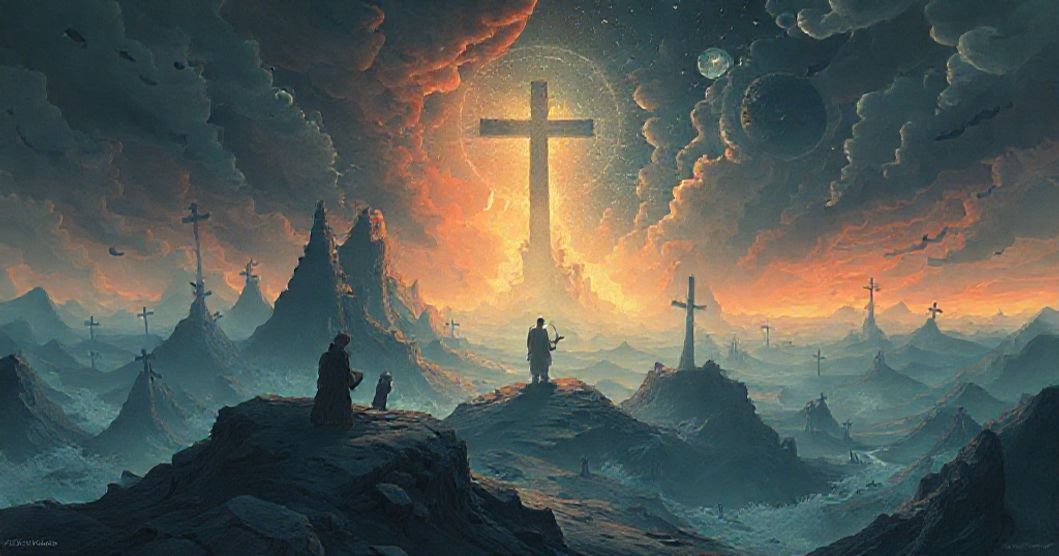
The dream begins with mass disappearances, a theme that evokes biblical imagery of the Rapture, combined with environmental catastrophes reminiscent of The Day After Tomorrow. The dreamer, raised in a Catholic household and deeply connected to Christian traditions, describes a setting that merges religious prophecy with natural disaster, creating a surreal landscape of spiritual and environmental collapse. Throughout these dreams, an unseen dark entity stalks the dreamer, never fully visible but always present, infusing the narrative with a sense of existential dread. The dreamer’s emotional response—fear, confusion, and a growing sense of inevitability—becomes increasingly intense with each subsequent dream.
The most recent dream introduces a pivotal shift: the dreamer finds safety in an old church, only to encounter a broken statue of Jesus, its chest shattered and eyes bleeding. This final element, the broken religious symbol, marks a turning point in the dream’s narrative, suggesting a confrontation with spiritual identity and the nature of faith itself. The dreamer’s awakening scream and the sense of “dying” within the dream reflect a profound psychological experience, blurring the boundaries between sleep and waking reality.
Want a More Personalized Interpretation?
Get your own AI-powered dream analysis tailored specifically to your dream
🔮Try Dream Analysis FreePart 2: Clinical Analysis
Symbolic Landscape: The Apocalypse as Psychological Metaphor
The recurring apocalypse dreams serve as a rich symbolic landscape, with each element carrying multiple layers of meaning. The apocalyptic setting itself—mass disappearances, earthquakes, floods, and hellfire—can be interpreted as a manifestation of the dreamer’s internal “collapse” of security and stability. In psychological terms, such imagery often represents the subconscious processing of existential anxieties, particularly around mortality, change, and the fragility of life. The dreamer’s Christian upbringing provides crucial context: the Rapture theme merges with environmental disaster, creating a hybrid narrative that speaks to both spiritual and secular fears.
The “dark entity” that stalks the dreamer without being seen is a classic symbol of the unconscious mind’s shadow aspects—elements of the self that remain unacknowledged or feared. In Jungian psychology, the shadow represents repressed emotions, unresolved conflicts, or fears that lurk beneath the surface of awareness. Here, the entity may symbolize the dreamer’s own unprocessed anxieties about faith, mortality, or existential uncertainty. The fact that the entity is unseen yet omnipresent suggests a fear of confronting these deeper aspects of self directly.
The broken Jesus statue is perhaps the most powerful symbolic element. In Christian tradition, Jesus represents divinity, sacrifice, and spiritual guidance. A broken statue, particularly with its chest shattered and eyes bleeding, can be interpreted as a crisis of faith or a questioning of traditional religious symbols. The statue’s “calling out” to the dreamer suggests a plea for attention—a subconscious invitation to explore the dreamer’s relationship with their faith and how it intersects with current life circumstances.
Psychological Perspectives: Understanding the Layers of Meaning
From a Freudian perspective, these dreams may represent repressed anxieties and unresolved conflicts that have emerged during sleep. The apocalypse could symbolize the dreamer’s fear of losing control or facing inevitable change, while the mass disappearances might reflect a sense of being overwhelmed by external forces beyond personal influence. The dark entity could embody repressed anger, guilt, or existential dread that the dreamer has not yet processed in waking life.
Jungian psychology offers a complementary lens, viewing the apocalypse as a collective archetype—the “Great Work” of individuation. The recurring nature of the dreams suggests a psychological process in motion, where the unconscious is attempting to integrate fragmented aspects of self. The broken statue, in particular, aligns with Jung’s concept of the “anima/animus” or the “shadow,” representing the dreamer’s confrontation with a wounded aspect of their spiritual identity.
Cognitive psychology might interpret these dreams as a way for the brain to process stressors and emotional states during sleep. The dreamer’s two-month period of frequent dreams coincides with a period of significant change or stress, where the mind seeks to organize and make sense of overwhelming experiences through symbolic narratives. The continuity of the dreams suggests a persistent emotional theme that requires attention.
Emotional & Life Context: Tracing the Roots of Anxiety
The dreamer’s lifelong Christian upbringing, combined with Catholic school attendance and church attendance, provides critical context for the religious symbolism. The Rapture theme reflects eschatological beliefs, which can create a natural framework for interpreting apocalyptic imagery. However, the dream’s evolution from environmental disaster to a broken religious symbol suggests a deeper exploration of faith’s role in the face of existential uncertainty.
The “continuity” of the dreams—each one building upon the last—indicates a persistent emotional undercurrent. The dreamer’s description of the first dream and its subsequent “continuations” suggests a narrative that is unresolved, creating a sense of psychological urgency. The “dark entity” and the stalker imagery may reflect feelings of being hunted by internal fears or external pressures, such as work stress, relationship issues, or uncertainty about life direction.
The shift from environmental to spiritual collapse in the dream could signal a transition from external concerns to internal ones. The dreamer’s Christian background may be creating a subconscious tension between traditional beliefs and modern anxieties, leading to a questioning of spiritual identity in the face of existential threats.
Therapeutic Insights: Navigating the Apocalyptic Dreamer’s Journey
For the dreamer, these recurring apocalyptic dreams offer an opportunity for self-exploration and emotional processing. The first step is to recognize the dreams as a form of psychological communication rather than literal predictions. Keeping a dream journal to document each dream’s details—including emotions, symbols, and potential waking associations—can help identify patterns and underlying themes.
Exploring the religious symbolism within the dream can provide clarity. The broken statue might invite reflection on how the dreamer’s faith is being tested or transformed. Journaling about personal beliefs, doubts, and spiritual questions can help process these feelings, separating them from the fear-inducing imagery of the dream.
Creating a sense of safety and control in waking life may reduce the intensity of these dreams. Practices like mindfulness meditation, journaling before bed, or engaging in grounding exercises can help manage anxiety and prevent the mind from fixating on apocalyptic themes during sleep.
If the dreams persist, exploring underlying stressors or life changes is essential. The dreamer might benefit from discussing these themes with a trusted spiritual advisor, therapist, or counselor, creating a space to unpack the emotional and spiritual layers of the dreams.
FAQ Section
Q: Why do these apocalyptic dreams feel so continuous and intense?
A: Recurring dreams often signal unresolved emotions or themes. The continuity suggests a psychological process in motion, where the mind attempts to integrate fragmented experiences or anxieties into a coherent narrative.
Q: What does the broken Jesus statue symbolize in this context?
A: A broken religious statue typically represents a crisis of faith or questioning traditional beliefs. Here, it may symbolize the dreamer’s struggle with spiritual identity, particularly in the face of existential uncertainty.
Q: How can I differentiate between my dreams and waking life concerns?
A: Dream journaling helps track themes. If anxiety persists, mindfulness practices and grounding exercises can reduce the intensity of apocalyptic imagery, allowing clearer distinction between dream and reality.