
Part 1: Dream Presentation
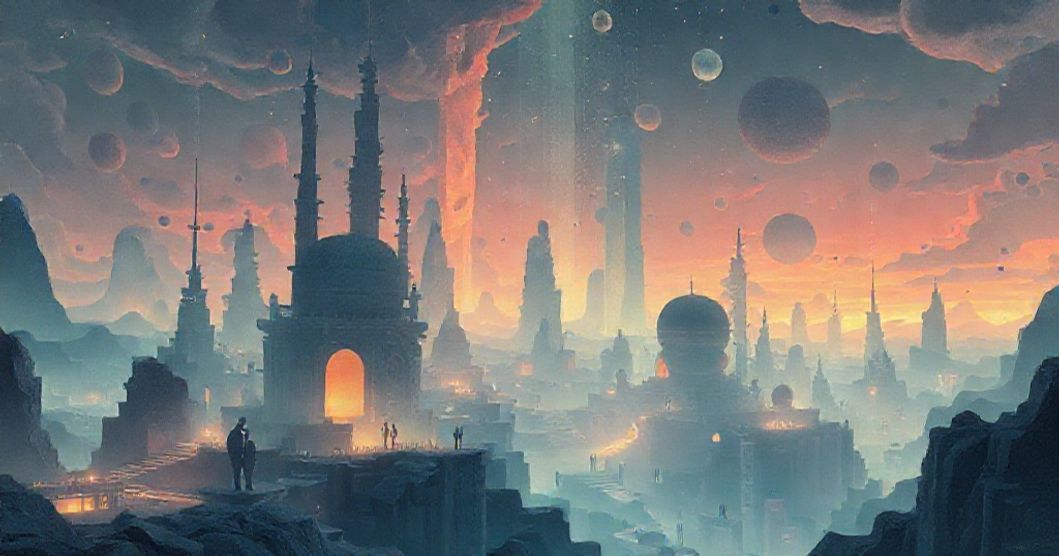
Dreams have long fascinated humanity as mysterious landscapes where reality bends to the unconscious mind’s design. In this particular dream experience, the dreamer describes a distinct act of creative agency: actively constructing and shaping dream locations with deliberate, almost architectural precision. This unique perspective transforms the passive nature of dreaming into an active process of creation, where the mind becomes both architect and inhabitant of its own imaginary realm.
The dreamer begins their process with familiar reference points—the blocky geometry of Minecraft worlds—before expanding into more abstract forms. They start with foundational elements: either a remembered skybox or a stark black void as a backdrop, using simple colored planes and cubes to outline structures. For recurring locations that capture their interest, they add intricate details, creating a layered, evolving dreamscape that defies the typical fleeting nature of dreams. This deliberate construction process reveals a profound connection between conscious intention and the dream state, suggesting a form of lucid dreaming where the dreamer actively participates in shaping their reality.
Part 2: Clinical Analysis
Want a More Personalized Interpretation?
Get your own AI-powered dream analysis tailored specifically to your dream
🔮Try Dream Analysis FreeSymbolic Landscape of Dream Construction
The act of constructing dream locations represents a powerful symbolic expression of agency and creative control. In dreams, where reality is typically unconstrained by physical laws, the dreamer’s deliberate use of geometric forms (planes, cubes) reflects a primal need to impose order on chaos—a fundamental human impulse to create structure from the unknown. The 'sky box' or 'black background' serves as a metaphor for different states of awareness: the sky box might represent remembered or familiar contexts, while the black void embodies the limitless potential of the unconscious mind. These foundational elements mirror how the brain organizes information during waking life, using basic building blocks to construct complex narratives.
Recurring locations, which the dreamer chooses to 'add models to,' symbolize psychological anchors—elements of the self that demand attention or resolution. In dreamwork, recurring locations often represent unresolved themes or aspects of the psyche that need exploration. By transforming these fragments into tangible landscapes, the dreamer demonstrates an adaptive approach to dream interpretation: rather than passively experiencing dreams, they engage with them as active collaborators, reshaping their internal world to align with conscious intentions.
Psychological Lenses on Dream Construction
From a Jungian perspective, this process reflects the active participation of the collective unconscious in constructing meaning. The dreamer’s use of geometric forms aligns with the archetype of the 'builder' or 'creator,' a fundamental symbol across cultures representing the drive to manifest order from chaos. In contrast, Freudian theory might interpret this as a manifestation of repressed desires for control—particularly relevant if the dreamer experiences feelings of powerlessness in waking life. The comparison to Minecraft and Blender suggests a connection to the waking self’s creative outlets, where digital construction tools become extensions of the mind’s ability to shape reality.
Cognitive neuroscience offers another lens: during REM sleep, the brain’s default mode network activates, constructing coherent narratives from scattered neural activity. The dreamer’s deliberate construction mimics this process, where the mind synthesizes disparate elements (memories, desires, fears) into a cohesive dreamscape. This aligns with research showing that the brain uses predictive coding to fill in gaps, much like the dreamer’s 'colored planes and cubes' filling the 'black background' of the dream.
Emotional and Cognitive Context
The dreamer’s curiosity about 'how the brain works' suggests an intellectual engagement with their own mind—a sign of self-awareness and psychological openness. The shift from Minecraft to personal construction reflects a progression from external digital worlds to internal symbolic landscapes, indicating a deepening connection between waking creativity and dream imagery. This transition mirrors the broader psychological process of integrating conscious and unconscious elements, where waking skills (like 3D modeling in Blender) influence how the mind constructs reality during sleep.
The question about 'doing this in Blender' reveals a desire for external validation and shared experience—a social aspect of dream exploration. Dreams often serve as private, internal experiences, but the dreamer’s openness to discussing their technique suggests a need to connect with others who share similar cognitive patterns, validating the uniqueness of their approach while seeking confirmation of its psychological significance.
Therapeutic Insights: Building Awareness Through Dream Architecture
This dream offers valuable therapeutic insights for anyone interested in self-exploration. The practice of constructing dream locations can be adapted as a mindfulness exercise: by intentionally shaping dreamscapes, individuals develop greater awareness of their thought patterns and emotional states. When recurring locations appear, they signal areas requiring attention—perhaps unresolved conflicts or unmet needs. Journaling these locations and analyzing their symbolic elements can provide clarity on waking life challenges.
For creative individuals, this process demonstrates how the unconscious mind can be harnessed as a source of inspiration. The dreamer’s ability to 'add models to recurring locations' suggests a strategy for integrating feedback loops: observe recurring patterns, analyze their meaning, and modify the dreamscape to reflect desired changes. This approach can be applied to waking life, where creative visualization techniques enhance problem-solving by structuring thoughts into tangible plans.
Practical Applications for Dream Construction
1. Dream Journaling with Architecture: Document recurring dream locations, noting their geometric forms and emotional tone. This creates a visual record of psychological themes. 2. Symbolic Reshaping: When a recurring location causes discomfort, mentally 'remodel' it using elements that evoke safety or resolution (e.g., adding water to a barren landscape for emotional nourishment). 3. Bridging Waking and Dream Creativity: Experiment with waking visualization techniques inspired by the dreamer’s method, such as sketching or 3D modeling to externalize internal dreamscapes.
FAQ Section
Q: Why do some people feel the need to construct dream locations while others experience more spontaneous dreams?
A: This reflects individual differences in dream control (lucid dreaming) and cognitive style. Those who construct dream locations often have higher self-awareness and agency, while spontaneous dreams may stem from less active engagement with the dream state.
Q: How does this relate to lucid dreaming techniques?
A: Lucid dreaming involves recognizing one is dreaming; constructing locations represents a deeper form of lucid engagement, where the dreamer actively shapes the environment, merging lucidity with creative expression.
Q: Can this practice help with nightmares or negative dream states?
A: Yes—by consciously restructuring the dream environment, the dreamer can transform nightmares into manageable, symbolic landscapes, reducing fear and gaining a sense of control.
Conclusion
The dreamer’s unique approach to constructing dream locations illuminates a profound truth: dreams are not passive experiences but dynamic landscapes shaped by both the unconscious and conscious mind. By acting as architects of their internal worlds, they demonstrate how self-awareness and creative intention can transform even the most surreal aspects of sleep into tools for psychological growth. This practice bridges the gap between waking creativity and dream exploration, offering a roadmap for integrating the two into a cohesive journey of self-discovery.