
Part 1: Dream Presentation
Dreams often serve as psychological palimpsests, overlaying disparate memories and anxieties onto a single narrative canvas. This particular dream unfolds as a vivid journey through theatrical preparation, sci-fi menace, and transformative identity, creating a surreal landscape where childhood creativity collides with adult fears. Here is the complete dream as experienced:
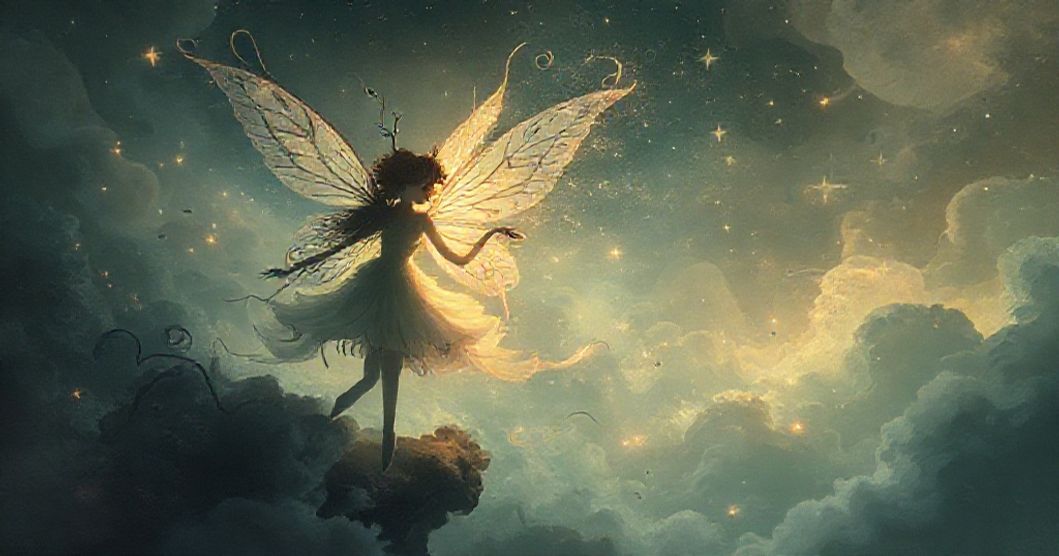
It was time for the annual eventyrstien—a cultural school tradition held in the local park, where various groups staged small performances. My theatrical group gathered in a cozy cabin, preparing for our act. I was to be a fairy, with white sparkly wings painstakingly painted by my teacher and white hooves carefully applied by another girl. The anticipation of performance hummed in the air as we adjusted costumes and makeup.
Suddenly, the setting fractured into a stark, futuristic structure—part hospital, part prison, part sci-fi facility. A voice explained my mission: a villainess with insectoid henchmen patrolled the halls, and I must avoid capture. The villainess herself was a towering figure with oily black, bug-like skin and orange beetle wings, while her henchmen, shorter and hunched, moved with predatory precision. I navigated the corridors, finding safety in the crowd of people who made detection impossible.
Want a More Personalized Interpretation?
Get your own AI-powered dream analysis tailored specifically to your dream
🔮Try Dream Analysis FreeReturning to the cabin, I joined my fellow performers, then stepped outside onto a steep heather-covered hill bathed in purple-teal light, reminiscent of Pandora’s bioluminescent forests. The tranquility ended as the villainess and her henchmen emerged, chasing me. In her grasp, I underwent a subtle transformation: my fairy wings and hooves remained, but my color palette shifted to deeper blues with orange accents, and tiny white stars appeared on my cheeks. Despite this change, I continued in the parade, suggesting a “dream-like sadness” to my teacher.
Part 2: Clinical Analysis
The Symbolic Landscape: Fairy, Spider-Villain, and Transformative Color
The fairy imagery represents the dreamer’s creative, playful self—an aspect of identity rooted in childhood performance and artistic expression. The white wings and hooves symbolize purity and potential, while the collaborative effort in preparing these elements suggests community support in self-expression. The sci-fi prison/hospital setting introduces a more abstract, threatening dimension, where the villainess and henchmen embody the “shadow” elements of the dreamer’s psyche—those aspects of self that feel alien or threatening.
The spider-humanoid villain is particularly rich in symbolism. Spiders in mythology often represent transformation, creativity, and the “web of fate,” while their insectoid features suggest a fusion of human and animalistic traits—perhaps the dreamer’s fear of losing humanity in pursuit of artistic identity. The henchmen, shorter and more uniform, may represent societal pressures to conform or the fear of being “swallowed” by collective expectations.
The transformative moment—color palette shifting to deeper blues and orange accents—signals psychological integration. The blue represents emotional depth and stability, while orange hints at warmth and energy. The white stars on the cheeks symbolize the persistence of innocence or the “sparkle” of creativity even in the face of menace. This transformation is not destruction but evolution—a new iteration of self that retains core elements (wings, hooves) while incorporating new aspects.
Psychological Perspectives: Jungian Archetypes and Shadow Integration
From a Jungian perspective, the dreamer’s journey embodies the individuation process—the movement toward wholeness by integrating conscious and unconscious elements. The fairy represents the “anima” or “animus”—the feminine/masculine aspects of self—while the villainess embodies the shadow, a repressed part of the psyche that demands recognition. The task of avoiding capture mirrors the shadow’s tendency to feel threatening until acknowledged.
Freudian theory might interpret the theatrical preparation as wish fulfillment—desire for recognition and creative expression. The sci-fi setting could represent repressed anxieties about modern life’s impersonal, institutional structures. The “capture” by the villainess may symbolize fear of failure in performance or social judgment.
Neuroscientifically, dreams function as memory consolidation and emotional processing. The dream’s rapid shifts between theatrical safety and sci-fi danger may reflect the brain’s attempt to process conflicting emotions: the need for security (hospital setting) versus the thrill of performance (fairy costume). The crowd that aids in avoiding capture suggests the dreamer’s reliance on social support to manage anxiety.
Emotional & Life Context: Performance Anxiety and Identity Integration
The recurring cabin setting hints at a safe space for creativity—a familiar environment where the dreamer thrives. The eventyrstien itself represents community and cultural identity, where performance becomes a way to connect with others. The shift to the sci-fi building introduces an unexpected, threatening element, possibly reflecting anxiety about modern life’s impersonal structures or fear of losing one’s “true self” in professional or social contexts.
The transformation into a more complex, blue-hued fairy suggests the dreamer’s desire to balance vulnerability with strength. The heather hill, with its purple-teal lighting and Pandora-like greenery, evokes the “sublime”—a sense of awe and connection to nature that contrasts with the sterile sci-fi environment. This natural setting may represent the dreamer’s need for authenticity amid societal pressures.
The final decision to maintain participation in the parade despite transformation reveals resilience and acceptance. The “dream-like sadness” aesthetic requested of the teacher suggests a desire to express emotional depth through art—a recognition that vulnerability and strength can coexist.
Therapeutic Insights: Embracing Transformation and Creative Identity
This dream offers several therapeutic lessons. First, the fairy transformation teaches that identity is not static but evolves. The dreamer learned to retain core aspects of self (wings, hooves) while integrating new elements (blue/orange palette, stars). This process mirrors real-life growth: holding onto values while adapting to new experiences.
The “avoid capture” task can be reframed as managing anxiety in social situations. The dream suggests that community support (the crowd) can help navigate threatening environments, encouraging the dreamer to seek connection rather than isolation when facing fears.
For the dreamer, reflection exercises might include journaling about moments of “capture” in waking life—situations where they felt alienated or threatened—and identifying how they can transform those moments into growth opportunities. Performance anxiety can be addressed by embracing the “dream-like sadness” aesthetic as a way to channel vulnerability into authentic expression.
FAQ Section
Q: What does the spider villain represent in this dream?
A: The spider villain likely embodies the dreamer’s shadow—unconscious fears or aspects of self that feel threatening, such as fear of failure or loss of identity in creative pursuits.
Q: Why did the dreamer transform rather than fight the villain?
A: Transformation suggests integration rather than conflict. The dreamer learns to absorb threatening elements rather than resist them, a common theme in dreams about emotional growth.
Q: How does the heather hill symbolize emotional terrain?
A: The steep, colorful hill represents the dreamer’s emotional landscape—challenging yet beautiful, with the purple-teal light suggesting the interplay of fear and wonder in self-discovery.