
Part 1: Dream Presentation
Dreams often serve as portals to the subconscious, where ordinary environments transform into landscapes of symbolic meaning. This particular dream transports us to a sunlit driveway, a familiar domestic space, yet the presence of wild animals—slugs, frogs, snakes, cats, and elephants—suggests a deeper psychological narrative unfolding beneath the surface. The dreamer’s journey begins with quiet curiosity, evolves through surprise and tension, and culminates in a primal reaction to the mother elephant, revealing how the unconscious processes emotions, boundaries, and unexpected life experiences.
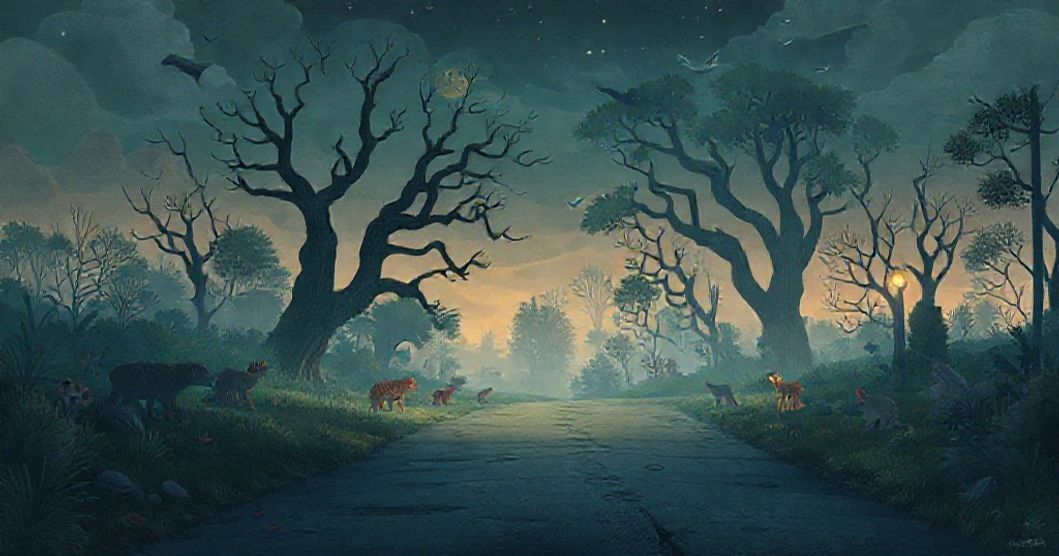
I found myself squatting on a sun-warmed driveway, the rough texture of asphalt pressing against my palms as I knelt near a cluster of overgrown bushes. A slug, glistening with moisture, slowly traversed a patch of moss that had taken root in a crack—a small, unassuming creature that I’d almost overlooked. Its silvery trail glistened in the afternoon light, and I watched with quiet curiosity as it inched toward something I couldn’t yet see. Suddenly, a plop! sound cut through the stillness as a frog leaped into view, its green form a stark contrast against the muted tones of the driveway and surrounding trees. It landed with a soft splash, as if the momentary disruption of its water-world had spilled into this dry, concrete space. I turned my head toward the sound of a low, grunting exhale from the bushes—a sound both animalistic and unexpected, like someone struggling to breathe. From the foliage emerged three snakes, their scales catching the light as they slithered away in a coordinated retreat. I felt a flutter of tension in my chest as I realized their direction, and then I saw the cat—a sleek, dark-furred creature with narrowed eyes—pouncing after one of the snakes, its movements quick and purposeful. The snake disappeared into the underbrush, and the cat paused, tail flicking, as if deciding whether to pursue further. Just as I processed this small drama, a new presence emerged: a small elephant, its trunk twitching as it cautiously explored the area where the grunting had come from. It stood on the edge of the driveway, its large ears fanning slightly, and I found myself both intrigued and confused by its presence in this domestic setting. Before I could fully register this oddity, a larger figure stepped out from the bushes—a mother elephant, her massive form blocking most of the light as she moved toward the small one. The mother elephant’s presence was immediate and overwhelming. I felt a sudden, instinctual urge to retreat, my body moving before my mind could fully process the emotion. I stepped back quickly, tripping slightly on the driveway’s edge, and then—just like that—the scene dissolved. I woke with a start, heart still racing, the images lingering vividly in my mind.
Part 2: Clinical Analysis
Want a More Personalized Interpretation?
Get your own AI-powered dream analysis tailored specifically to your dream
🔮Try Dream Analysis FreeSymbolic Landscape: Decoding the Animal Encounters
The driveway, a threshold between domesticity and nature, becomes a powerful symbolic space in this dream. Its concrete expanse represents the boundary between the known (human-made environment) and the unknown (the natural world), a recurring theme in dreams about transitions and internal boundaries. The sequence of animals mirrors the subconscious mind’s tendency to present layered messages, each creature carrying its own symbolic weight.
The slug, often overlooked in daily life, introduces themes of subtlety and overlooked aspects of self or circumstances. Its slow, deliberate movement suggests attention to details we might otherwise ignore—a reminder of the importance of noticing small, neglected elements in waking life. The frog, with its distinctive leap and amphibious nature, symbolizes transformation and emotional adaptability. Frogs often appear in dreams during periods of change, signaling the need to embrace fluidity rather than rigidly clinging to the status quo.
Snakes, with their dual symbolism of danger and transformation, slither into the dream as a primal presence. In the context of the driveway, these reptiles represent hidden threats or repressed emotions emerging from the subconscious. The cat’s pursuit of the snake adds another layer: the cat, a creature of independence and intuition, embodies the mind’s protective instincts—acting on perceived threats while maintaining curiosity about the unknown.
The elephant sequence introduces the most dramatic shift in scale and emotional tone. Elephants, with their size and familial bonds, symbolize power, protection, and the weight of responsibility. The small elephant’s cautious exploration reflects vulnerability and new experiences, while the mother elephant—representing authority, guidance, or overwhelming presence—triggers an immediate fear response. This contrast between the small and large elephant highlights the tension between approaching the unknown and retreating from what feels threatening.
Psychological Perspectives: Layers of Dream Interpretation
From a Jungian perspective, this dream reveals the collective unconscious at work, where animal archetypes appear as manifestations of the dreamer’s inner psyche. The mother elephant, as a powerful archetype of protection and maternal guidance, may symbolize an aspect of the dreamer’s personality or relationship that demands attention. The snake, a Jungian symbol of the shadow self, represents repressed aspects of the personality that the dreamer is confronting through this encounter.
Freudian analysis might view the sequence as a condensation of repressed desires and fears. The driveway, a transitional space, could represent the dreamer’s unconscious conflict between the safety of the domestic (driveway) and the allure of the unknown (wild animals). The mother elephant’s overwhelming presence may reflect unresolved maternal issues or fears of authority figures, while the cat chasing the snake could symbolize the ego’s attempt to control or confront repressed instincts.
Neuroscientifically, this dream illustrates how the brain processes emotional memory during sleep. The rapid sequence of animal encounters mimics the brain’s default mode network activity, where the mind synthesizes recent experiences and emotions into symbolic narratives. The emotional intensity of the mother elephant’s appearance correlates with REM sleep’s heightened emotional processing, as the brain works to integrate emotional experiences from the day.
Emotional & Life Context: Connecting to Waking Reality
The emotional arc of this dream—from quiet curiosity (slug, frog) to tension (snakes, cat) to fear (mother elephant)—resonates with common waking experiences of navigating uncertainty. The dream’s progression suggests the dreamer may be encountering new or unexpected situations, where initial curiosity gives way to anxiety as the stakes increase.
The driveway setting, a familiar yet liminal space, hints at recent changes in the dreamer’s life—perhaps a new project, relationship, or responsibility that feels simultaneously accessible and overwhelming. The mother elephant’s sudden appearance could reflect the dreamer’s response to a situation that feels too large or authoritative, triggering protective instincts and a need to create boundaries.
Daily life often contains unacknowledged pressures that manifest in dreams. The cat chasing the snake might symbolize the dreamer’s internal conflict between addressing a problem (the snake) and avoiding it (the cat’s pursuit). The elephant’s size and presence could represent a responsibility or relationship that feels too big to manage, evoking the instinct to retreat rather than engage.
Therapeutic Insights: Applying Dream Lessons
This dream offers several opportunities for self-reflection and growth. First, the slug invites us to notice overlooked details in daily life—perhaps a small project, relationship issue, or personal quality that needs attention. The frog encourages embracing flexibility during change, reminding us that transformation often requires movement and adaptation.
The snakes and cat suggest confronting fears directly rather than suppressing them. Journaling about recent stressors or conflicts can help identify which