
Part 1: Dream Presentation
Dreams often serve as mirrors reflecting our deepest psychological and spiritual landscapes. In this compelling narrative, the dreamer navigates a tempestuous journey through overwhelming natural forces, collective consciousness, and divine intervention. The dream begins in Miami, a city symbolizing warmth and celebration, yet transformed into a site of impending disaster—a tsunami approaching with the inevitability of fate. The dreamer’s repeated attempts to save family members, each time failing only to restart the scenario, reveal a core tension between personal agency and existential threat.
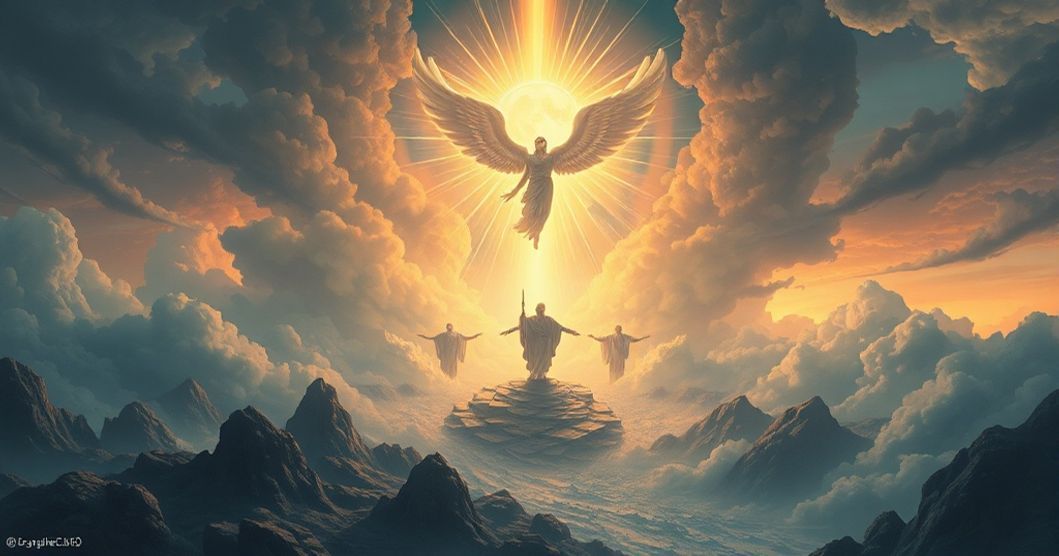
The 'Dominic pocket' emerges as a liminal space—a temporary sanctuary where the dreamer and others can connect despite chaos. This shared consciousness suggests a psychological buffer zone, a place where trauma can be processed collectively. When the dreamer prays in darkness, the divine response arrives not through a visible figure but through a voice and symbols: angels on horses, a golden desert, and a black stallion. These elements collide with the mundane detail of 'Kingdom Dance' from Tangled, creating a bridge between the sacred and the personal.
The dream culminates in a powerful transformation: the dreamer moves from helplessness to empowerment, riding with a celestial army across a golden desert. The final message—'Help others find Me'—suggests a call to integrate spiritual insight into daily life, transforming personal experience into service.
Want a More Personalized Interpretation?
Get your own AI-powered dream analysis tailored specifically to your dream
🔮Try Dream Analysis FreePart 2: Clinical Analysis
Symbolic Landscape of the Dream
The tsunami represents overwhelming change or existential threat, a universal symbol of life’s unpredictable forces. Its recurrence in the dream mirrors unresolved anxiety or fear of loss, particularly regarding family safety. The 'pocket' itself functions as a container for processing trauma collectively—a Jungian 'collective unconscious' in miniature, where the dreamer and others share a common psychological space. This aligns with the concept of 'active imagination,' a Jungian technique for integrating fragmented aspects of the psyche.
The black horse, a recurring symbol in mythology and dreams, embodies power, mystery, and spiritual journey. Its contrast with the white horses of angels suggests a balance between human strength and divine guidance. In alchemy, black often represents the nigredo phase—purification through darkness—while white symbolizes spiritual illumination. The golden desert, a rare color in dream imagery, signifies transcendence, possibility, and the 'philosopher’s stone' of transformation.
The prayer in darkness, stripped of words yet filled with faith, represents the dreamer’s core spiritual values. The voice from heaven, though not explicitly religious, echoes the archetype of the 'wise old man' or divine father figure—a Jungian 'anima/animus' aspect. The angels, traditional symbols of protection and guidance, reinforce themes of spiritual support during turmoil.
Psychological Currents
From a Jungian perspective, this dream reflects the 'shadow' integration process—the tsunami as the shadow of overwhelming anxiety, the repeated loops as the shadow’s persistence until integrated. The dreamer’s family represents the 'shadow' of fear of abandonment or loss, while the pocket functions as a 'mandala'—a symbol of wholeness emerging from chaos.
Freudian analysis might interpret the dream as a wish-fulfillment narrative, where the dreamer’s repeated attempts to save family represent unconscious desires to overcome childhood anxieties or protect loved ones. The 'Kingdom Dance' reference, a Disney song, introduces the 'regressive' aspect of dreams, tapping into childhood memories of safety and comfort.
Modern dream research confirms that dreams process emotional conflicts while activating the default mode network—our brain’s 'worry center.' The dream’s structure, with its temporal loops and symbolic resolution, suggests the brain is working through unresolved emotional patterns, seeking meaning and resolution.
Emotional and Life Context
The dream likely reflects the dreamer’s waking experiences with uncertainty, perhaps related to family responsibilities, career transitions, or existential questions. The tsunami’s inevitability mirrors the dreamer’s perception of life’s uncontrollable forces, while the pocket represents a temporary respite from overwhelm. The prayer and divine intervention suggest a search for meaning amid chaos—a common response to modern life’s pressures.
The contrast between the dreamer’s initial helplessness and final empowerment suggests a journey toward self-efficacy. The black suit/turtleneck, described as 'the one that always made me feel like my best self,' represents the dreamer’s authentic self emerging during crisis—a 'self-actualization' moment.
Therapeutic Insights
To integrate this dream into waking life, the dreamer can practice 'dream journaling' to explore recurring themes. Reflective questions might include: 'What aspects of my life feel like a tsunami?' and 'Where do I seek safety when overwhelmed?'
Therapeutic techniques like guided imagery can help recreate the golden desert journey, visualizing riding the black horse with the sense of empowerment. The message 'Help others find Me' suggests channeling spiritual insights into service—perhaps volunteering, mentoring, or supporting others through challenges.
Mindfulness practices during waking moments can help maintain the peace experienced in the dream. The 'Kingdom Dance' reference invites reconnecting with childhood joys that foster resilience.
FAQ Section
Q: What does the repeated time loop symbolize?
A: Time loops often represent unresolved emotional patterns needing repetition until mastery. In this case, they suggest the dreamer is learning resilience and adaptability in the face of life’s storms.
Q: Why the black horse specifically?
A: The black horse symbolizes power, mystery, and spiritual journey. Its contrast with white angels suggests balancing human strength with divine guidance—a key theme in overcoming fear.
Q: How to apply the 'Help others find Me' message?
A: This invites sharing spiritual insights through service—perhaps mentoring, volunteering, or supporting others through their own storms, embodying the dream’s empowering message in daily life.