
Part 1: Dream Presentation
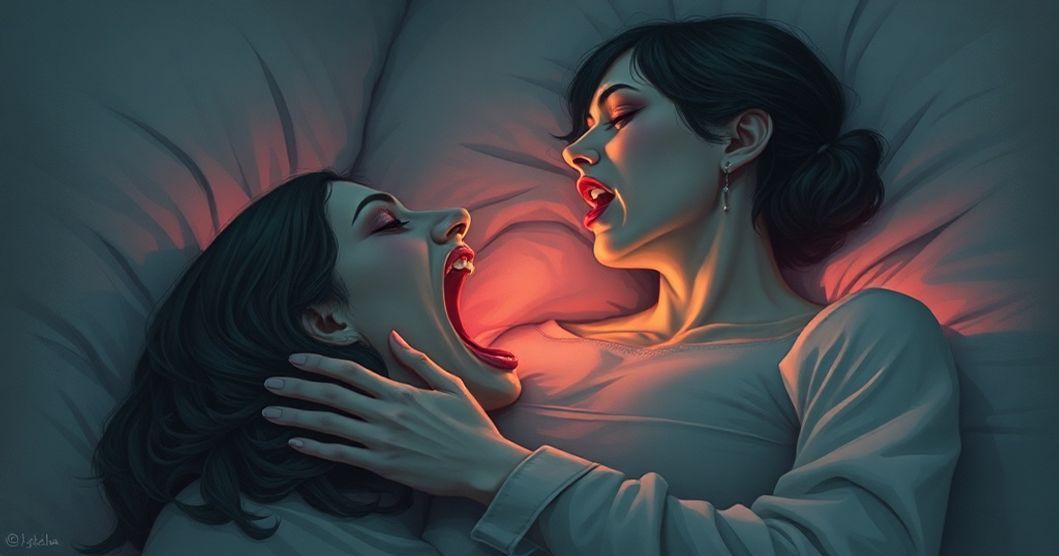
Dreams often arrive unannounced, carrying messages from the depths of our unconscious with both clarity and ambiguity. This particular dream experience unfolds as a vivid, unsettling tableau that defies straightforward interpretation yet offers profound insights into the dreamer’s emotional landscape. As the dream begins, there is a sudden, disorienting shift from ordinary awareness to a surreal encounter: the dreamer finds their shirt being pulled downward, exposing the left breast to a woman whose lips glisten with a vivid crimson hue. The dreamer experiences the physical sensation of this intrusion—the fabric’s rough texture against their skin, the unexpected pressure of the woman’s mouth against their breast—and then a sharp, biting pain that jolts them awake.
The narrative maintains a curious tension between maternal symbolism and violation: the woman acts with the deliberate nurturing of a mother preparing a child for departure, yet her actions are aggressively physical and painful. The dreamer, a straight man with no romantic or sexual interest in women, feels profoundly confused by this scenario, as it contradicts their waking identity. The dream’s aftermath leaves them with nausea and an overwhelming sense of unease, suggesting that the emotional impact of the dream extends beyond its immediate physical sensations.
Part 2: Clinical Analysis
Want a More Personalized Interpretation?
Get your own AI-powered dream analysis tailored specifically to your dream
🔮Try Dream Analysis FreeSymbolic Landscape: Archetypes and Sensory Signifiers
The dream’s core elements reveal layers of symbolic meaning that invite exploration. The woman with red lips embodies the maternal archetype—a Jungian concept representing the collective unconscious’ deepest feminine nurturing energies. In dream imagery, red lips often symbolize communication, passion, or boundary crossing; here, their vivid color may signify intense emotional expression or a boundary that the dreamer feels is being violated. The breast, a universal symbol of nourishment and vulnerability, becomes a focal point for conflicting emotions: it represents both the need for care and the fear of losing control over one’s body.
The act of biting introduces another layer of symbolism: it can represent aggression, assertion, or a primal attempt to “consume” or “claim” something. In this context, the bite may symbolize a struggle between internalized maternal expectations and the dreamer’s need for autonomy. The motherly role the woman embodies—preparing for departure—suggests themes of transition or letting go, while the bite disrupts this nurturing narrative with violence. This contradiction mirrors the tension between the dreamer’s conscious identity (straight, uninterested in women) and the unexpected, uncomfortable imagery conjured by their unconscious.
Psychological Perspectives: Jungian and Freudian Frames
From a Jungian perspective, this dream may reflect the activation of the shadow archetype—the repressed aspects of the psyche that emerge during sleep. The woman’s dual nature (motherly yet aggressive) could represent the dreamer’s internalized masculine-feminine tensions, or the conflict between the nurturing, “motherly” part of the self and the assertive, boundary-defying aspects of identity. The bite might symbolize the shadow’s attempt to “awaken” the dreamer to unconscious material they’ve been avoiding.
Freudian analysis, while traditionally focused on sexual symbolism, can offer insight into the dream’s themes of repression. The breast as a sexual symbol is a common Freudian reference, but the dream’s maternal framing complicates this interpretation. The dreamer’s discomfort with the scenario may stem from repressed feelings about vulnerability or the fear of being “consumed” by expectations, even if those expectations are maternal rather than romantic. The absence of sexual attraction in waking life suggests the dream is not about literal sexuality but about emotional or psychological needs.
Contemporary dream research adds another dimension: dreams as emotional processing tools. The vivid physical pain and subsequent nausea may indicate that the dream is processing unresolved emotional stress or boundary issues. The act of “biting” could represent a primal attempt to assert boundaries or release pent-up emotions in a safe, symbolic space.
Emotional and Life Context: Unpacking the Subtext
The dream’s emotional resonance suggests underlying themes of identity, relationships, and self-perception. The discrepancy between the dreamer’s conscious identity and the dream’s imagery hints at internal conflicts about vulnerability or expectations. The “motherly figure” role, despite not resembling the actual mother, implies that the dreamer carries internalized maternal expectations or unresolved feelings about nurturing and care.
The act of being “latched onto” and bitten may reflect a waking fear of losing autonomy or being overwhelmed by external demands. The dreamer’s nausea and confusion suggest that the dream is processing emotions they’ve been avoiding—perhaps related to recent life transitions, relationship challenges, or self-doubt. The dream’s non-sexual nature (despite the breast imagery) underscores that the conflict is not about sexuality but about the psychological impact of being “consumed” by expectations or relationships.
Therapeutic Insights: Integrating the Dream’s Message
This dream invites the dreamer to explore their relationship with boundaries and vulnerability. Journaling exercises could help unpack the specific emotions triggered by the dream: What waking situations feel nurturing vs. violating? What maternal expectations might they be internalizing? Reflective questions like “When do I feel most vulnerable, and how do I protect myself?” can foster self-awareness.
Therapeutic integration involves recognizing the dream as a communication from the unconscious rather than a literal prediction. The biting, while painful, might represent the necessary “waking up” to emotional truths. The dreamer can practice self-compassion, acknowledging that vulnerability is not weakness but a natural part of human experience. Setting small boundaries in daily life—both emotional and physical—can help externalize the internal conflict represented in the dream.
FAQ Section
Q: Why does the dream involve a motherly figure if I don’t resemble my actual mother?
A: The motherly figure represents the collective maternal archetype, not literal maternal identity. This symbol often emerges when processing themes of nurturing, care, or internalized expectations, regardless of one’s real mother’s influence.
Q: Could the bite symbolize something positive, or is it purely negative?
A: Bites in dreams typically represent boundary assertion or emotional “waking up.” Here, it may signify the need to assert boundaries with internal expectations or external pressures, even if the process feels painful.
Q: How do I reconcile this dream with my identity as someone with no romantic interest in women?
A: The dream’s imagery is not about sexuality but about emotional processing. It may reflect conflicts with nurturing, vulnerability, or maternal expectations, which can arise regardless of one’s sexual orientation.