
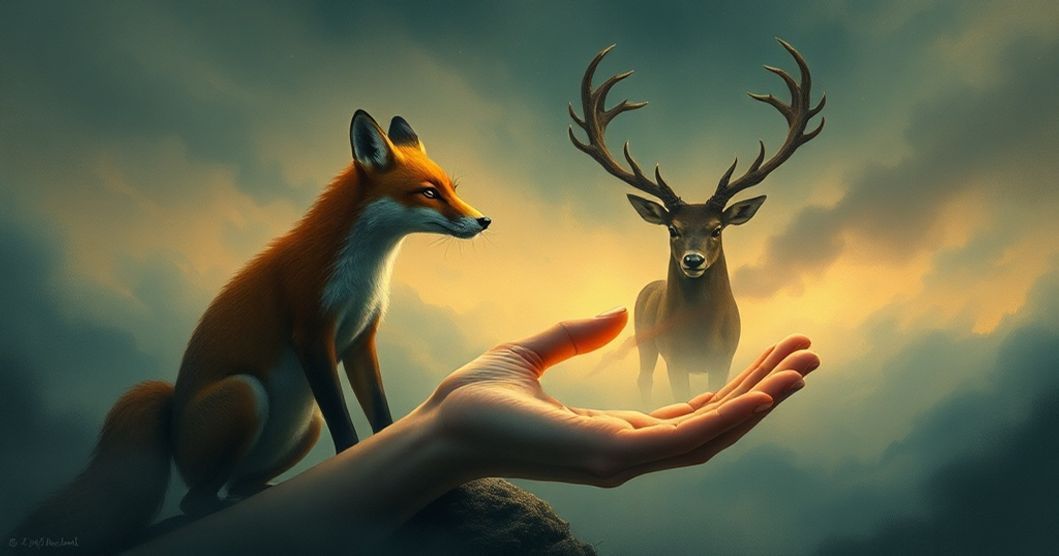
The Fox, the Deer, and the Hollow Hand: A Dream of Vulnerability and Transformation
Part 1: Dream Presentation
Last night’s dream unfolded with such visceral clarity that even now, details linger like a half-remembered nightmare. I found myself walking along a windswept path, the salt-kissed air carrying the rhythmic crash of waves. Before me stretched an expanse of water—an ocean, its surface churning with dark, foamy crests. On the shore, a deer struggled frantically, thrashing its legs as if pinned by invisible chains. Drawing closer, I saw the source of its torment: a fox, its muzzle clamped firmly to the deer’s neck. The wound beneath the fox’s jaws was grotesque—a raw, bloody gash where the animal tore into living flesh, feeding greedily as the deer bucked and twisted, yet remained trapped. The scene felt both surreal and horribly real, a primal drama playing out on the edge of consciousness. I was transfixed, driven by an inexplicable urge to document this bizarre encounter. Reaching into my pocket, I pulled out my phone, knelt to steady the camera, and framed the image. Just as I prepared to take the shot, the fox’s head snapped upward. Its gaze locked onto me, pupils slitted with malice. With a wordless snarl, it abandoned the deer and charged. Reacting instinctively, I thrust my right hand forward, palm out, to shield my face. The fox lunged, its teeth sinking into the center of my palm with a sickening crunch. Unlike a normal bite, it held on, clamping down harder as I felt the pressure intensify, teeth burrowing deeper into my flesh. Panic flickered, but I recalled a strange calm: yanking my hand would only worsen the injury. With my left hand, I fumbled for my pocket knife, flipping it open. Pressing the blade gently against the fox’s side, I applied pressure incrementally, matching its escalating force. I wasn’t trying to kill it—only to make it release my hand. The fox recoiled with a startled snarl, finally letting go. I stood, heart pounding, and shouted at the top of my lungs, waving my free hand to scare it away. The dream shifted abruptly. As I walked away, I examined my palm. The bite mark had transformed into something uncanny: a gaping, hollow hole on the back of my hand, as if someone had carved out a rubber hand and left it empty. There was no blood, no pain, just an eerie, artificial texture that made my hand look like a poorly crafted prop. This dream, unlike any I’d experienced before, felt charged with meaning, its symbols lingering like a puzzle I couldn’t quite solve.
Part 2: Clinical Analysis
Symbolic Landscape: The Dreamer’s Unconscious Theater
Want a More Personalized Interpretation?
Get your own AI-powered dream analysis tailored specifically to your dream
🔮Try Dream Analysis FreeThe dream’s imagery is rich with symbolic potential, each element serving as a character in the dreamer’s internal drama. The fox, a creature steeped in myth and folklore, emerges as a classic shadow archetype—representing the unconscious aspects of the self that may feel predatory or threatening. In Jungian psychology, the fox often symbolizes cunning, adaptability, and the need to confront hidden aspects of ourselves we might be avoiding. Its choice to target the deer first before turning to the dreamer suggests the dreamer is processing tensions between external threats and internal vulnerabilities. The deer, with its delicate features and prey status, embodies innocence, vulnerability, and perhaps a part of the self that feels defenseless against life’s pressures. The body of water amplifies this theme, as water in dreams typically represents the unconscious mind—the churning waves mirror emotional turbulence or unresolved feelings.
The act of photographing the scene is particularly telling. The camera symbolizes the urge to externalize, document, or intellectualize experiences rather than engage with them directly. This reflects a common psychological pattern: when faced with emotional intensity, we sometimes step back to observe rather than participate, turning feelings into objects to be studied. The fox’s sudden charge toward the dreamer after the camera is raised introduces a critical shift—the dreamer’s attempt to control or understand the situation backfires, forcing direct confrontation.
Psychological Currents: From Freud to Jung to Cognitive Frameworks
Freudian analysis would likely interpret the fox’s attack as a manifestation of repressed aggression or fear of being overwhelmed by instinctual drives. The bite on the hand—central to the dreamer’s experience—could symbolize penetration of the ego’s defenses, with the hand representing the dreamer’s active engagement with the world. In contrast, Jung’s emphasis on archetypal imagery reveals the fox as a shadow figure urging integration of these primal, sometimes unsettling parts of the self. The deer’s struggle may reflect the dreamer’s empathy for others or a sense of powerlessness in a situation where they feel hunted or oppressed.
Cognitive dream theory offers another lens: the dream’s narrative structure—problem (fox attacking deer) → attempt to resolve (photograph, intervene) → escalation (fox attacks dreamer) → transformation (hollow hand)—mirrors the brain’s natural problem-solving process during sleep. The dreamer’s calm response to the bite, using a knife to apply controlled pressure rather than panic, suggests a cognitive strategy: meet conflict with deliberate, non-destructive action. This aligns with research showing dreams often process emotional challenges by creating scenarios where we practice coping mechanisms.
The hollow hand represents a profound transformation—a departure from physical reality into the realm of symbolic meaning. In dreamwork, hollow or empty body parts often signify feelings of emotional depletion, disconnection, or a sense that the self is not fully real or authentic in certain life contexts. The absence of blood or pain adds to this uncanny quality, suggesting the dreamer’s emotional wounds are not physical but psychological—felt as a lack of substance or authenticity.
Emotional & Life Context: Unpacking the Dreamer’s Inner Landscape
To contextualize this dream, we consider the waking life triggers that might have seeded these symbols. The dreamer mentions writing in a rush before work, implying time pressure or anxiety about performance. The fox’s relentless attack and the deer’s struggle could reflect workplace dynamics where the dreamer feels hunted by deadlines, criticism, or competitive pressures. The act of photographing (observing) rather than intervening might mirror a pattern of professional or personal life where the dreamer avoids direct conflict, preferring to document or analyze instead of engaging fully.
The dream’s progression from observation to confrontation to transformation suggests the dreamer is in a period of emotional growth, where old patterns of avoidance are being challenged. The hollow hand’s transformation hints at a deeper need for authenticity—perhaps the dreamer feels