
Part 1: Dream Presentation
Dreams often serve as mirrors reflecting our unconscious preoccupations, and this particular dream offers a haunting glimpse into the psyche’s struggle with identity, control, and memory. The dream begins with a primal scene of collective survival—the barricading of doors against an unseen threat—immediately establishing themes of protection and vulnerability. What follows is a curious paradox: the dreamer awakens to a world that appears normal yet feels profoundly alien, populated by people who seem to know them but remain strangers.
The narrative unfolds through a series of increasingly surreal transitions: a mansion that functions as both refuge and prison, a journey to Paris from an unfamiliar starting point (Bulgaria), and the appearance of doppelgangers who mimic the dreamer’s closest relationships. Most striking is the repetition of actions—the barricading, the forced calm, the confrontation with a familiar stranger—and the dissonance between emotional states (rage, dread) and the external appearance of normalcy. The dream culminates in a voice that seems to critique the dreamer’s violent response, suggesting an internal conflict between action and consequence.
Part 2: Clinical Analysis
Want a More Personalized Interpretation?
Get your own AI-powered dream analysis tailored specifically to your dream
🔮Try Dream Analysis FreeSymbolic Landscape: The Dreamer’s Inner Theater
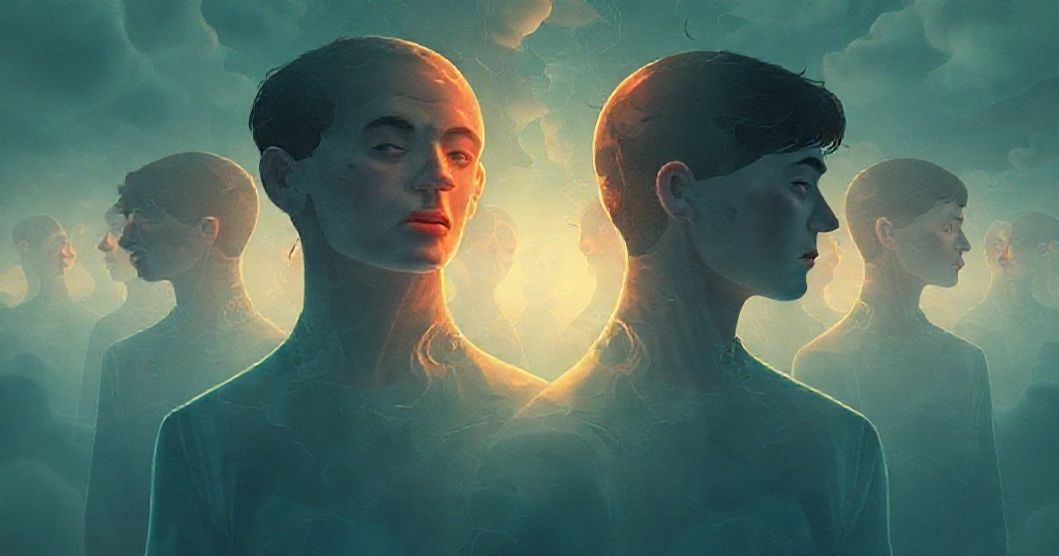
The doppelgangers at the heart of this dream represent a profound exploration of identity fragmentation and self-doubt. In Jungian psychology, doppelgangers often symbolize the shadow self—the aspects of ourselves we disown or fear. Here, the multiple identical figures suggest the dreamer may be experiencing a sense of being split or duplicated in waking life: perhaps feeling like a “copy” of someone else, or struggling to maintain a coherent sense of self in a situation that demands conformity.
The barricading of doors against demonic forces reflects the dreamer’s attempt to protect themselves from perceived threats—whether external pressures, internal anxieties, or unresolved emotional conflicts. The demonic presence can be interpreted as the shadow’s darker manifestations: fears, guilt, or unacknowledged emotions that feel overwhelming and inescapable. When the “demonic” force is repelled but the dream transitions to normalcy, it suggests the dreamer has successfully navigated a crisis but is now left in a liminal space—neither fully safe nor fully at ease.
The Paris setting introduces another layer of symbolism. As a city of both cultural significance and tourist spectacle, Paris represents a place of performance and disorientation. The dreamer’s arrival from Bulgaria without explanation or resources mirrors the feeling of being dropped into a situation without context—a common theme in dreams about displacement. The tour guide, with his “jacked” physique and middle-part haircut, embodies authority and control, yet his ominous undertones suggest the dreamer’s discomfort with external direction and judgment.
The “new batch” statistic and the 9% threshold reveal a bureaucratic view of identity, reducing people to numbers and roles. This echoes modern anxieties about feeling replaceable or dehumanized in systems that prioritize efficiency over authenticity. The two doppelgangers of the best friend, playing with a ball, represent the dreamer’s attempt to recreate or understand a relationship—perhaps feeling that their best friend has changed, or that they themselves are being asked to conform to a version of friendship they no longer recognize.
The final confrontation with the “criminal” figure, who triggers a memory of a past (unrealized) confrontation, highlights the dream’s focus on repetition compulsion—a Freudian concept where unresolved conflicts lead to repeated patterns in dreams. The voice that says, “Beating people up is cool only if you don’t kill them at the end” suggests a moral reckoning: the dreamer’s violent impulse is not inherently wrong, but its consequences matter, and the act of violence must be balanced with awareness of its implications.
Psychological Perspectives: Layers of Unconscious Processing
From a Jungian perspective, this dream reveals the emergence of the shadow self through the doppelgangers and the demonic presence. The shadow, which represents the repressed parts of the psyche, often appears in dreams as threatening figures or distorted versions of self. The fact that the shadow figures are both dangerous and familiar (the doppelgangers) suggests the dreamer is beginning to integrate these previously disowned aspects of themselves.
Freud might interpret the dream as a manifestation of repressed anger or aggression. The dreamer’s rage toward the doppelganger and the “criminal” figure could represent unresolved frustrations from waking life—perhaps feelings of powerlessness that manifest as violent impulses in the safety of sleep. The “memory” of a past confrontation, which never occurred in waking life, suggests these are not literal memories but symbolic representations of how the dreamer processes conflict.
Cognitive dream theory offers another lens, suggesting dreams help consolidate emotional memories and process information. The repetitive actions (barricading, sightseeing, the “new batch” announcement) might represent the brain’s attempt to work through a situation that feels stuck in waking life—a cycle of feeling trapped and forced to perform without understanding the purpose.
Neuroscience adds a biological dimension: dreams often occur during REM sleep, when the brain processes emotional memories and integrates new information. The dream’s emphasis on “familiar strangers” and “unfamiliar familiarity” could reflect the brain’s struggle to recognize patterns in ambiguous social situations, where identity and relationships feel both known and unknown.
Emotional & Life Context: The Unseen Pressures Behind the Dream
This dream likely emerges from a period of significant self-exploration or uncertainty. The doppelgangers and forced routines suggest the dreamer is questioning their role in relationships or feeling pressured to conform to expectations they don’t fully understand. The transition from Bulgaria to Paris without explanation mirrors the feeling of being uprooted in waking life—perhaps a new job, relationship, or environment that feels both exciting and disorienting.
The “9% statistic” and “new batch” announcement reflect anxiety about performance metrics and replaceability. In modern life, many people feel like cogs in a machine, with their worth determined by arbitrary percentages or roles. The dreamer might be grappling with feelings of insignificance or the pressure to meet external standards.
The “memory” of a past confrontation, which never occurred, suggests the dreamer is processing a situation where they felt they needed to “take action” against someone or something. This could represent a real conflict in waking life—a situation where the dreamer felt forced to defend themselves or assert boundaries, but the emotional impact of that conflict remains unresolved.
The overall tone of dread and the inability to recall how we arrived at the mansion suggests the dreamer is experiencing memory fragmentation—a common response to high-stress situations where the mind tries to compartmentalize overwhelming experiences.
Therapeutic Insights: Navigating the Dream’s Messages
The dream invites several reflection exercises for the dreamer. First, exploring the “familiar strangers” in waking life: Are there relationships where the dreamer feels known yet misunderstood? Journaling about these relationships could reveal patterns of feeling like an imposter or struggling to maintain authenticity.
The repetitive actions (barricading, forced calm, the confrontation) suggest a need to break cycles of reactivity. The voice’s message—“Beating people up is cool only if you don’t kill them at the end”—implores the dreamer to recognize the difference between healthy assertiveness and harmful aggression. Mindfulness practices could help differentiate between these responses in waking life.
The doppelgangers, as shadow symbols, suggest the dreamer should explore parts of themselves they’ve disowned. Journaling prompts like “What aspects of myself feel like ‘doppelgangers’ in my relationships?” can help identify these hidden parts.
For integration, the dreamer might benefit from asking: “What routines am I following without questioning their purpose?” The “new batch” statistic suggests a system of evaluation that feels arbitrary—exploring how the dreamer’s self-worth is tied to external metrics, and creating internal measures of success that matter to them.
Finally, the dream’s emphasis on “unfamiliar familiarity” invites the practice of curiosity rather than certainty. Instead of trying to “figure out” the dream’s meaning, the dreamer can observe their emotional responses without judgment—a technique that helps build self-awareness and reduce the pressure to find definitive answers.
FAQ Section
Q: What does it mean to have doppelgangers in a dream?
A: Doppelgangers often symbolize identity fragmentation or the shadow self—parts of yourself you feel disconnected from or fear. They may reflect anxiety about conforming to others’ expectations or feeling like a “copy” of someone else.
Q: Why did the dream include a “new batch” statistic and a tour guide?
A: These represent external control and replaceability. The tour guide embodies authority figures who judge based on arbitrary metrics, while “new batch” reflects fears of being evaluated and discarded.
Q: How should I interpret the “memory” of a past confrontation in my dream?
A: This is likely a symbolic representation of unresolved conflict, not literal memory. It suggests you’re processing feelings of powerlessness or the need to assert boundaries in waking life, even if the situation itself feels unclear.