
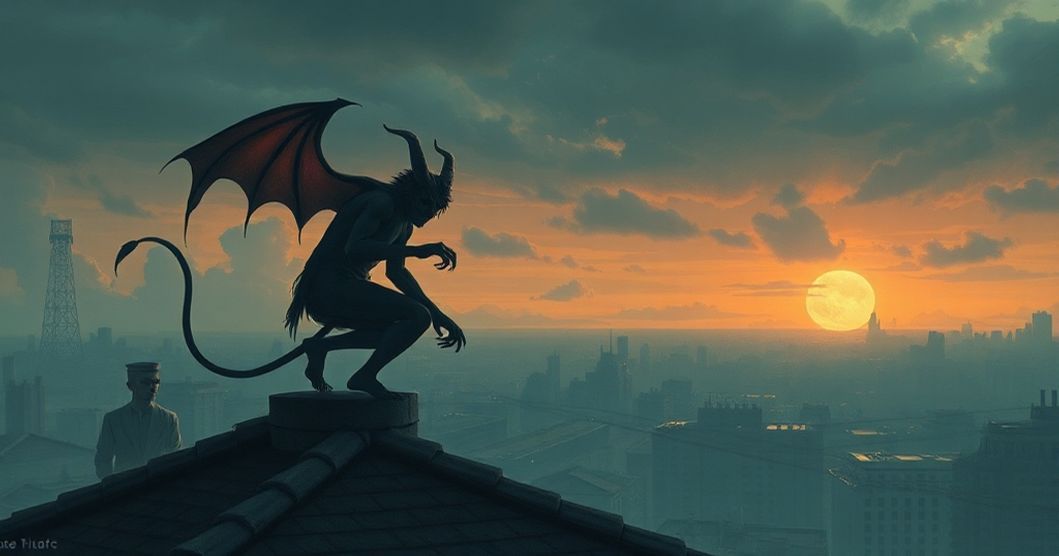
Part 1: Dream Presentation
Dreams often serve as mirrors to our inner landscapes, reflecting tensions we may not yet name. In this particular dream, the journey through a familiar yet transformed home reveals layers of emotional conflict and spiritual unease. The dreamer, a single woman temporarily residing at her mother’s house, navigates a symbolic landscape where hidden desires collide with primal fears, ultimately hinting at a need for balanced self-expression.
I found myself standing on the threshold of a familiar yet strange building, my mother’s house where I’d been staying these past few days. The air felt heavy with the weight of unspoken conversations, and as I ascended the creaking staircase to the third and final floor, I clutched something precious against my chest: a sheet of paper covered in swirling, indecipherable symbols and a bouquet of deep crimson roses. The paper, I realized with a jolt, was the same one I’d seen in a previous dream—a recurring vision that felt both urgent and cryptic, as if it held a key to something I’d forgotten. With each step, I felt the paper’s texture grow warm in my hands, as though it carried a living energy. The neighbors below, I knew, would notice if I revealed my roses, so I kept them hidden, my heart pounding with a mix of protectiveness and vulnerability. Why did I feel the need to conceal them? What did they represent? These questions lingered as I unlocked my apartment door and stepped inside, the scent of my mother’s cooking still clinging to the air. From the window, I looked out at the rooftop, and there it was—a dark, shadowy figure that I instantly recognized as a demon. A voice, both malevolent and strangely familiar, whispered that it had been there for a while, watching. I didn’t know if it was called a demon or Satan, but the fear was visceral, a cold dread that settled in my gut. Then, without warning, the figure rose, wings unfurling as it flew away into the sky, leaving only the faint echo of my racing heartbeat behind. Relief flooded through me, a wave that felt almost physical, as though I’d shed a burden I didn’t know I carried. I descended the stairs, my steps lighter now, and as I reached the entryway, something caught my eye: another bouquet, identical in color but fully open, its petals vibrant and unhidden, standing proudly in the hallway. No one was there to see it, yet it seemed to glow with a quiet confidence. I stood transfixed, wondering why one bouquet hid and another dared to bloom.
Part 2: Clinical Analysis
Want a More Personalized Interpretation?
Get your own AI-powered dream analysis tailored specifically to your dream
🔮Try Dream Analysis FreeSymbolic Landscape: The Dream’s Visual Language
The dream’s elements form a rich tapestry of psychological symbolism, each detail carrying multiple layers of meaning. The mother’s house, a recurring setting in dreams, often represents the unconscious mind and its connection to familial roots and emotional security. The third and final floor suggests completion or reaching a personal threshold, while the shared entryway with neighbors introduces themes of community, judgment, and the fear of exposure.
The written paper with symbols embodies the dreamer’s intuitive knowledge or spiritual guidance. In Jungian psychology, such symbols often represent the collective unconscious, archetypal images that bridge personal and universal experience. The warmth of the paper suggests that this intuition is not abstract but alive, pressing for acknowledgment. Red roses, universally recognized as symbols of love, passion, and vulnerability, appear in two states: hidden and open. Their color signals deep emotional energy, while the contrast between hiding and revealing speaks to the tension between self-protection and authentic expression.
The demon on the rooftop is a classic shadow archetype, representing repressed fears, anxieties, or aspects of the self the dreamer has disowned. Its presence on the roof—an elevated, exposed space—suggests this shadow has been observing from a place of power, yet its departure signals a shift in the dreamer’s relationship to these fears. The voice referring to it as “demon” or “Satan” introduces religious or moral undertones, where the shadow may be perceived as threatening or morally corrupt.
Psychological Perspectives: Multiple Lenses on the Dream
From a Jungian framework, the house represents the dreamer’s psyche, with the third floor as the “higher” levels of consciousness. The demon as shadow materializes when the unconscious confronts aspects of the self deemed unacceptable or threatening. The hidden roses reflect the shadow’s influence on the dreamer’s ability to express vulnerability openly, while the open roses in the entryway symbolize integration—accepting both hidden and exposed parts of the self.
Freudian analysis might interpret the hidden roses as repressed desires or emotions. The “demon” could represent the superego’s punitive aspects, manifesting as fear of judgment for expressing these desires. The act of hiding aligns with Freud’s concept of repression, where socially unacceptable impulses are pushed into the unconscious.
Cognitive dream theory posits dreams as problem-solving mechanisms, processing recent experiences and emotions. The dreamer’s current situation—staying at her mother’s house—may trigger feelings of uncertainty or transition, manifesting as the “demon” (a symbol of anxiety) on the rooftop. The paper with symbols could represent the dreamer’s attempt to find meaning or guidance during this period of change.
Neuroscientifically, the dream’s emotional arc—fear, relief, curiosity—aligns with the brain’s emotional processing during REM sleep. The contrast between the hidden and open roses reflects the brain’s attempt to resolve conflicting emotional states: vulnerability versus protection, fear versus courage.
Emotional and Life Context: Navigating Transitions
The dreamer’s current life situation—staying at her mother’s house—suggests a period of transition or uncertainty. Living arrangements often trigger questions of identity and self-definition, particularly for single individuals navigating independence. The “demon” may embody fears of judgment in this new phase, while the roses represent the love and passion she seeks to express but fears exposing to others.
The contrast between hidden and open roses reveals an internal conflict: how much to share of oneself with others versus protecting vulnerable emotions. This tension is common in relationships, where vulnerability can feel risky yet necessary for connection. The demon’s departure and the appearance of the open roses suggest the dreamer is beginning to integrate these conflicting aspects, finding relief through acceptance.
The recurring paper with symbols hints at a deeper spiritual or intuitive journey. The dreamer may be seeking meaning in her current circumstances, using the paper as a guide to navigate uncertainty. The “demon” could represent resistance to this spiritual exploration, a common theme when facing significant life changes.
Therapeutic Insights: Integration and Self-Expression
This dream invites the dreamer to reflect on the balance between protection and vulnerability. Journaling exercises focusing on the roses—exploring when hiding feels necessary versus when expressing openly feels empowering—can help clarify emotional boundaries.
Reflecting on the “demon” as a shadow aspect, the dreamer might ask: What fears or judgments does this symbol represent? By naming these, she can transform the “demon” from a threatening figure to a source of insight. The rooftop, a space of exposure, suggests that confronting these shadows leads to growth and integration.
Practical steps include creating a “symbol journal” to explore recurring elements like the paper and roses, tracking how they appear in waking life. The contrast between hidden and open roses suggests that vulnerability is not weakness but a path to authentic connection. The dreamer might experiment with small acts of openness, gradually building confidence in expressing her true self.
FAQ Section: Addressing Common Questions
Q: What does the hidden versus open roses symbolize?
A: The contrast represents the tension between self-protection and vulnerability. Hidden roses reflect emotions we guard, while open roses suggest the possibility of authentic expression without fear of judgment.
Q: Why does the demon appear on the rooftop?
A: Rooftops symbolize elevation and exposure. The demon here represents shadow aspects observed from a place of power, but its departure signals relief and integration of these challenging emotions.
Q: How does the recurring paper with symbols impact interpretation?
A: The paper suggests intuitive guidance or spiritual themes. It may indicate the dreamer is seeking meaning during life transitions, using symbols to navigate uncertainty and emotional conflict.