
Part 1: Dream Presentation
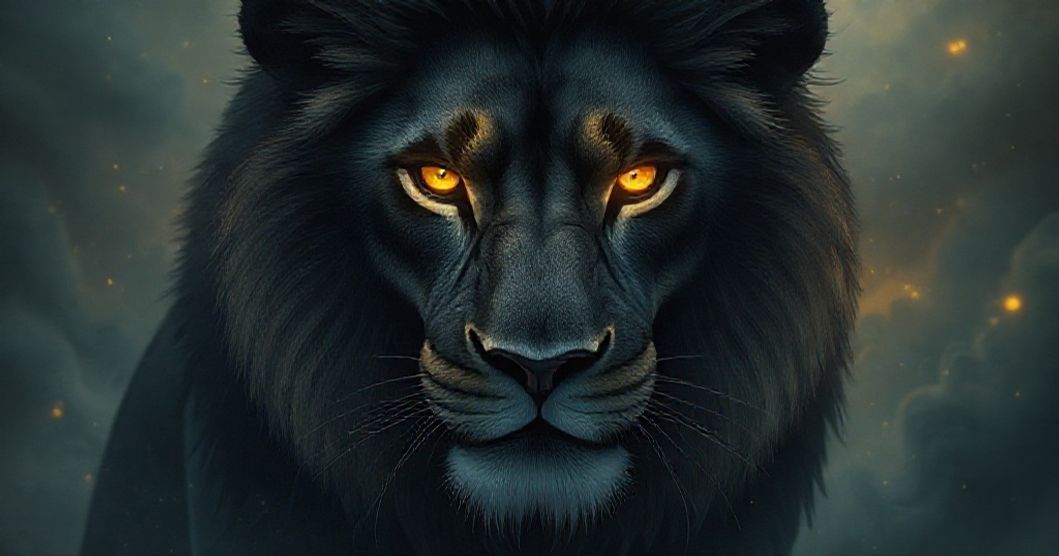
Dreams often serve as mirrors to our unconscious selves, reflecting tensions we may not yet acknowledge in waking life. In this particular dream experience, the dreamer finds themselves pursued by a striking black lion with golden eyes—a creature whose presence is both terrifying and mesmerizing. The sequence unfolds with deliberate clarity: starting in an enclosed space, the dreamer flees through a room into the outside world, ascending the side of a cabin to a rooftop sanctuary, only to discover the lion has followed, now lying still yet intensely watchful. This dream’s imagery—especially the black lion with its luminous golden eyes, the rustic cabin, and the elevated rooftop—creates a symbolic landscape rich with potential meaning for the dreamer’s emotional and psychological state.
I had a dream, where I was chase by a all black male lion with gold eyes. He chased me through a room, then outside. Where I climbed up the side of the cabin we were in. When I got to the rooftop he just laid down and stared at me.
Part 2: Clinical Analysis
Want a More Personalized Interpretation?
Get your own AI-powered dream analysis tailored specifically to your dream
🔮Try Dream Analysis FreeSymbolic Landscape: The Black Lion and Golden Eyes
The black lion with golden eyes represents a powerful convergence of symbolic elements in dream imagery. In traditional dream analysis, the lion universally signifies strength, courage, and authority, but its black color adds layers of mystery and complexity. Black often symbolizes the unconscious mind, the shadow self, or aspects of personality we may fear or resist acknowledging. This lion, therefore, may embody a dominant, intimidating aspect of the dreamer’s psyche—perhaps an untamed power, suppressed anger, or a challenge to established control.
The golden eyes introduce another dimension of symbolism. Gold traditionally represents value, illumination, and the 'light within'—suggesting intuition, awareness, or a deeper understanding emerging from the darkness. The lion’s gaze, fixed and unblinking, implies an unwavering focus on the dreamer’s inner landscape, urging attention to something vital yet often overlooked. This combination of black (the unknown) and gold (the illuminated) creates a paradox: the lion is simultaneously terrifying and wise, a duality that mirrors the tension between fear and insight in the dreamer’s experience.
The cabin itself functions as a significant symbolic space. Its rustic, enclosed nature suggests a safe haven—a place of comfort and protection. The transition from inside the cabin to outside, then to the rooftop, represents a movement from safety to exposure, vulnerability to perspective. Rooftops in dreams often symbolize elevated awareness, a new vantage point, or the need to 'rise above' a situation. The act of climbing the cabin’s exterior to reach the rooftop suggests effort, determination, and a willingness to confront challenges to reach a higher state of being.
Psychological Undercurrents: Jungian and Freudian Perspectives
From a Jungian framework, the lion may represent the 'shadow' archetype—the repressed, unconscious aspects of the self that demand recognition. The black lion embodies the shadow’s power and mystery, while the golden eyes hint at the shadow’s potential for illumination. In Jungian terms, the shadow is not inherently negative but represents the unintegrated parts of ourselves that we may fear or reject. The lion’s pursuit could symbolize the shadow’s insistence on being acknowledged, refusing to remain hidden in the darkness.
Freud might interpret the lion as a manifestation of repressed aggressive instincts or repressed sexual energy, as lions often symbolize sexual potency in Freudian dream theory. The pursuit could represent an unconscious drive or fear of being 'chased' by these forces, with the cabin and rooftop representing attempts to establish control or boundaries. The lion’s stillness on the rooftop, rather than attacking, suggests a moment of confrontation rather than immediate destruction—a pause in the dreamer’s psyche to process these powerful emotions.
Modern neuroscience offers another lens: dreams as part of the brain’s emotional processing system, particularly during REM sleep. Threat simulation dreams, like this chase scenario, may help the brain practice confronting fears and processing stress. The lion could represent a 'threat' in the dreamer’s emotional processing—perhaps a real-world challenge or unresolved conflict that the unconscious is working through. The rooftop, as a high, exposed space, might reflect the dreamer’s need to gain perspective on this threat, to rise above it rather than remain paralyzed by fear.
Emotional and Life Context: Confronting the Unknown
This dream likely emerges from a period of significant emotional processing or transition in the dreamer’s life. The black lion’s presence suggests an encounter with something powerful and unfamiliar in waking life—perhaps a new professional challenge, relationship dynamic, or personal growth opportunity that feels threatening yet necessary. The cabin, a symbol of safety, contrasts with the outside world and the pursuit, indicating a tension between comfort zones and the need to step outside them.
The act of climbing the cabin’s exterior to reach the rooftop reveals a paradox: the dreamer is both vulnerable (climbing a steep surface) and empowered (reaching a higher vantage point). This mirrors the common human experience of growth through confrontation—often requiring effort and courage to reach new perspectives. The lion’s stillness on the rooftop could symbolize the dreamer’s own internalized strength, now observing rather than being consumed by fear.
If the dreamer is experiencing uncertainty in their life—whether about career changes, relationships, or self-identity—the lion may represent the unknown aspects of their potential or the challenges they face in stepping into new roles. The golden eyes, with their piercing gaze, urge the dreamer to look within for clarity, to recognize that the 'threat' they face might actually be a source of wisdom and growth.
Therapeutic Insights: Reflecting on the Dreamer’s Journey
For the dreamer, this dream offers an invitation to explore the relationship between fear and power. A key reflection exercise is to journal about recent experiences where they felt 'chased' by uncertainty or challenges. Identifying patterns in these experiences can reveal what aspects of themselves or their lives the unconscious is urging them to confront.
The act of climbing the cabin’s exterior to reach the rooftop suggests that growth often requires intentional effort. The dreamer might benefit from practicing mindfulness around these challenges, recognizing that confronting fears (like the lion) leads to greater perspective and self-awareness. The lion’s stillness on the rooftop is a reminder that sometimes we need to pause, observe, and integrate rather than immediately 'attack' or 'flee' from our inner challenges.
Another practice: exploring the color black in waking life associations. Does the dreamer associate black with mystery, fear, or power? The golden eyes could prompt reflection on areas where intuition or insight has been lacking, and how to cultivate more awareness in those areas. The cabin as a safe space might represent the dreamer’s need to establish healthy boundaries while still being open to growth.
FAQ: Navigating the Dream’s Symbolism
Q: What does it mean to be chased by a black lion in a dream?
A: A black lion chase often symbolizes confronting powerful, shadow aspects of yourself or life challenges that feel overwhelming. It may represent repressed emotions or new responsibilities demanding attention.
Q: Why did the lion have golden eyes?
A: Golden eyes suggest illumination within darkness—your unconscious is urging you to recognize intuition or wisdom amid uncertainty. It may signal that clarity is emerging from challenging situations.
Q: What does the rooftop represent in this dream?
A: Rooftops symbolize elevated perspective, vulnerability, and new awareness. Climbing to the rooftop suggests growth through confrontation, while the lion’s stillness there invites observation rather than immediate action, encouraging you to gain clarity before proceeding.