
The Devil in the Mirror: A Dream of Identity, Choice, and the Fear of Failure
Part 1: Dream Presentation
Dreams often serve as psychological mirrors, reflecting our deepest anxieties and unacknowledged conflicts through symbolic imagery. This particular dream unfolds as a tense psychological drama set in a liminal space between life and torment, where the boundaries between self and other, success and failure, blur into a single, fraught decision point.
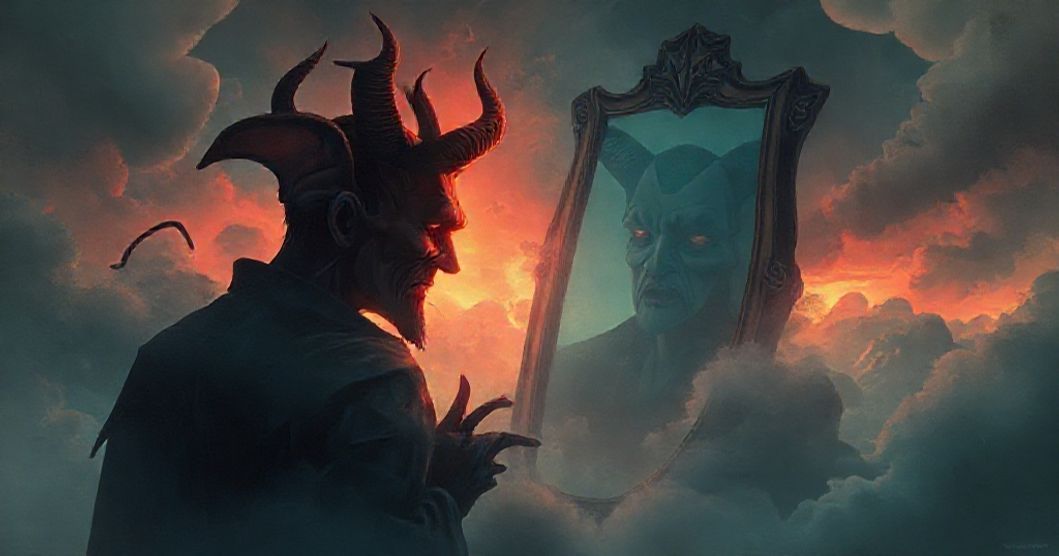
I found myself in a seemingly endless line of souls, each one moving toward a dark, foreboding door that promised an eternity of torment. This was no ordinary waiting line—it felt like a queue for hell itself, and the tension in the air was palpable, thick with dread and resignation. As I neared the front, the door opened to reveal a small, cluttered office bathed in dim, flickering light. Behind a wooden desk sat a figure I instantly recognized: my best friend, yet somehow transformed into a terrifying version of the devil. His eyes glowed faintly red, and his smile, once warm and familiar, now felt cold and mocking. The figure addressed me with a voice that blended both my friend's tone and something profoundly demonic. 'Welcome, seeker,' he said, 'I offer you a choice. Step forward, and you may play a game of chance. Win, and you return to your life as if nothing happened. Lose, and you'll be cast directly into hell.' The options were stark and unyielding.
I hesitated, but the weight of my waking life's uncertainties seemed to press upon me. I chose the game, a game of blackjack, a game I knew well from casual evenings with friends. To my shock, I was offered the role of dealer—a position that felt both empowering and deeply unsettling. We agreed that a tie would mean neither of us won, a neutral outcome. Round one began. The cards dealt, and I quickly won with a strong hand. Victory tasted sweet, a brief reprieve from the nightmare. Round two: my friend (the devil) started with a 12, a number that stuck in my mind like a warning. I lost that round, the tension rising as his cards accumulated. Round three: he held a 14, his face betraying fear as he debated hitting the deck. I had 19, my heart pounding with the knowledge that a 20 could easily beat me. With a final card, I won again. As I celebrated this victory, I found myself in a strange limbo—a waiting room where time seemed to freeze. The office around me blurred, and I felt suspended between success and the unknown. Just then, my partner's voice jolted me awake, the dream dissolving into the gentle glow of morning light.
Want a More Personalized Interpretation?
Get your own AI-powered dream analysis tailored specifically to your dream
🔮Try Dream Analysis FreePart 2: Clinical Analysis
The Symbolic Landscape of the Dream
The dream's imagery is rich with symbolic resonance, each element carrying multiple layers of meaning. The 'line for hell' establishes a framework of existential judgment and moral uncertainty, suggesting the dreamer is confronting significant life choices or fears of judgment. The figure of the devil—who appears as the dreamer's best friend—represents a critical symbolic transformation: the 'devil' is not an external antagonist but a familiar, internalized part of the self. This reflects Carl Jung's concept of the shadow archetype, that which we project onto others but which actually resides within us.
The game of blackjack functions as a microcosm of life's risks and rewards. As the dealer, the dreamer assumes control while simultaneously being vulnerable to the outcome—a paradoxical position that mirrors real-life experiences where we feel both empowered and at the mercy of external forces. The specific numbers (12, 14, 19, 20) carry additional significance: 12 often symbolizes completion or imbalance, 14 represents a threshold or transition, 19 signifies a critical decision point, and 20 embodies the fear of overreach or failure. The 'limbo waiting room' after winning suggests unresolved tension between success and the fear of repeating the same patterns, a common theme in dreams of achievement followed by uncertainty.
Psychological Perspectives on the Dream
From a Jungian perspective, this dream illuminates the process of individuation—the journey toward integrating conscious and unconscious aspects of the self. The devil as best friend represents the shadow's attempt to be recognized and integrated rather than projected onto external figures. The game becomes a symbolic encounter with the shadow, where the dreamer must face not an external adversary but a part of themselves.
Freud might interpret the dream as a manifestation of repressed conflicts, particularly around relationships with authority figures and fears of failure. The devil's familiar appearance could indicate unresolved childhood conflicts or unconscious guilt about disappointing a loved one. The game of blackjack, with its rules of chance and risk, may symbolize the dreamer's anxiety about life's unpredictable outcomes and the fear of making wrong choices.
Cognitive dream theory offers another lens, suggesting dreams function as problem-solving mechanisms. The blackjack game could represent the dreamer's attempt to work through a real-life decision by 'playing out' potential outcomes in the safety of sleep. The sequence of winning, losing, and winning again might reflect the dreamer's internal debate about whether to take risks or play it safe in waking life.
Emotional and Life Contextualization
This dream likely emerges from a period of significant life transition or uncertainty. The 'devil' figure as a best friend suggests the dreamer may be questioning the authenticity of relationships or struggling with how they perceive themselves through others' eyes. The fear of losing (round two) and the anxiety about potential failure (round three) indicate underlying stress about performance, achievement, or self-worth.
The dream's timing—shortly before a significant waking event or decision—aligns with the common phenomenon of dreams processing unresolved emotions. The limbo after winning hints at post-victory anxiety, where the dreamer feels both relieved and uncertain about what comes next. This could reflect a real-life pattern of celebrating success but then feeling lost or unmoored without clear direction.
Therapeutic Insights and Integration
The dream offers several opportunities for self-reflection and growth. First, recognizing the devil as a familiar figure invites the dreamer to examine their relationship with themselves. Instead of seeing 'failure' as an external judgment, the dream suggests it may stem from internalized expectations.
The blackjack game as a metaphor for risk-taking encourages the dreamer to explore their comfort with uncertainty. The dream's resolution—winning the game and entering limbo—might suggest that success alone isn't enough; we must also integrate the lessons of failure and success into a cohesive sense of self.
Practical reflection exercises include journaling about waking relationships that feel 'toxic' or ambiguous, and identifying which parts of ourselves we project onto others. Dreamers can use the game as a metaphor for real-life decisions, asking themselves: 'What risks am I avoiding? What rewards am I seeking?'
FAQ Section
Q: Why did the devil appear as my best friend in the dream?
A: The devil as a familiar figure represents your shadow archetype—the parts of yourself you project onto others but which actually reside within. This suggests you may be struggling to reconcile aspects of yourself you've repressed or feared.
Q: What does the blackjack game symbolize in the context of my dream?
A: Blackjack represents life's risks and rewards, where you feel both in control and vulnerable. The dealer position suggests you're taking on responsibility while still facing uncertainty, mirroring real-life decision-making processes.
Q: Why did I feel limbo after winning the game?
A: The limbo represents unresolved tension between success and the fear of repeating patterns. It suggests you may be celebrating victory but still grappling with underlying insecurities that prevent you from fully embracing your success.